







When multiple employees are making purchases for your business, choosing the right credit card can make your business run more smoothly. And the best card for your business will largely depend on whether you prefer cash back or transferable miles and how much your business spends.
Handing out employee cards also means giving others the ability to spend on your business’s account. That’s where features like individual spending limits and real-time transaction tracking become all the more important.
Capital One business cards give you those controls, along with employee cards with no additional costs that earn rewards on purchases.
Here’s what to know about Capital One employee cards, which cards offer them and how to add and manage them.
Related: Best Capital One Credit Cards
What to look for in a business card for employees
Choosing a business credit card gets a little more complicated when you aren’t the only person using it. Beyond the rewards and annual fees, you’ll need to consider how much control you have over employee spending and how easily you can track their purchases.

Some of the most important features to look for include:
- Employee card fees: Paying an additional annual fee for each employee can add up quickly, especially if you have a larger team.
- Individual spending limits: Allowing each employee a different spending limit helps you control expenses without having to approve every purchase.
- Expense tracking: Look for a card that lets you see which employee made each purchase and monitor transactions in real time.
- Rewards on employee purchases: Ideally, employee spending will earn the same rewards as purchases made with the primary card, with those rewards going back to the business.
- Account controls: Features like purchase alerts and the ability to lock employee cards can make managing multiple cardholders easier.
Related: Business cards vs. personal cards: Key differences
Which Capital One business cards offer employee cards?
Employee cards are available at no additional cost across Capital One’s business card lineup. These cards also offer individual spending limits and allow employee purchases to earn rewards that pool in the primary account.
Keep in mind, however, that adding an employee card doesn’t automatically give that employee all of the primary cardholder’s benefits. Some benefits are available for an added cost.
For example, adding an employee card to the Capital One Venture X Business is requires no additional cost, but lounge access isn’t automatically included. Primary cardholders can purchase lounge access for eligible additional cardholders for $125 per person, per year.
The biggest differences between the cards are their annual fees, earning structures and benefits. Here’s how the current Capital One business cards compare:
The information for the Capital One VentureOne Business has been collected independently by The Points Guy. The card details on this page have not been provided by the card issuer.
Related: A guide to Capital One’s Spark business cards
How employee cards work with Capital One
When you add an employee to your Capital One business card account, they’re added as an authorized user and can receive their own card. Their purchases are charged to your business account, rather than a separate account in their name.
Related: A smarter way to earn rewards on business travel spending
Set employee spending limits
Capital One lets you assign customized spending limits to individual employee cards, so an employee who regularly makes larger purchases can have a different limit than someone who only needs a card for occasional expenses.
Keep in mind that an employee’s spending limit isn’t a separate credit line. Employee cards are connected to the primary account, and their purchases count toward the account’s overall available credit.
Track employee spending
Each employee’s purchases are identified by cardholder, making it easier to see who paid for what when you’re reviewing transactions or reconciling expenses. You can also use account notifications to stay on top of purchases without checking the account throughout the day.
Earn rewards on employee purchases
Purchases made with employee cards earn rewards at your business card’s usual rates. Those rewards go to the primary account, so purchases across your employees’ cards can all contribute to the same pool of cash back or Capital One miles.
That means employee spending can help your business earn rewards faster without requiring employees to maintain separate rewards balances.
How to add and manage Capital One employee cards
You can add employee cards directly from your Capital One Business account. After logging in, select the business card you want to manage.
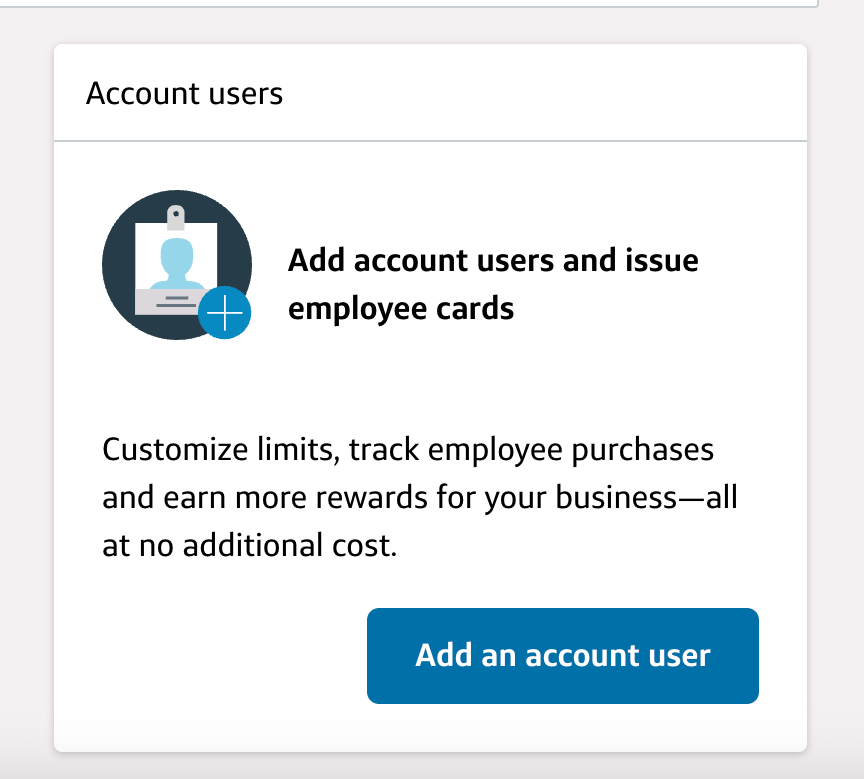
From the account page, look for “Add account users and issue employee cards,” then select “Add an account user.”
Choose an employee’s access level
Capital One will first ask you to choose an access level for the new user.
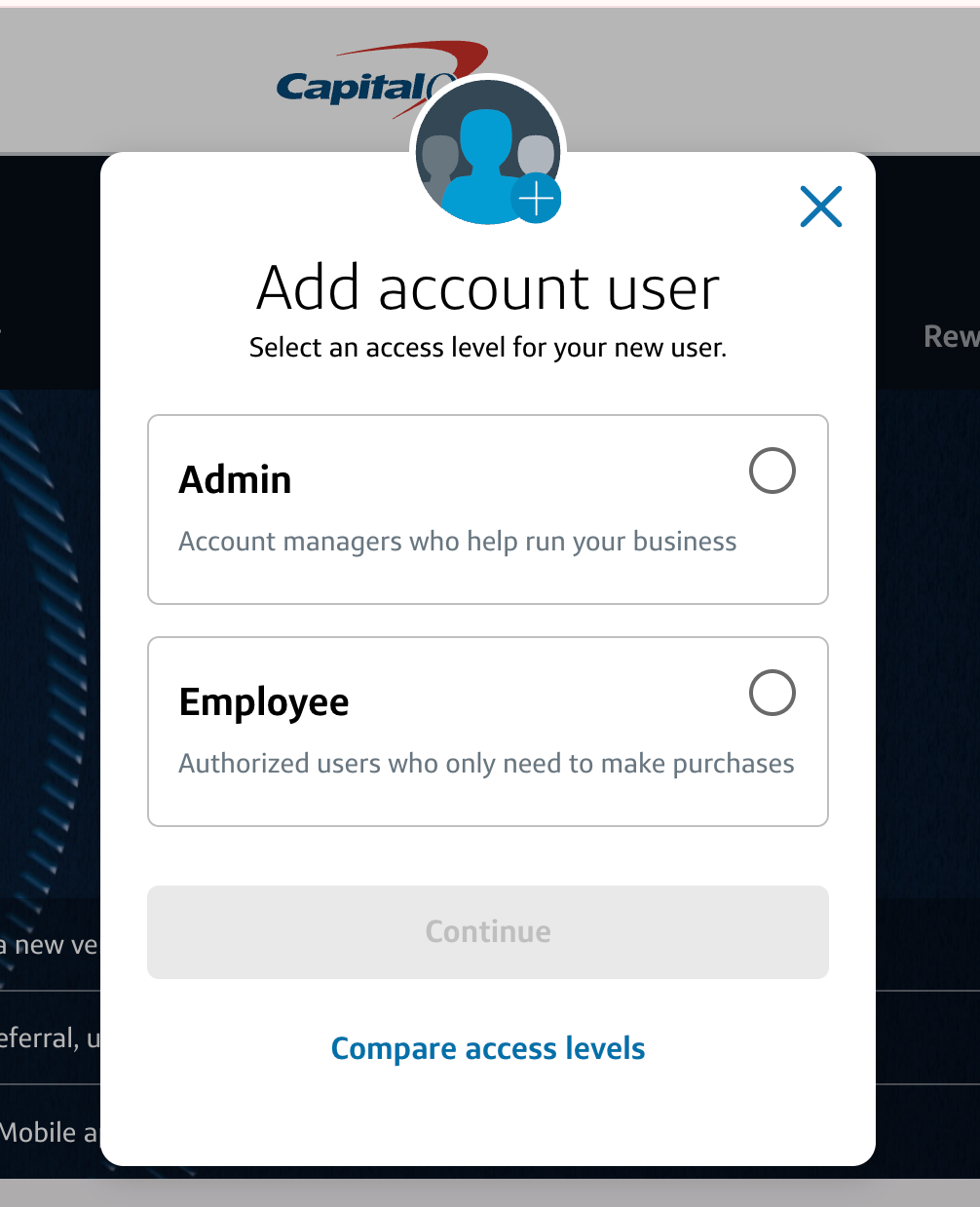
You can add the user as an admin, which comes with broader account-management permissions, or as an employee, an authorized user with more limited access. If you’re simply issuing a card for an employee to make business purchases, choose the employee option.
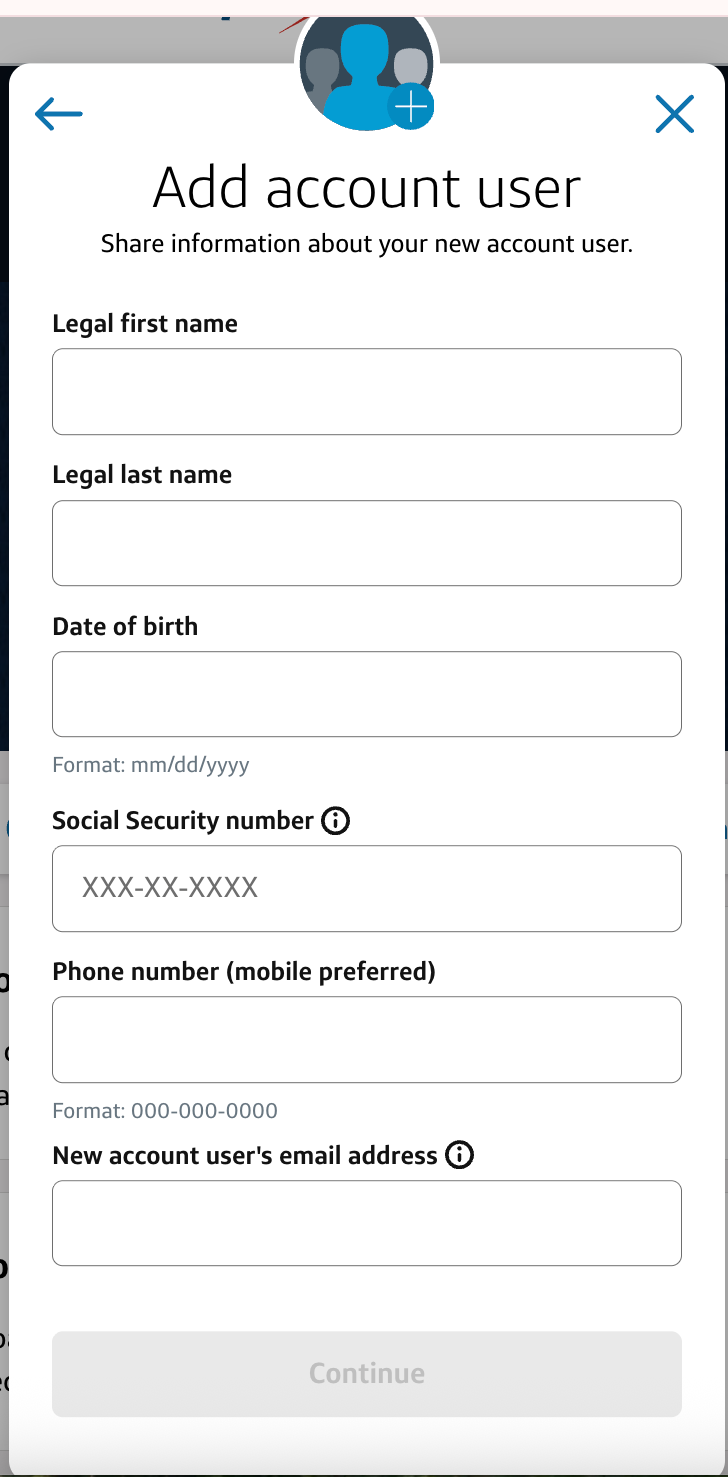
Add the employee’s information
After choosing an access level, you’ll enter the new user’s legal first and last name, date of birth, Social Security number, phone number and email address.
Set employee spending controls
Next, choose whether to issue the employee a card and set their spending preferences.
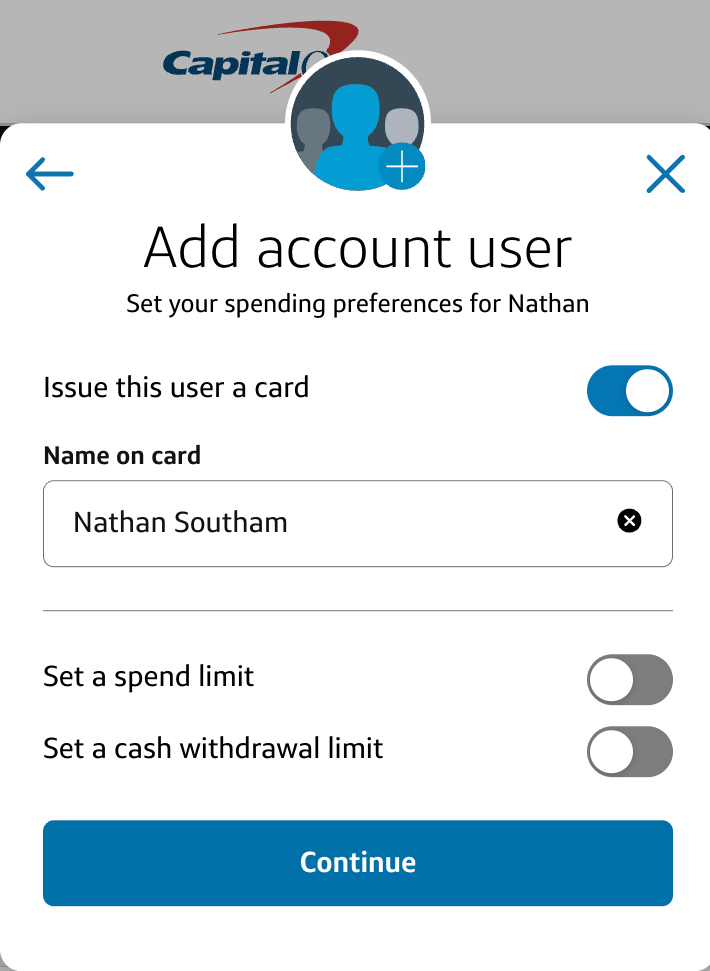
You can also set a separate limit for cash withdrawals.
Review and add the employee
Finally, review the employee’s information and spending preferences. You’ll need to acknowledge Capital One’s Authorized User Terms and Conditions before selecting “Add user.”

Once the employee is successfully added, Capital One will send confirmation emails to you and the employee. If you requested a physical card, Capital One will also mail the new card to the address on the account.
Track employee purchases
Once your employees start using their cards, you can track their purchases directly from your Capital One business account.
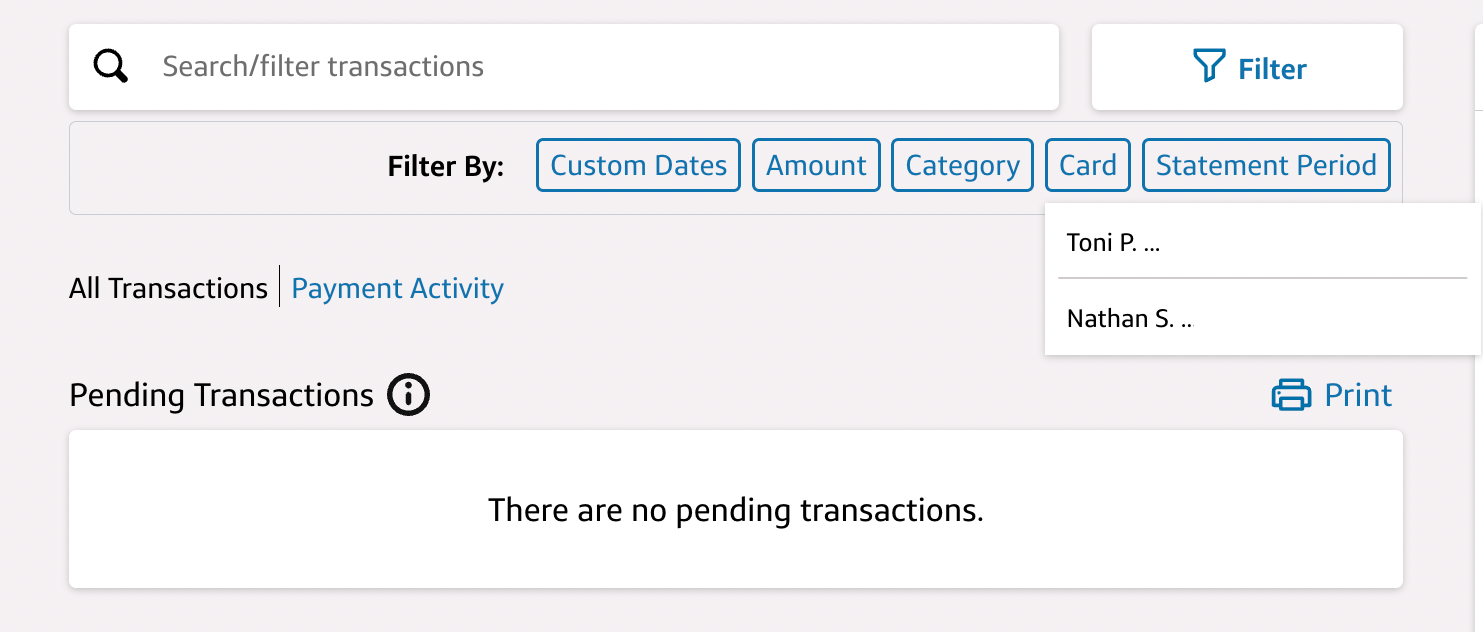
Your transactions appear on the main account page, but you can narrow them down to a specific employee by selecting “Filter,” choosing “Card” and then selecting that employee’s card.
Related: The best business credit cards to add to your wallet
Capital One vs. Chase Ink employee cards
Capital One isn’t the only issuer that makes it easy to give employees their own cards. Chase offers many of the same employee card features across its Ink Business card lineup, including employee cards with no additonal cost, individual spending limits and tools for monitoring employee purchases.
| Feature | Capital One business cards | Chase Ink business cards |
|---|---|---|
|
Employee card fee |
No additional cost |
No additional cost |
|
Individual spending limits |
Yes |
Yes |
|
Track employee spending |
Yes |
Yes |
|
Rewards on employee purchases |
Yes |
Yes |
|
Manage cards online |
Yes |
Yes |
|
Lock employee cards |
Yes |
Yes |
The bigger differences come down to how your business spends.
For example, the Ink Business Cash® Credit Card (see rates and fees) earns 5% cash back on office supply stores and on internet, cable and phone services (on up to $25,000 in combined purchases each account anniversary year). The Spark Cash Plus, meanwhile, earns a flat 2% cash back on purchases with no cap, which can make sense for businesses whose employees spend across a wider range of categories.
If you’re interested in travel rewards, compare Capital One miles with Chase Ultimate Rewards points to see which program better fits your business’s spending and travel plans.
Related: Chase Ink Business Cash card review: Valuable rewards for business expenses with no annual fee
Bottom line
Capital One business cards make it relatively simple to give employees their own cards without paying an additional employee-card fee. You can set individual spending limits, track purchases by employee and earn rewards from eligible employee spending in the primary account.
Since those core employee-card features are available across Capital One’s business card lineup, the best option comes down to your broader priorities. Businesses that want transferable travel rewards may prefer a Venture card, while those that value straightforward cash back may be better served by a Spark card.
If you’re choosing a new business card, employee-card features probably won’t be the deciding factor. Capital One and Chase have a lot in common on that front, so focus on which rewards program, earning structure and card benefits better match your business’s spending.
Related: The best time to apply for these popular Capital One credit cards based on offer history