






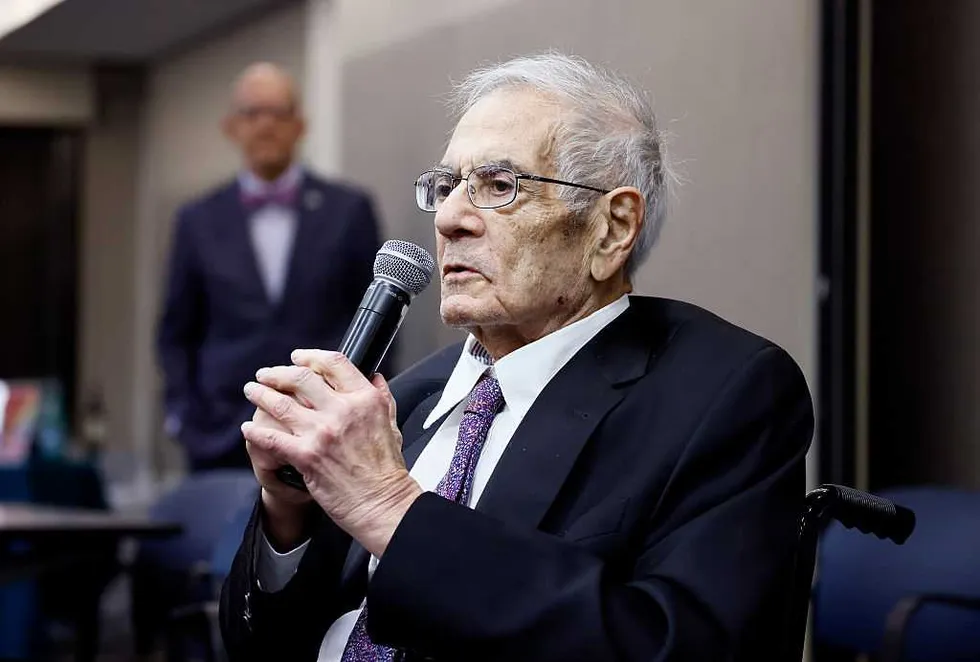
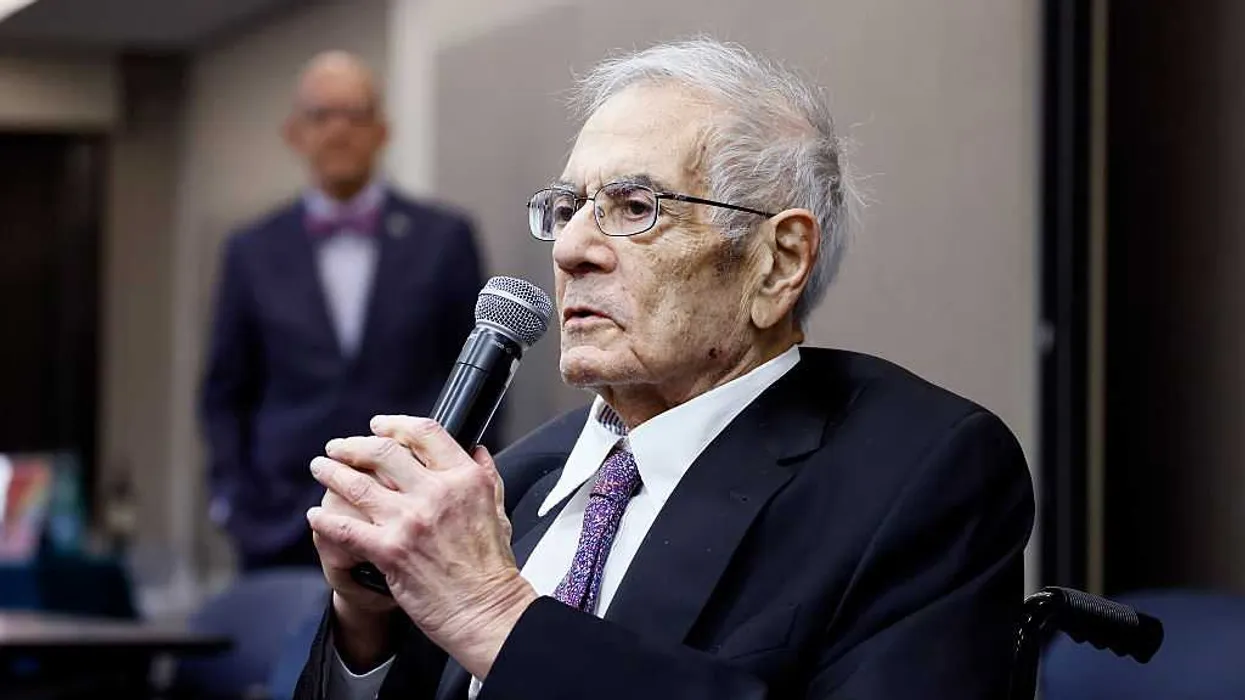
Barney Frank spent his final months warning Democrats that the left had become a danger to itself.
Frank, the 16-term congressman from Massachusetts who died May 19 at 86, had been promoting a book scheduled for September publication: “The Hard Path to Unity: Why We Must Reform the Left to Rescue Democracy.”
The most effective revolutionaries do not always sound revolutionary. Sometimes they sound like men telling the revolutionaries to shut up, count the votes, and wait their turn.
That title says a great deal. Frank warned his fellow Democrats that they’re losing the electorate. But he was no mushy moderate. He was solidly a man of the left who understood that his party had developed habits that could cost it power — and, in his view, endanger the country.
Before anyone mistakes my point: This is not a eulogy for the co-author of Dodd-Frank, a man with more than his share of ethical lapses and scandals — male prostitution, anyone? — and a long record of expanding federal power and undermining American civilization. I am not here to praise Barney Frank’s life and career. I am here to draw a vital lesson about politics — how it works, who wins, and who loses.
Frank spent more than three decades in Congress advancing left-wing causes, from gay rights and anti-discrimination law to financial regulation and a more aggressive federal role in American life.
But not too aggressive too soon.
In one of his final interviews, Frank told CNN’s Jake Tapper that Democrats had succeeded in moving inequality to the center of the party’s agenda. But that success, he said, had “enabled people who wanted to use that as a platform for a wide range of social and cultural changes, some of which the public isn’t ready for.”
That little caveat — what “the public isn’t ready for” — carries a lot of weight.
To the activist mind, public reluctance often looks like bigotry, cowardice, or false consciousness. To Frank, it looked like politics. Voters were not clay to be molded by professors, nonprofits, and online scolds. They had to be persuaded, reassured, pressured, and moved over time.
Politics is persuasion — and persuasion can be the work of a lifetime.
Frank never confused delay with defeat. He treated delay as part of the cost of lasting victory. That was the real meaning of his final, misunderstood calls to “moderation” — something his irritating leftist critics missed or chose to ignore. He did not ask the left to abandon its goals. He asked the left to stop endangering them.
RELATED: Inside the left’s push to reshape 2028 with ranked-choice voting
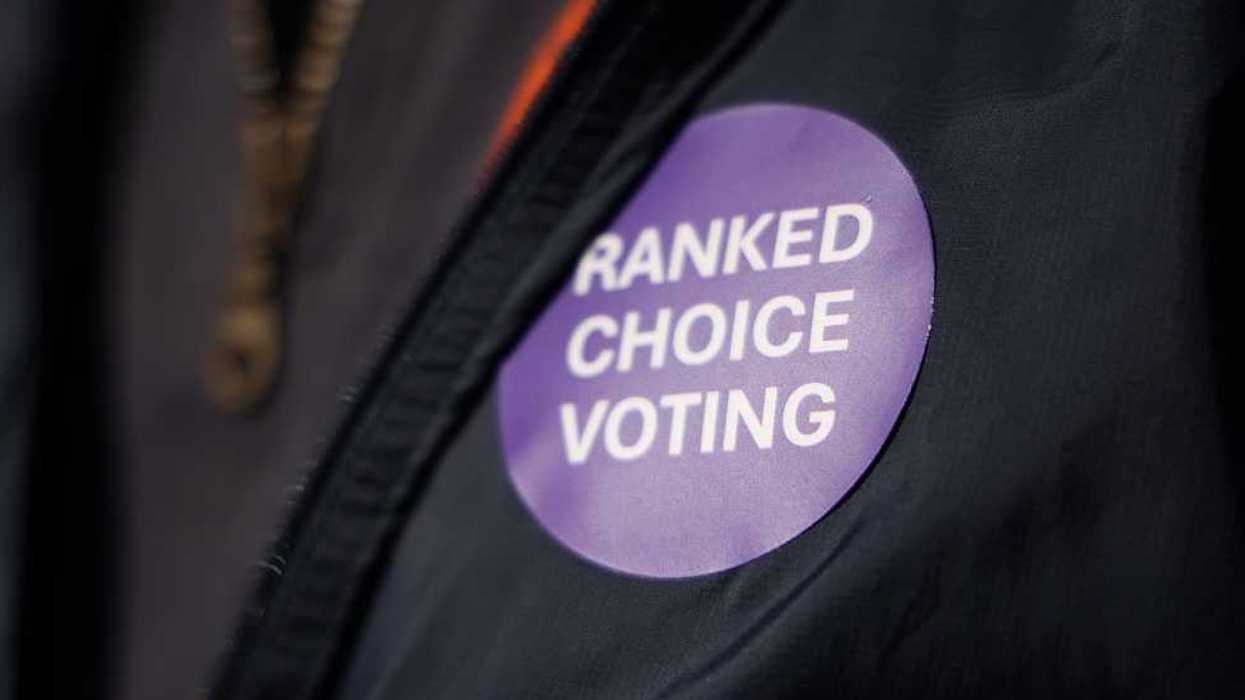 Michael Blackshire/Chicago Tribune/Tribune News Service/Getty Images
His career offers a useful correction to our political vocabulary. We tend to call politicians “moderate” when they sound less insane than their allies. But Frank was not moderate in his ends. He was moderate only in his sense of timing, sequencing, and risk.
Consider same-sex marriage. Frank supported gay rights long before they became fashionable in elite institutions. But he understood that the movement first had to win more basic fights against discrimination before asking the public to redefine marriage.
“When we were fighting for gay rights — a fight I think we have essentially won — we knew that some issues were more popular than others,” Frank told the New York Times a week before his death. “So we tended to start by trying to win the ones that were most popular. Gays in the military. Employment. We didn’t go after same-sex marriage, we didn’t make marriage a litmus test, until the very end.”
Then he drew the analogy to biological males competing in women’s sports. “That is the most controversial part of the agenda — the equivalent of gay marriage — so put it at the end. If you go at it that way, you build support for it. But if you insist on the most controversial parts all at once, you make it harder.”
Notice what he did not say. He did not say men in women’s sports had crossed an uncrossable line. He said the left had mistimed the fight. Prepare the ground, then advance. Move the public, then consolidate the gain. Do not force every question at once and then denounce the electorate for failing to keep pace.
Call that whatever you like, but don’t call it mushy moderation. That’s professional politics.
The same instinct shaped Frank’s conduct in Congress. In 2007, he supported removing gender identity protections from the Employment Non-Discrimination Act because he believed the votes did not exist to pass the broader bill. Activists accused him of betrayal. Frank’s answer was coldly practical: Do what you can now, and return later for the rest.
Frank was a patient institutional leftist. He understood committees, votes, caucuses, and public opinion. He could be abrasive, partisan, and arrogant. But he did not mistake moral intensity for legislative power.
That separated him from Sen. Bernie Sanders (I-Vt.), whom Frank often criticized as a politician with little to show for decades in Congress. Sanders treats politics as indictment. The system is corrupt. The billionaires are guilty. The people have been betrayed. Some of that rhetoric can move voters, but rhetoric alone does not write statutes, build coalitions, or hold fragile majorities together.
Sanders rages against the system. Frank learned how to use it.
Alexandria Ocasio-Cortez complicates the picture. She entered Congress as a democratic socialist insurgent in the Sanders mold. But she has grown in office — not toward the center, exactly, but toward machinery. Frank would not have mistaken her for one of his own. But he might have recognized the beginning of her political education.
RELATED: Your enemies aren’t mentally ill. They apparently just want to kill you.
 Blaze Media Illustration
A better comparison might be Jerry Brown.
California Republicans never got past the late-1970s caricature of “Governor Moonbeam,” and it cost them. “Moonbeam” was Jerry 1.0. The man who left the governor’s office in 2019 was Jerry 7.0, maybe 7.5: older, harder, more disciplined, more fiscally cautious, and vastly more dangerous. Brown was no conservative, though he possessed certain conservative instincts. Brown succeeded because he understood California’s currents better than the Republicans who mocked him.
Brown had his canoe theory of politics: Paddle a little to the left, paddle a little to the right, and you get where you need to go — ultimately, the to left bank of the river. Brown was smart enough and steady enough not to tip the canoe on the way there.
Conservatives should study politicians like Brown and Frank, not because we should admire or emulate their goals, but because we should understand their methods. A political movement that cannot describe its opponents accurately cannot defeat them. Worse, it cannot learn from them.
Frank’s final warning to Democrats was simple: Stop letting the loudest voices on the left turn every unpopular cultural demand into a test of moral seriousness. Read the room. Build consensus. Move when the ground can hold.
That warning should stir conservatives, too. The most effective revolutionaries do not always sound revolutionary. Sometimes they sound like men telling the revolutionaries to shut up, count the votes, and wait their turn.