Skip to content








U.S. Special Operations Command (SOCOM) is moving to demonstrate a new, fully integrated extended-range strike capability for the AC-130J Ghostrider gunship. The two core elements of this effort are an active electronically-scanned array (AESA) radar and the AGM-190A Small Cruise Missile (SCM), work on which has been underway separately for some time now. TWZ has long highlighted how giving the AC-130J an AESA radar would boost its ability to engage targets at longer ranges. This, in turn, could also help ensure the Ghostrider’s relevance in future high-end fights, especially in the Pacific region.
Col. Justin Bronder, head of SOCOM’s Program Executive Office for Fixed Wing (PEO-FW), discussed the integration of the radar together with the AGM-190A on the AC-130J earlier today. Bronder spoke to TWZ and other outlets alongside other SOCOM acquisition officials at a roundtable on the sidelines of the annual SOF Week conference.
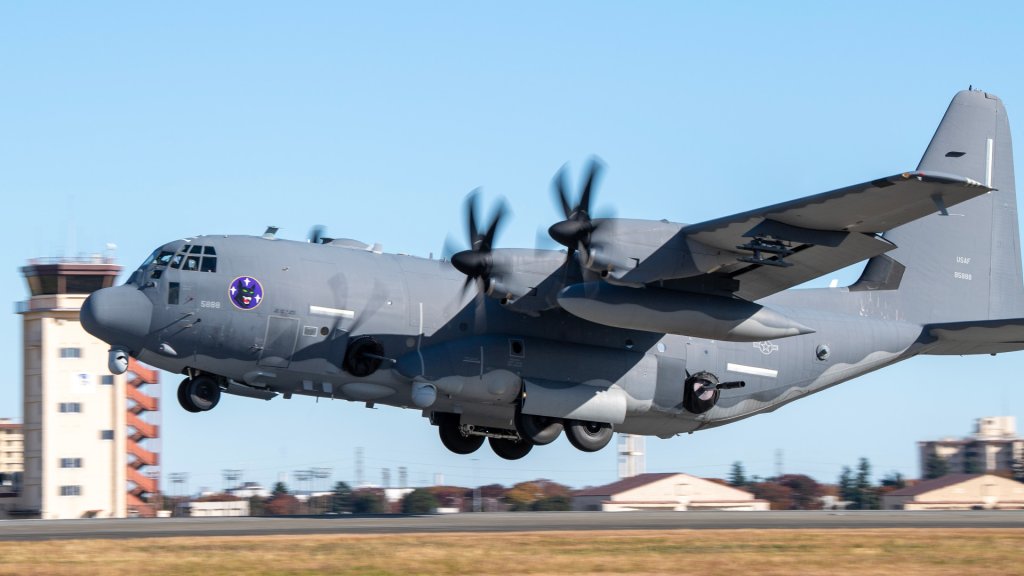
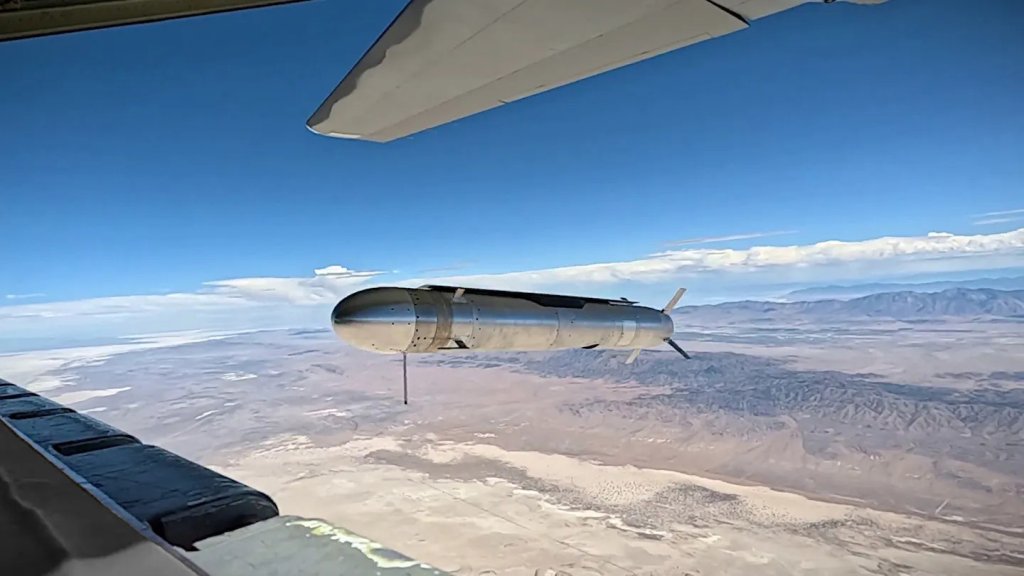
AGM-190A is the formal U.S. military designation for the SCM, developed by Leidos, originally under the name Black Arrow. It has now also emerged that SOCOM refers to the missile by the nickname Havoc Spear. With a demonstrated range of at least 400 miles, the missile has far greater reach than any of the other missiles and precision bombs that the AC-130J is known to be able to employ now by a huge margin. The Ghostrider’s current armament package, which also includes a 30mm automatic cannon and a 105mm howitzer, is focused on close air support and interdiction missions against targets at much closer ranges.
“A lot going on in that space,” Col. Bronder said today. “Our unique teaming with Leidos, that started with a CRADA [Cooperative Research and Development Agreement], that accelerated through an express development program on the now called AGM-190 Havoc Spear affordable cruise missile.”
A CRADA is a non-traditional research and development mechanism through which elements of the U.S. military can pool resources with private companies and other organizations. These agreements allow the parties involved to pursue mutually beneficial work, but without a typical contract or even money necessarily changing hands.
“That program [the AGM-190] has really been moving along quite, quite quickly,” Bronder continued. “We’re looking at ways to kind of accelerate fielding of that weapon in the not too distant future with close teaming with AFSOC [Air Force Special Operations Command] partners to really collapse that development and operational test timeline. So, real big acquisition success there.”
“We have tech demonstrations with the AESA radar and the small cruise missile that we’re now looking to see how we can augment and accelerate fielding those types of capabilities for the SOF [special operations forces] fleet,” Bronder added.
“CRADAs produced the AGM-190A Havoc Spear small cruise missile that offers an affordable mass solution with significant range to our service partners,” U.S. Navy Adm. Frank Bradley, head of SOCOM, also said separately during his keynote address at the SOF Week conference earlier today. “Integrated with the AESA radar on the AC-130 gunship, [it is] a formidable capability.”
SOCOM’s proposed budget for the 2027 Fiscal Year, released last month, had hinted at plans to demonstrate the new combination of capabilities for the AC-130J in the next year or so. The command is asking for nearly $5.9 million to support work on the so-called Precision Strike Package (PSP) for the AC-130J. PSP is the overarching system through which all weapons and associated sensors are integrated onto the Ghostrider.
The new funding “is required to integrate AESA radar capabilities into the PSP,” according to SOCOM’s budget documents. The planned work “includes software and hardware development to incorporate the AESA functionality into the Battle Management System and other associated AC-130J systems.”
What specific AESA radar is going on the AC-130Js is unclear. At last year’s SOF Week conference, Col. Bronder said there was “pathfinding” underway involving Northrop Grumman’s AN/APG-83, also known as Scalable Agile Beam Radar (SABR).
“AFSOC is exploring the development and use of the AESA Radar on the AC-130J as the command continues to operate as both the SOF component to the Air Force and air component to USSOCOM,” AFSOC told TWZ when asked for an update in August 2025. “We cannot discuss the type of radar due to operational security.”
The APG-83 does remain a very plausible choice. The Air Force has already been in the process of integrating this radar onto a significant portion of its fleets of F-16C/D Viper fighters for years now. Beyond its target detection and tracking capabilities, the AN/APG-83 has a synthetic aperture mapping mode and is capable of producing ground moving target indicator data. Also referred to as SAR mapping, this mode allows SABR to produce high-resolution radar imagery. GMTI tracks can be overlaid on those images. All of this, in turn, can be used for target acquisition and identification purposes, as well as general reconnaissance.

There are other AESA radars on the market, as well, including a growing number of compact designs. Radars of this type, in general, can spot objects of interest, even ones with smaller radar cross-sections, faster and do so with greater precision and fidelity compared to older mechanically-scanned models. They can also just scan faster and perform multiple functions near-simultaneously, and do so with improved resistance to radiofrequency jamming and far greater reliability.
As mentioned, TWZ has long pointed out that the addition of an AESA radar would be a huge upgrade for the AC-130J’s ability to spot, track, and engage targets at extended ranges, even in bad weather. The radar would be able to provide real-time midcourse updates to a stand-off weapon if it had a data link capability. This would make engaging moving targets possible if the missile also had a terminal seeker capable of doing so.
Overall, the capability boosts the AESA radar offers are especially important when paired with new, longer-range strike munitions like the AGM-190A. The radar could also help improve the Ghostrider’s effectiveness when employing other shorter-range munitions, including GBU-39/B Small Diameter Bombs (SDB) now and GBU-53/B StormBreakers (also known as SDB IIs) in the future.
AESA radars will also expand the AC-130J’s general surveillance and reconnaissance capabilities, as well as provide improved general situational awareness.
This is all reflected in SOCOM’s budget documents, which state: “AESA radar enhances the AC-130J’s situational awareness, precision targeting, and survivability while replacing phased-out legacy radars, enabling the Gunship to close Joint Force kill webs and expand its role in support of USINDOPACOM [U.S. Indo-Pacific Command] and Western Hemisphere operations.”
The mention here of the Indo-Pacific region underscores broader questions about future operational relevance that have been facing the AC-130 fleet in recent years. The Ghostrider and its immediate predecessors were workhorses during the Global War on Terror era, flying heavily over countries like Afghanistan, Iraq, and Syria. Even so, they flew almost exclusively under the cover of darkness to help reduce vulnerability to ground fire.
Threats to AC-130s would be far more pronounced in any future high-end fight, such as one against China in the Pacific. For years now, this has been the chief scenario driving U.S. military planning around force structure and other requirements. The latest conflict with Iran, as well as other U.S. operations in and around the Middle East in recent years, have made clear that more capable air defense systems are steadily proliferating to smaller nation states and even non-state actors, as well.
The integration of a new stand-off strike capability paired with an AESA radar is one way for the AC-130J to respond to this evolving threat ecosystem. It could also open the door to other new capabilities for the Ghostrider, as well as other AFSOC aircraft like the OA-1K Skyraider II light attack plane. Similar questions about future relevance have been raised about the OA-1K, a design that is also primarily geared toward counter-terrorism missions and other low-intensity conflicts.
The AC-130J fleet is also in the process of receiving a number of other upgrades, including improvements to its defense countermeasures suite.
It is very possible that the AGM-190A could find its way out of the special operations community and into more widespread U.S. military use. The Air Force is currently planning to buy nearly 28,000 low-cost strike munitions over the next five years through its Family of Affordable Mass Missiles (FAMM) program.
“We’re also continuing to talk to the Air Force about what they’re doing with their Family of Affordable Mass Munitions [sic]” to see “if there’s some continued interplay there for us to do a service-to-SOF or SOF-to-service transition,” Col. Bronder said today.
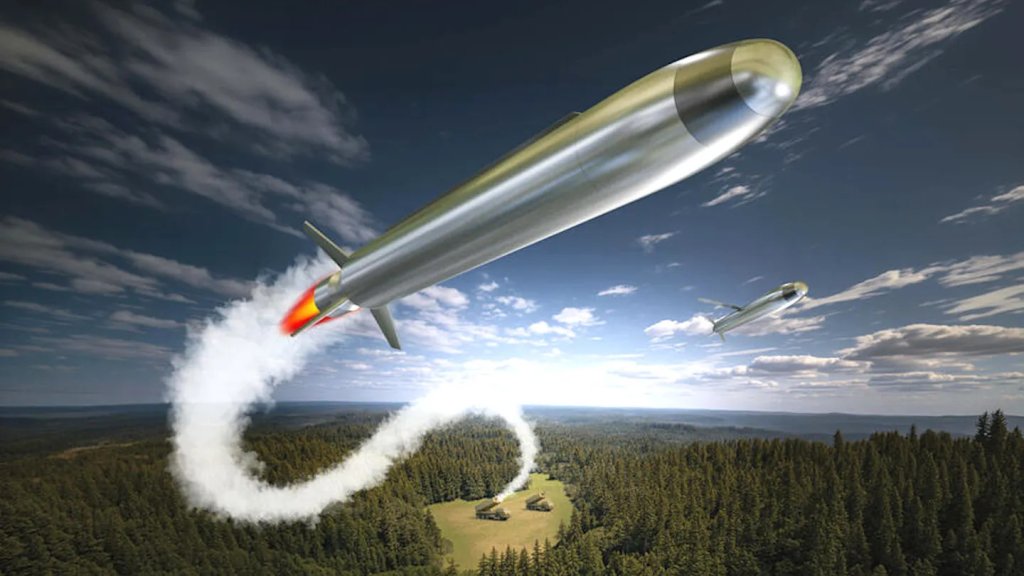
Last week, the Pentagon also rolled out a plan to acquire at least 10,000 lower-cost cruise missiles, primarily for surface-launched applications from containerized launchers, in the next three years. Leidos is among the companies now involved in this Low-Cost Containerized Missiles (LCCM) program, and is developing a derivative of the AGM-190A to meet those requirements.
For the AC-130J, a full-up demonstration of the pair of an AESA radar and the AGM-190A cruise missile will mark another step toward giving the gunships a valuable, if not increasingly essential, boost in capability.
Contact the author: joe@twz.com
The post AC-130J Gunship With Mini Cruise Missiles Paired With AESA Radar To Undergo Tests appeared first on The War Zone.