









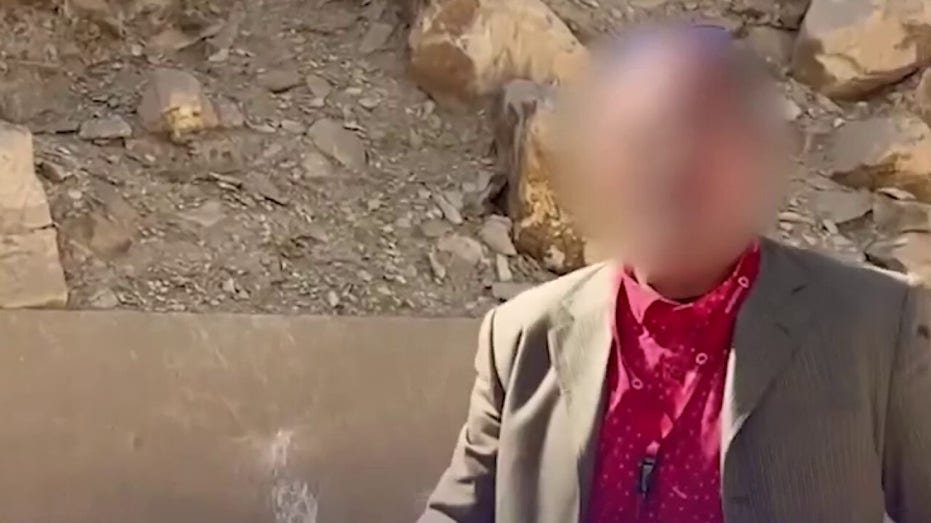
An Egyptian tour guide was arrested after allegedly sketching a stick figure onto the side of the 4,000-year-old Pyramid of Unas while leading a group of tourists.
Video of the incident, which circulated widely on social media, shows the man leaning toward a lower section of the pyramid’s outer casing while tourists stand nearby listening. He is then seen attempting to wipe the markings away with his hand, though remnants remain visible in the footage.
In a post on X, Egypt’s Interior Ministry said the guide “damaged an antiquity by drawing on the outer casing of one of the pyramids” while explaining the site to tourists. Although the initial report mentioned the general Giza area.
The ministry said the investigation was launched after the video spread online, prompting an antiquities inspector to file a report with the Saqqara Tourism Police Station identifying the guide. Officials said the markings were later removed by specialists.
WORLD’S TOP TOURIST CITY TURNS ANCIENT RUINS INTO PART OF THE DAILY SUBWAY COMMUTE
Authorities apprehended the suspect, who confessed to the act during questioning, according to the ministry.
“Legal measures have been taken,” the ministry added, noting that specialists have since removed the markings.
Local media outlets, citing the Interior Ministry’s investigation, identified the site as the Pyramid of Unas in the Saqqara necropolis south of Giza.
VANDALS HIT YOSEMITE NATIONAL PARK WITH GRAFFITI ON BOULDER, MORE
B.C. for the Pharaoh Unas, is historically significant for containing the earliest Pyramid Texts. These religious inscriptions consist of more than 200 spells carved into the pyramid’s interior walls, forming what scholars consider the oldest known collection of funerary texts.
ARCHAEOLOGISTS FIND 1,600-YEAR-OLD CHURCHES AND MURAL OF JESUS IN EGYPTIAN DESERT SETTLEMENT
The pyramid is located within the vast Saqqara necropolis, part of ancient Memphis – Egypt’s first capital and now a UNESCO World Heritage Site that contains a sprawling complex of tombs, temples and pyramids.
Egypt has increased enforcement and preservation efforts at archaeological sites in recent years as officials seek to protect ancient monuments that attract millions of visitors annually.
Under Egypt’s Antiquities Protection Law, damaging actions such as writing on or damaging archaeological sites can carry prison sentences and fines, with the exact penalties varying by offense.