





I’m a Jew who lives in Crown Heights, Brooklyn, and nobody on my block can tell. I don’t wear a kippah. I don’t keep Shabbat. On a Saturday afternoon, I can walk down Eastern Parkway without standing out.
Many of my neighbors don’t have that luxury. Their hats, coats, and tzitzit identify them from a block away. Those visible signs of Jewish life also make them targets in a city long considered one of the best places in the world to be Jewish.
New York already publishes hate-crime figures. It should also examine the rhetoric behind those crimes.
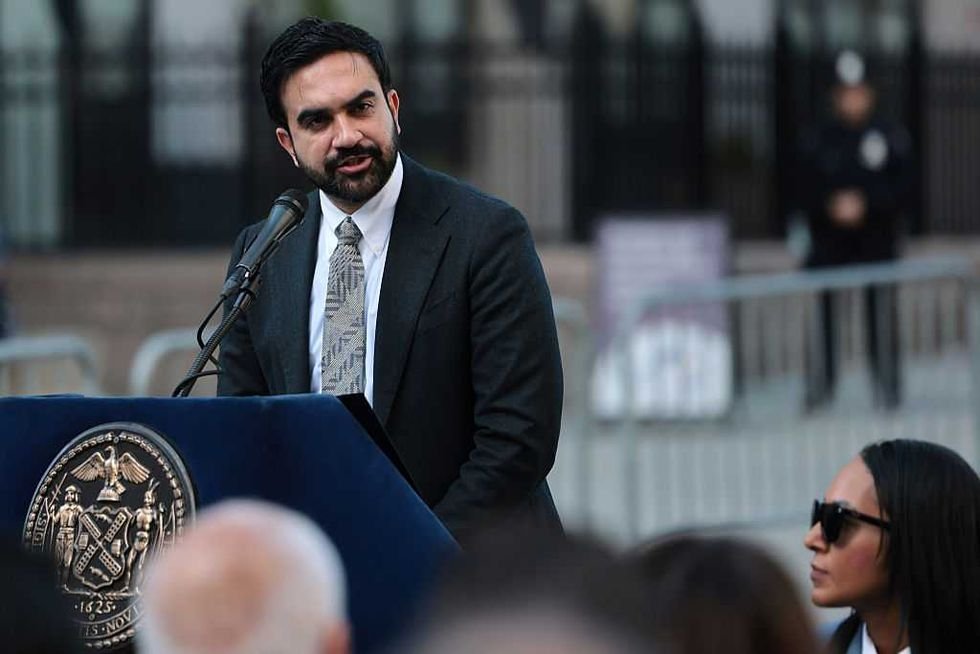
Mayor Zohran Mamdani says he wants to protect them. On September 29, he released New York City’s first Strategy to Combat Antisemitism. Parts of the plan deserve credit. It directs $1 million to security at vulnerable houses of worship, doubles “hate-prevention” grants to $6.4 million, and expands eighth-grade visits to the Museum of Jewish Heritage. Synagogues struggling to pay for guards, cameras, and locks need the help.
But the 33-page strategy has a glaring blind spot: It never confronts the anti-Semitism that increasingly uses the word “Zionist” as a substitute for “Jew.”
The report’s concrete examples of anti-Semitic violence are Charlottesville in 2017, the Tree of Life synagogue massacre in 2018, and the Poway synagogue shooting in 2019. All were horrific. None happened in New York City. The document acknowledges that anti-Jewish crime increased after October 7, 2023, but does not examine the role of anti-Zionist agitation in that increase.
According to the Anti-Defamation League, the share of anti-Semitic incidents in New York City involving Israel or Zionism rose from 5% in 2022 to 37% in 2023 and 58% in 2024. Yet the mayor’s plan never addresses the relationship between anti-Zionist rhetoric and attacks on Jewish New Yorkers.
It also declines to adopt a definition of anti-Semitism. The city says it can fight hatred “without needing to adopt a definition for this specific form of hate.” The report discusses competing definitions, then leaves the decision unresolved. That is convenient when some of the most poisonous language comes from activists on the mayor’s side of the political divide.
In Crown Heights, we have heard that language firsthand. Last year, a group called Crown Heights Bites Back distributed free groceries near Utica Avenue and Eastern Parkway. It also distributed flyers warning that “Zionist white supremacists” would “kill us, exploit us, raise our rents and evict us.” At a vigil for Gavin Cato, whose 1991 death preceded the Crown Heights riots, masked activists from the group shoved a Jewish man. The group also praised the murder of two Israeli embassy staffers.
The accusation has spread beyond my neighborhood. Nerdeen Kiswani of Within Our Lifetime claimed that “Zionist landlords” exploited black communities to fund settlements in Palestine. Brooklyn Democrat district leader Carmella Charrington compared a family property dispute to Israeli activity in the West Bank, even though the state attorney general’s office had described the underlying matter as an inheritance dispute. In Chelsea, flyers opposing a public-housing redevelopment denounced a “Zionist occupation”; others attacked “Talmudists” and “Rothschilds.” The same reporting documented both sets of accusations.
The housing grievance is especially perverse because Hasidic families struggle with rising costs, too. The borough president’s housing analysis identifies Borough Park and South Williamsburg among Brooklyn’s most rent-burdened neighborhoods. Some young Chabad families have moved to Brownsville because they cannot afford Crown Heights. Some Hasidic developers have grown rich in Brooklyn real estate. So have many others.
RELATED: Our enemies burn Israel’s flag. Our friends plant it.
But the anger rarely lands on a developer. It lands on the man in the black hat waiting for the bus.
The ADL found that Orthodox Jews were victims in 36 of the city’s 69 anti-Semitic assaults in 2024, though they constitute about one-fifth of New York City’s Jews. Mamdani’s own report recognizes that visibly Jewish New Yorkers bear a disproportionate share of attacks. It never grapples with the local rhetoric that can turn a neighborhood housing complaint into an accusation against Jews as a group.
The strategy itself warns that anti-Semitism thrives on conspiracy theories that blame Jews for society’s troubles. What, then, should the city call the claim that “Zionists” are responsible for a family’s rent?
The political difficulty is plain. City Hall rolled out the plan with support from progressive Jewish organizations, including Jews for Racial and Economic Justice, Bend the Arc, and J Street’s local chapter. The rent-and-Zionism rhetoric comes from parts of the same political world. Naming it would require Mamdani to criticize allies as well as enemies.
He can do so when he chooses. In December, after an incoming staffer’s old posts about “money hungry Jews” surfaced, he accepted her resignation. When offensive Chelsea flyers appeared, City Hall denounced them.
RELATED: Mamdani boycotts NYC Israel Day Parade despite attending other ethnic celebrations

But when Jewish Insider asked about Charrington, a Democrat district leader elected with progressive backing, the mayor refused to answer three times. His office later condemned her conspiracy rhetoric as anti-Semitic but did not say whether she should remain in party leadership. The condemnation was welcome. The refusal to confront her position was revealing.
City Council Member Eric Dinowitz, an ally who praised the plan’s education and prevention measures, said it missed an opportunity to confront the overlap between anti-Zionism and anti-Semitism. He was right. That omission leaves a serious hole in an otherwise useful effort.
New York already publishes hate-crime figures. It should also examine the rhetoric behind those crimes, including attacks that connect Jewish identity to Israel or blame Jews for housing costs. And the city’s new prevention money should reach Crown Heights, Williamsburg, and Borough Park, where visibly Jewish residents have suffered assaults.
Mamdani should come to Crown Heights and say the words himself: Blaming Hasidic Jews for your rent is anti-Semitism. If he cannot say that much, no 33-page strategy will close the gap between his promises and the lives my neighbors lead.