






I just touched down last night from my 43rd flight on United Airlines in 2026, and I have several more United segments booked before the end of the year. It’s fair to say that I’m a pretty loyal United customer who often genuinely enjoys flying with the airline.
But starting next year, the number of flights I take with United won’t matter when it comes to earning elite status.
In what may well mark United’s final departure from rewarding frequent flyers, the airline is eliminating the option to qualify for elite status based on a combination of flights taken and money spent.
And for a lot of us, that’s going to make unlocking United MileagePlus elite status harder.
Of course, that’s not exactly how United is framing the announcement.
The airline is touting a simpler approach to earning elite status. And they aren’t technically wrong. Having just one pathway to status is simpler than having two.
But those who know me in real life have probably heard me say, “Multiple things can be true at the same time,” on more occasions than they care to count.
And in this case, it’s true that it might be “simpler” to make everyone qualify through a single pathway, but United is also making elite status harder to earn for many of its frequent flyers.
Interestingly, United is doubling down on spending as the only real metric for earning elite airline status, while another major airline is moving in a different direction.
Atmos Rewards — the program for Alaska Airlines and Hawaiian Airlines — is giving travelers more options than ever to choose their own best path to elite status. Starting in 2027, there will be three ways to qualify: distance flown, number of flights taken or a spending-only option.
Of course, Alaska Atmos Rewards and United MileagePlus are different loyalty programs at very different airlines, so it wouldn’t be fair to expect identical paths to elite status.
But it’s also true that United’s frequent flyers aren’t all the same and aren’t operating with the same set of parameters or locations. Meaning, we don’t all live in the same spots or need to fly to the same places.
For example, I fly United far more than any other airline, but I live in a suburb of its Houston hub, right in the middle of the country.
That means many of my domestic flights are relatively short trips to either coast, which often cost less than the longer transcontinental flights someone based on a coast might take.
So while I may book more flights with the airline, I don’t necessarily spend as much on airfare per flight as someone flying fewer, more expensive routes. And that’s mostly just a reality of where I live.
Under United’s current rules, you can qualify for Premier elite status based entirely on spending, which includes eligible United airfare purchases and spending on select United credit cards. That part isn’t changing for the lower three tiers — though the threshold is increasing pretty dramatically for its 1K top-tier level, from the current 28,000 Premier qualifying points to 32,000 starting next year. (That will be the highest requirement for any airline’s top-tier frequent flyer status in the market, at least until another airline potentially decides to match it.)
Or you can currently combine a somewhat lower but still significant spending requirement with taking a certain number of flights.
For example, as a United Premier Platinum elite (the second-highest published tier), I’ve needed to meet one of two requirements in recent years:
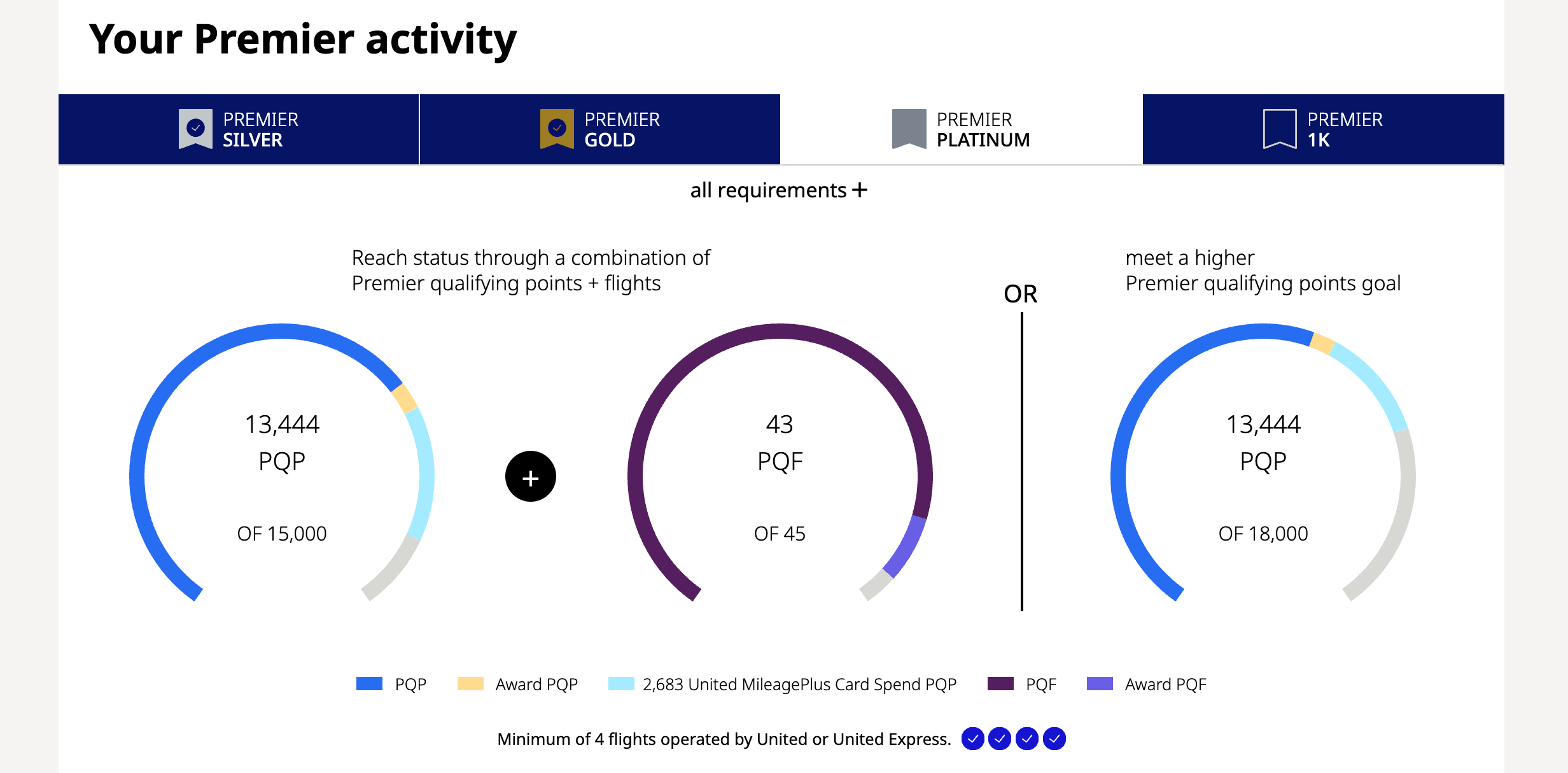
- 18,000 PQPs, which is roughly equivalent to $18,000 in eligible airfare spending.
- 15,000 PQPs plus 45 Premier qualifying flights in a calendar year.
All of United’s other published Premier status tiers have also offered two similarly structured qualification pathways.
Going forward, status will come exclusively from PQPs.
Related: Why I charged $50,000 on my United card to earn Platinum status
Another step away from flight-based rewards
It wasn’t even that long ago that the distance flown in a year was the primary way to earn airline elite status on most airlines, including United. Then came a period when travelers could qualify based on either distance flown or spending.
That flexibility allowed travelers with different flying patterns to demonstrate their loyalty in different ways, even though substantial spending — especially at the higher levels — is hardly a new requirement.
And don’t get me wrong, I’ve been at this a long time, and this sort of thing just happens. United is far from the first and likely not the last travel loyalty program to raise the spending requirements for elite status.
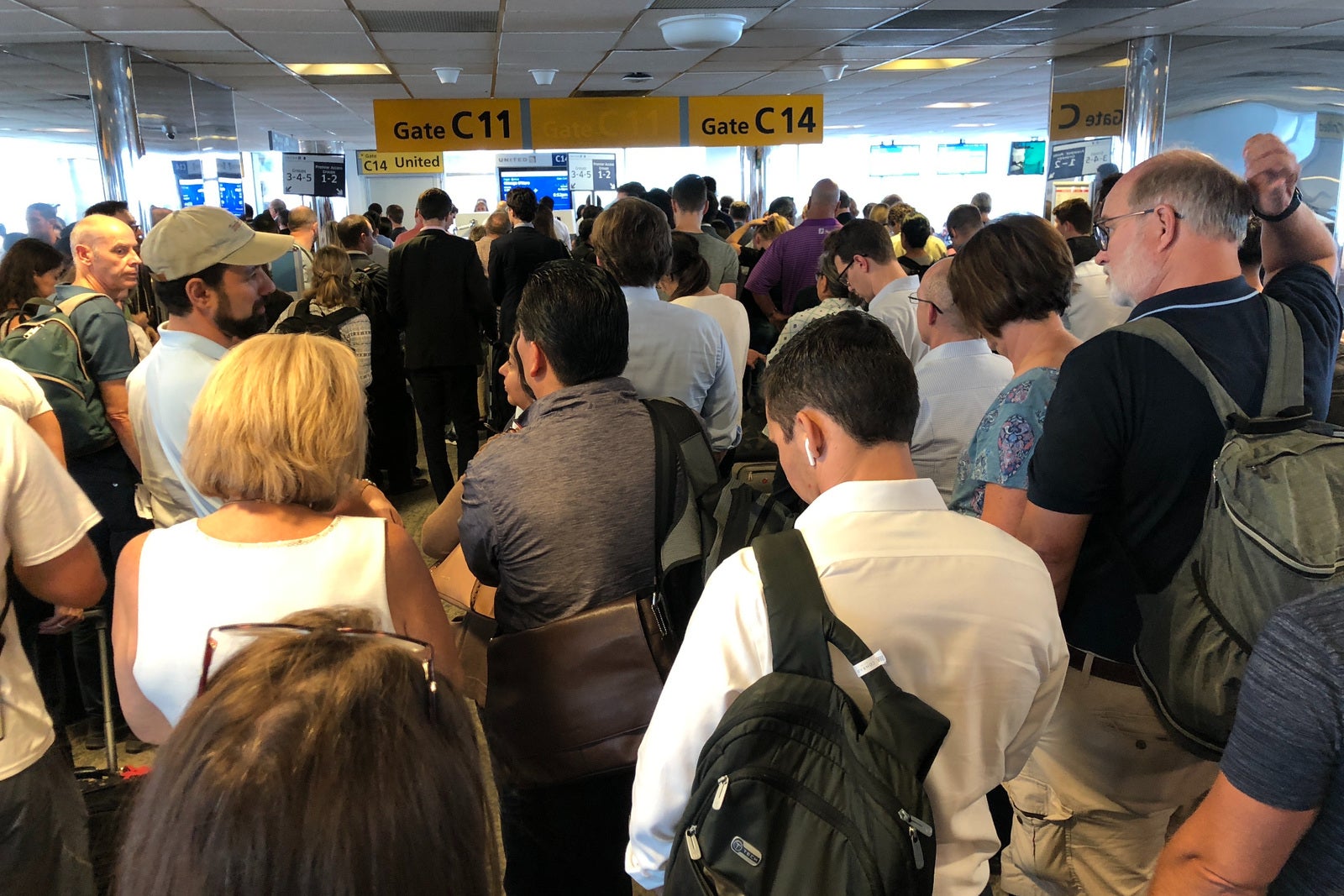
Heck, anyone who has lined up for a United flight in recent years has probably made at least a mental joke about just how many Global Services, 1Ks and Group 1 travelers are waiting to board early.
It’s the familiar problem: If everyone is elite, no one really is. That’s a reality that nearly every major loyalty program has to balance.
On top of that, flight prices are up around 20% from a year ago.
In theory, the 20% increase in the minimum required PQPs for travelers who previously qualified through the flights-plus-spending option could be explained, at least in part, by higher fares.
After all, if travelers are spending an average of 20% more on the same flights, they’re potentially earning 20% more PQPs without changing their travel patterns. The higher status thresholds could reflect that.
Still, for many of us who spend much of our lives booking flights and boarding planes with our airline of choice, this announcement is bad news.
Related: Complete guide to United’s revenue, award and upgrade fare classes
United isn’t simply making elite status qualification easier to understand. It’s eliminating a pathway that rewarded travelers for booking with United on flight after flight, even if those flights weren’t always the most expensive.
Frequent flyer perks, at least on United, are now officially high-spender perks.
And again, I get it. Loyalty is a big, big business, and United has presumably decided this change makes sense for its bottom line.
United credit cards will help, but only to an extent
The airline will likely point travelers toward its lineup of cobranded credit cards to help close the gap to elite status, since spending on those cards can unlock additional PQPs. But I imagine many frequent United flyers already have those cards. I already have two.
And they’re great cards with valuable perks that I already use to help earn status and redeemable miles through spending.
Making meaningful progress is a long, steep climb when both my hotel elite status goals and United status qualification rely on credit card spending. With United awarding just 1 PQP for every $15 to $20 spent, depending on the card, closing the gap is especially challenging.
At a certain point, there’s just not enough spending to go around.
For example, based on my current trajectory, even with 43 United flights logged and over 13,000 PQPs earned, I’ll need about another 1,000 PQPs before the end of the year to requalify for United Premier Platinum status using the flights-plus-spending option beyond flights I already have planned.
I have the United Club℠ Card (see rates and fees), which offers the more generous earning rate of 1 PQP per $15 spent. But even with that card, earning another 1,000 PQPs isn’t all that easy. It’ll actually require $15,000 in spending on the card, which I’ll likely just barely manage before Dec. 31.
If I instead needed to reach 18,000 PQPs without the flights-plus-spending option next year, that would likely be a bridge too far. Assuming my flights and spending patterns stay roughly the same as this year, I’d need to put an additional $45,000 on my United card, beyond this year’s total, just to cover the 3,000 PQP difference.
And at that point, my everyday spending might be better off going on whichever credit card earns the most valuable rewards, rather than the one I’m using primarily to unlock airline elite status.
And that card probably wouldn’t be a United card.
If that happens — and I find Platinum status out of reach despite flying close to 50 times a year on United — it wouldn’t be the first time I’ve thrown in the towel on chasing a particular airline status level.
I walked away from chasing top-tier United 1K status in 2023, when requirements were also rising after the peak of COVID-19, and my world kept rotating just fine without it.
Related: United will bring ‘basic’ fares to yet another cabin: First class
All this said, I do hope to somehow cling to United Premier Platinum status a while longer, as the ability to select up to eight Economy Plus seats at booking still works very well for me with a family and kids at home.
But if I get a few months into 2027 and realize that requalifying for Platinum just isn’t looking realistic, I’ll be disappointed. And it may not be only my family and me who lose out.
Shifting some flights and credit card spending away from United if requalifying for Platinum becomes too far out of reach wouldn’t be great for the airline, either. — at least if it happened on a large enough scale.
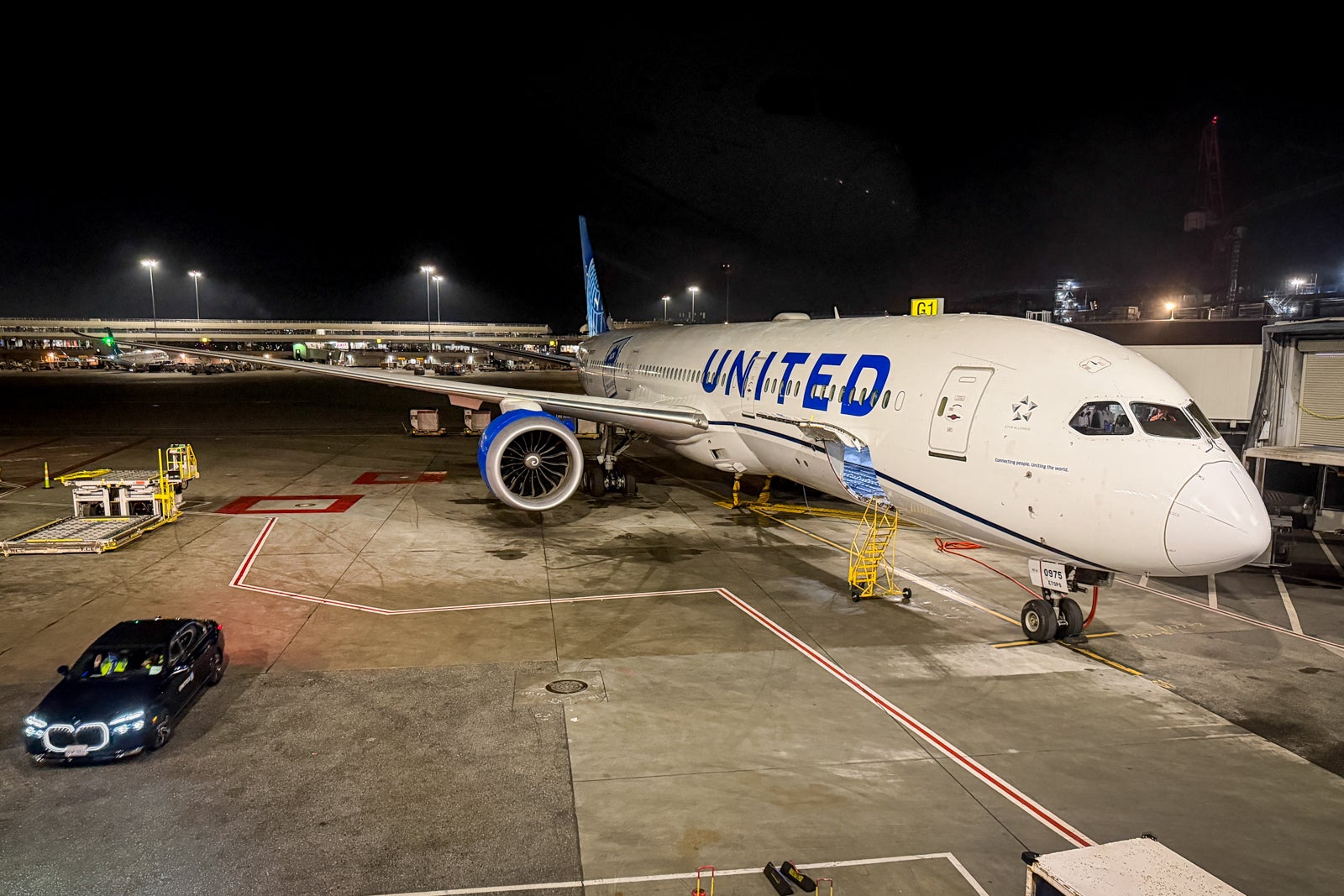
Loyalty is a delicate two-way balance that can tip too far in either direction.
Expecting a certain amount of spending in return for elite benefits is certainly reasonable. But that requirement was already there. And the spending-only pathway to status was already there, too, for those who favored that choice.
United has not only raised the bar for those of us who relied on the flights-plus-spending option and who now must spend more to earn the same status. But, it has also closed the boarding door on just about its last real tie to a world where how much — or how far — you flew actually mattered.
And for me, and I imagine others in similar situations, it’s a bit of a sad day, regardless of how much “simpler” MileagePlus may now become.
Related reading:
- United MileagePlus: Your guide to earning, redeeming, status and more
- The best credit cards for United Airlines flyers
- United’s big MileagePlus changes are in effect: What to know
- The best credit cards to reach elite status
- Sneak peak: On board United’s posh new Airbus A321XLR
- United adds 10 new international destinations in massive 13-route global expansion