






NEWYou can now listen to Fox News articles!
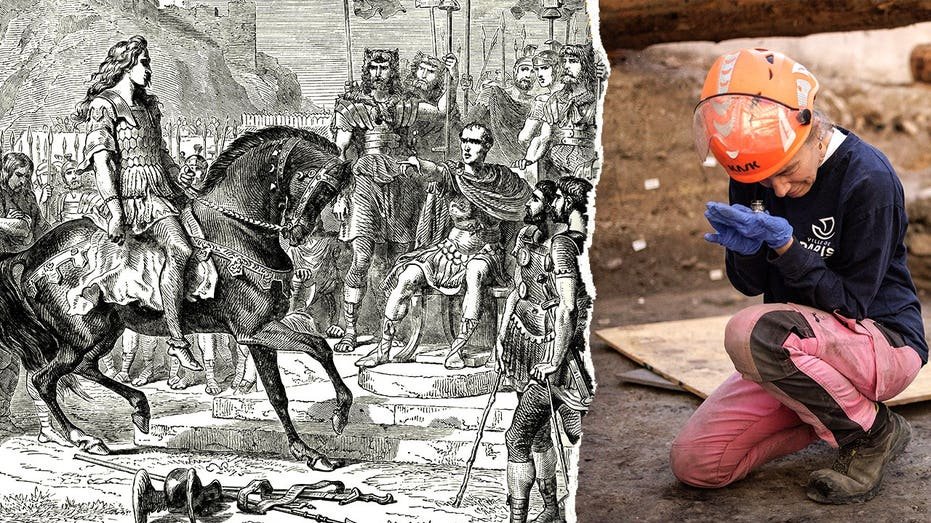
Archaeologists in Paris recently unearthed an ancient wall that may belong to a long-lost city — potentially solving a centuries-old mystery dating back to the times of Julius Caesar.
The discovery was recently announced by the French Ministry of Culture.
In a translated statement, officials said a wall discovered in the courtyard of the Hôtel-Dieu hospital — just a stone’s throw away from Notre Dame Cathedral in the city’s 4th arrondissement — might have belonged to the ancient city of Lutetia.
‘DIG OF THE CENTURY’ BENEATH NOTRE DAME REVEALS MYSTERIOUS MARKINGS, ANCIENT SECRETS
The excavation, which began in February, was conducted ahead of a “major redevelopment project,” officials said.
“Researchers initially expected to uncover traces of ancient dwellings, roads, or settlements dating to the medieval and early modern periods,” the translated statement read.
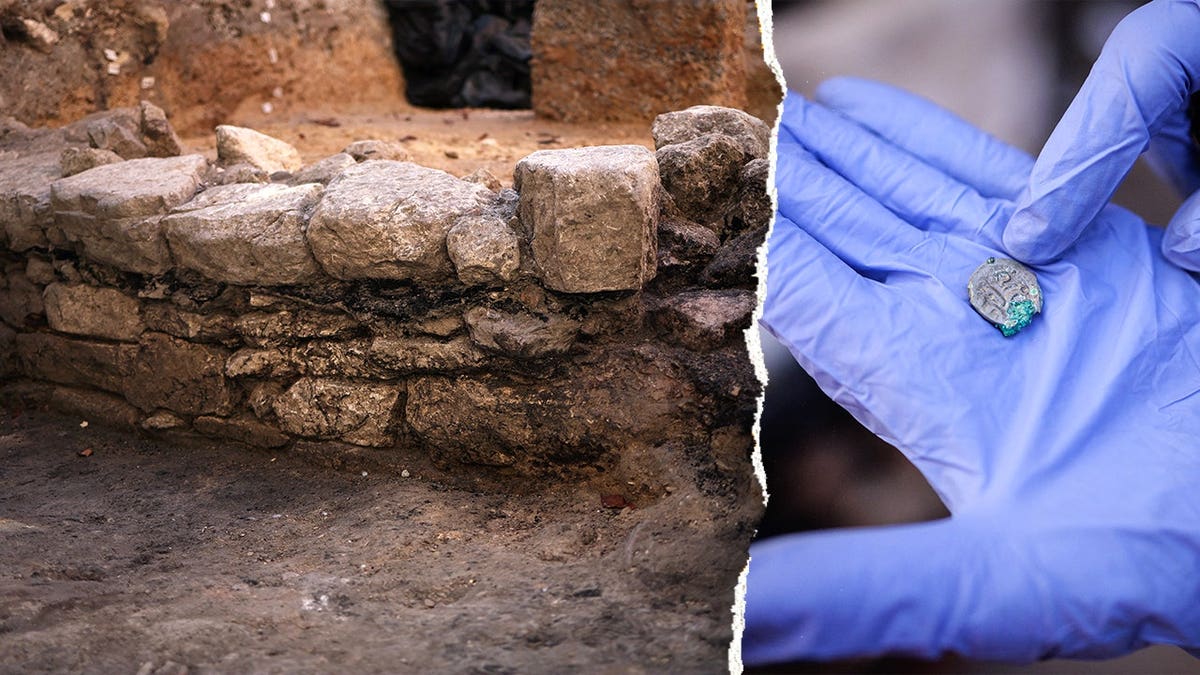
“Instead, alongside those remains, they discovered a stone-and-timber wall characteristic of ancient Gallic fortifications.”
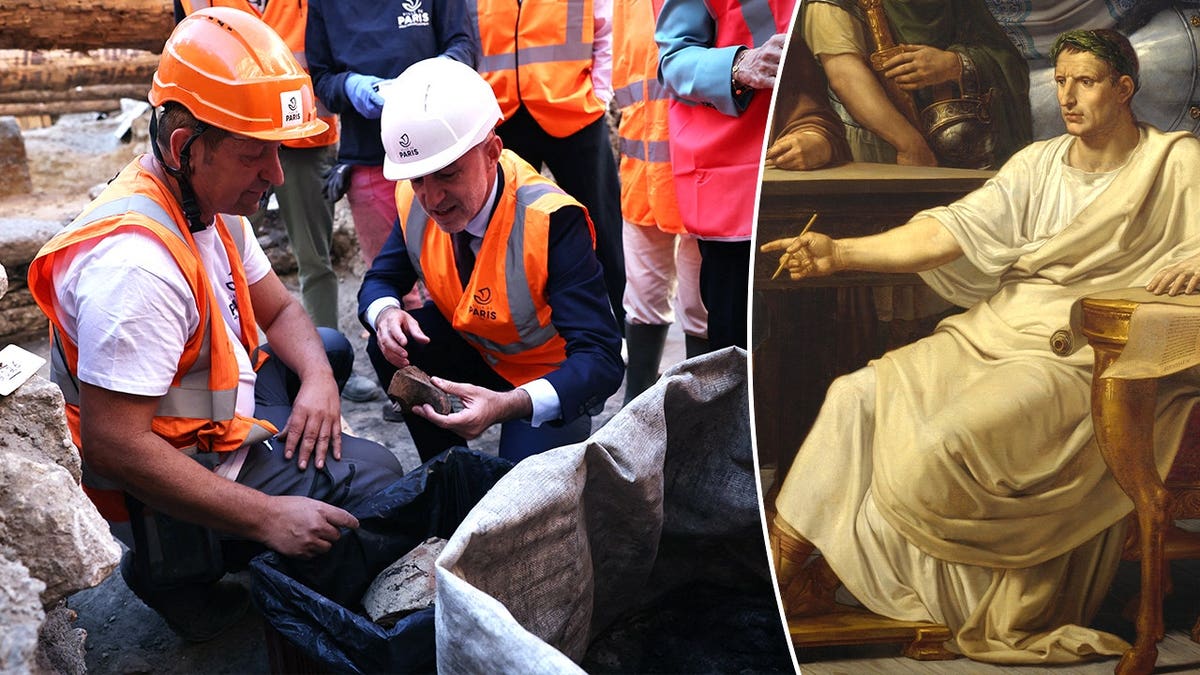
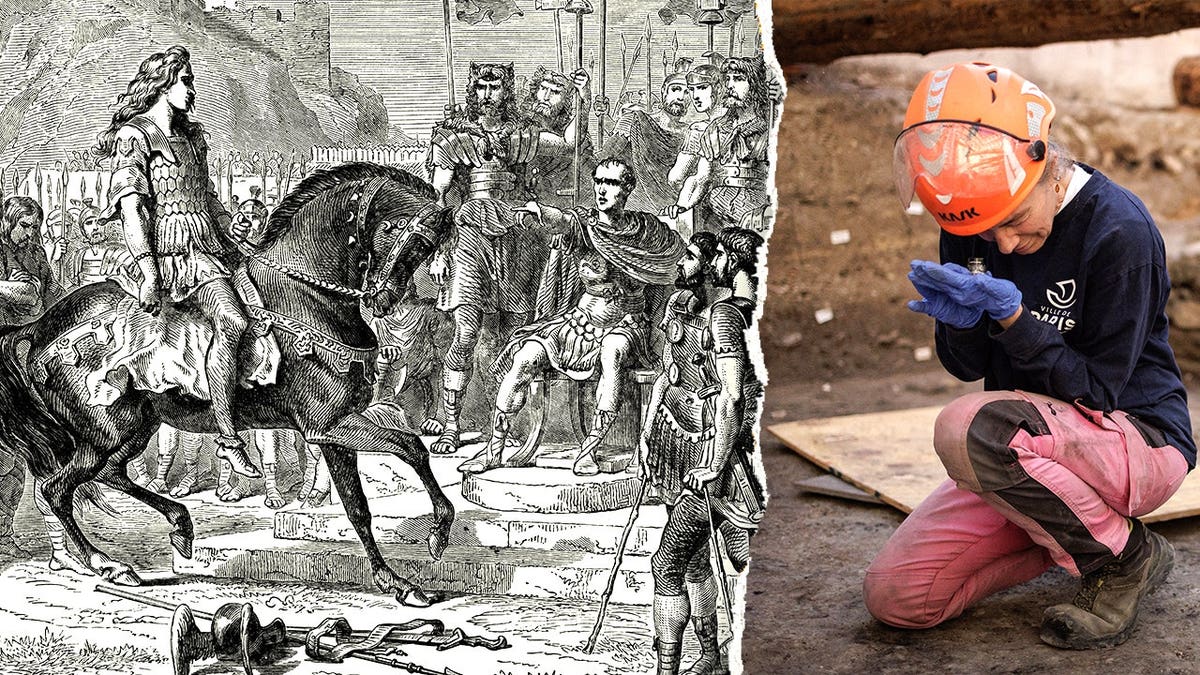
The settlement was mentioned by Julius Caesar in his writings, particularly “The Gallic Wars” — but no conclusive archaeological evidence confirmed its location until now.
ANCIENT CLUE CRACKS OPEN A 2,000-YEAR-OLD MYSTERY NEAR FAMED COLOSSEUM
In a statement, French Culture Minister Catherine Pégard said officials “may be looking at one of the most important discoveries ever made in understanding Gallic Lutetia.
“Scientific caution still requires us to verify its function and chronology, but the convergence of evidence is particularly remarkable,” added Pégard.
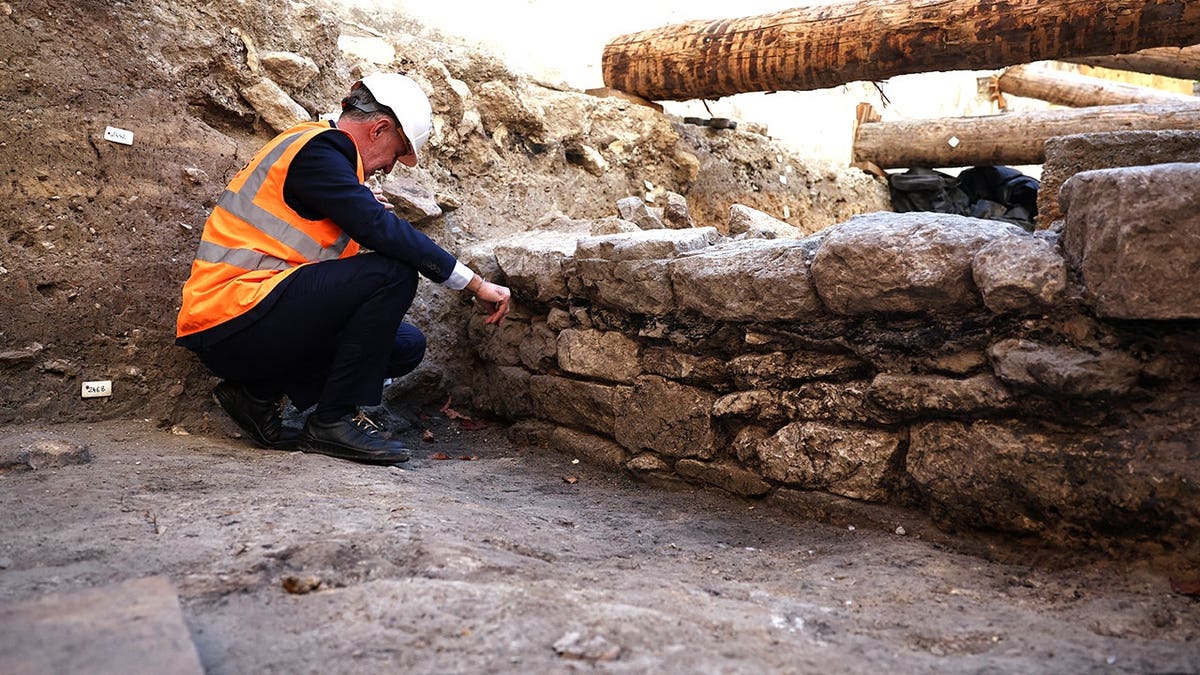
Photos from the excavation show large, weathered stone blocks stacked in uneven rows.
The wall, which stretches roughly 66 feet, bears evidence of a major fire, while radiocarbon testing of wooden elements found at the site suggests they date to between 200 B.C. and 10 B.C.
GRISLY DISCOVERY FROM LEGENDARY ROMAN EMPEROR’S REIGN REVEALS SOLDIERS’ REMAINS, WEAPONS
Researchers believe the structure may have served as a defensive fortification for the Gauls.
The wall’s stonework showed signs of fire damage, while archaeologists also uncovered burned seeds and the remains of a charred wooden building nearby.
Caesar’s account indicated the Gallic Parisii tribe burned its own fortified settlement in 52 B.C. to prevent it from falling into Roman hands.
CLICK HERE TO SIGN UP FOR OUR LIFESTYLE NEWSLETTER
Dorothée Chaoui-Derieux, a Paris archaeology official at DRAC Île-de-France, said the fire damage is precisely what strengthened researchers’ suspicions that the wall might belong to the ancient settlement described by Julius Caesar.
“Today, with this wall and its archaeological context, we may finally hold the key to solving the mystery.”
“The architecture of the wall, with its large stone blocks and system of interlocking wooden beams, very quickly made us think of a wall built in the Gallic tradition,” she said in the statement.
Due to the redevelopment project, the ancient wall cannot remain at its original location, officials said.
CLICK HERE FOR MORE LIFESTYLE NEWS
Instead, researchers plan to reconstruct part of the wall using original stones, with hopes of eventually displaying it in a Paris museum.
Looking ahead, researchers plan to conduct further excavations to determine the wall’s age and purpose.
TEST YOURSELF WITH OUR LATEST LIFESTYLE QUIZ
They will also investigate the platform behind the structure and any remains buried beneath it.
Stéphane Deschamps, regional archaeological conservator at the DRAC Île-de-France, said that the discovery “fills a gap in the archaeological record.”
CLICK HERE TO DOWNLOAD THE FOX NEWS APP
“Because of the lack of tangible evidence on the Île de la Cité, some even suggested that it was located in Nanterre,” Deschamps said.
“Today, with this wall and its archaeological context, we may finally hold the key to solving the mystery.”