



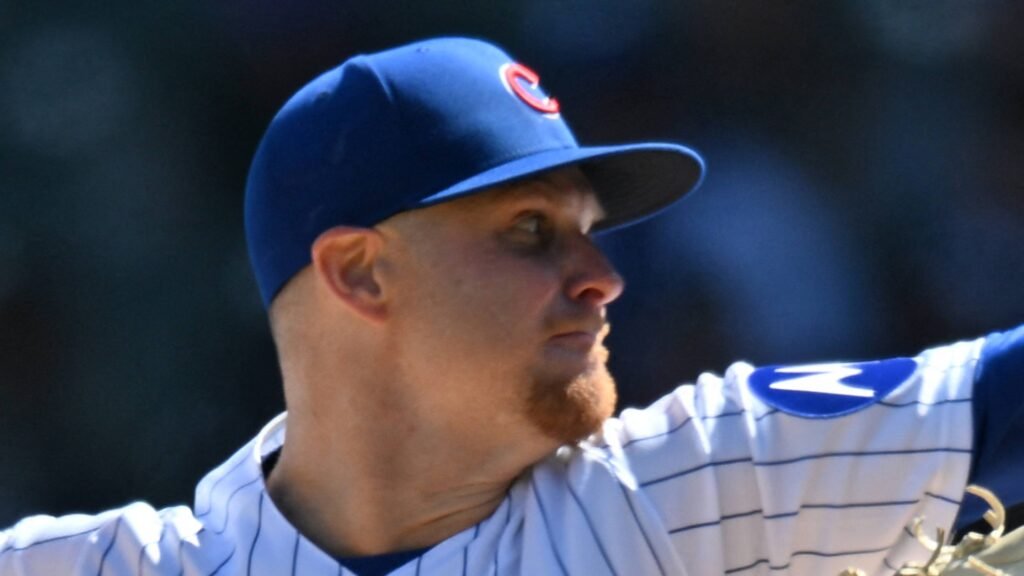
If you listened to Jed Hoyer’s end-of-season press conference, then you know that the big emphasis was on pitching.
The Chicago Cubs need an upgrade, and it will take significant work this offseason. There are major questions and concerns. Both the bullpen and the starters need reinforcements, and fans know it won’t be easy.
Cubs On SI writer Zoe Grossman highlighted the systemic issues the Cubs have had with their pitching approach and why they need to develop more homegrown talent. It’s an issue that is really starting to catch up to them – look no further than how many arms are a lock for the 2027 rotation.
As of now, Cade Horton is the only lock for the 2027 Chicago Cubs rotation. And that’s scary to think about.
For a team that made the playoffs the past two years, the Cubs are without any guarantees. Justin Steele has a chance, but it’s too early to tell how well he can perform after missing significant time due to injury.
Ben Brown has moved around, missed time, and never had a consistent role. He’s proven to be a valuable player when healthy, but can the Cubs fully count on him to start? One can hope he regains form and provides the Cubs with a long-reliever/sixth rotational spot.
Edward Cabrera, the prized acquisition from last offseason has turned out to be a bust. Whether it was injuries or struggles on the mound, Cabrera couldn’t provide for a struggling rotation. Although Cabrera is returning next year, it’ll be difficult to count on him in a similar capacity. Might the Cubs be left with no choice? Sure, but this season was rough enough to take him off the list of locks.
Before his season-ending injury, Cade Horton had dominated. He was the runner-up for the N.L Rookie of the Year and was working toward becoming the ace of the pitching staff. The injury was a huge setback, but the full expectations remains that Horton comes back and competes for the top spot in the rotation. That’s just how good he has been.
If the Cubs want to revamp their pitching infrastructure, it all starts with Horton: A homegrown pitcher who actually had success in the big leagues. The Cubs are looking to get it off the ground after their 2026 draft consisted mostly of pitching led by first-round pick, Cade Townsend.
To be sure, the Cubs were thought to be heading in the right direction when they drafted Jordan Wicks, Jackson Ferris, and D.J Herz, but Wicks didn’t pan out, and the others were traded away. Luke Little and Porter Hodge were young guys who could have developed into reliable bullpen arms, but injuries played a factor for Hodge, and Little struggled every time he got called up.
All of this has left the Cubs with no choice but to change their pitching structure. Horton will remain a key piece of the puzzle, but learning who else they can count on, specifically in the starting rotation, may have to involve some trial and error.
Sign up for our free newsletter to stay up-to-date with all things Chicago Cubs.
 Add us as a preferred source on Google