


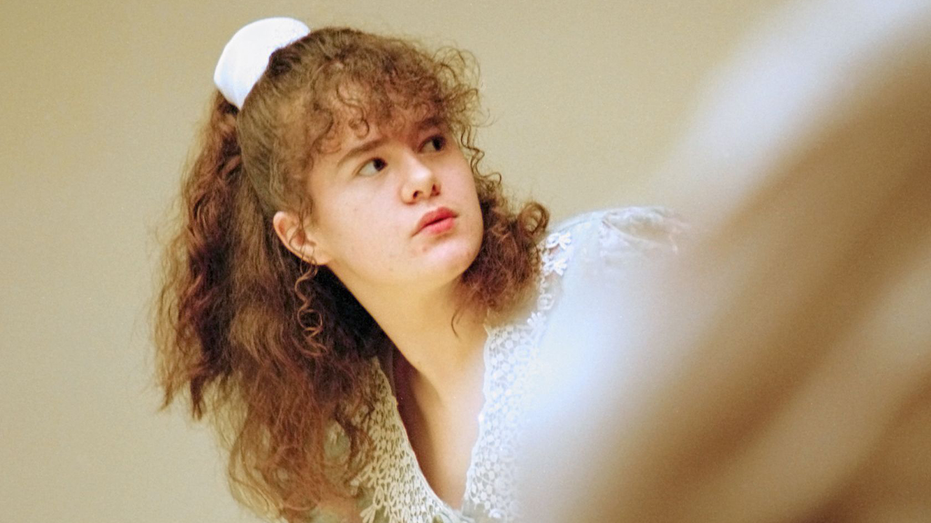



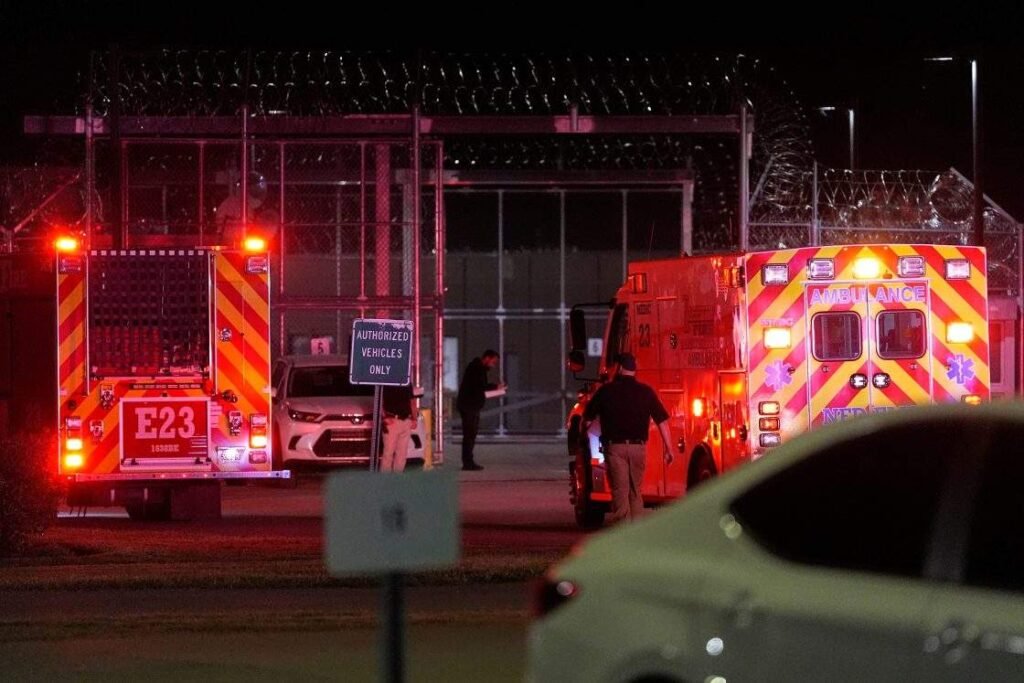
Christa Pike, who was sentenced to death in 1995 for murdering her classmate, survived two doses of a legal injection Wednesday in a botched execution and was transported to hospital.

Pike, 50, was alive and making audible snoring sounds after receiving the drugs and was taken by ambulance from the prison, her lawyers said, according to the Associated Press.
She was being treated at a hospital; they said they had not been provided updates on her condition.
As of Thursday morning, it is unclear whether she is still alive, the Death Penalty Information Center says.
She was scheduled for execution at 10 a.m. Wednesday morning for a killing she committed at 18 and would have been the first woman to be executed in Tennessee in 200 years.
A Tennessee appeals court initially halted the lethal injection an hour before it was to start; later in the day, the U.S. Supreme Court overturned that stay, permitting the execution to go ahead.
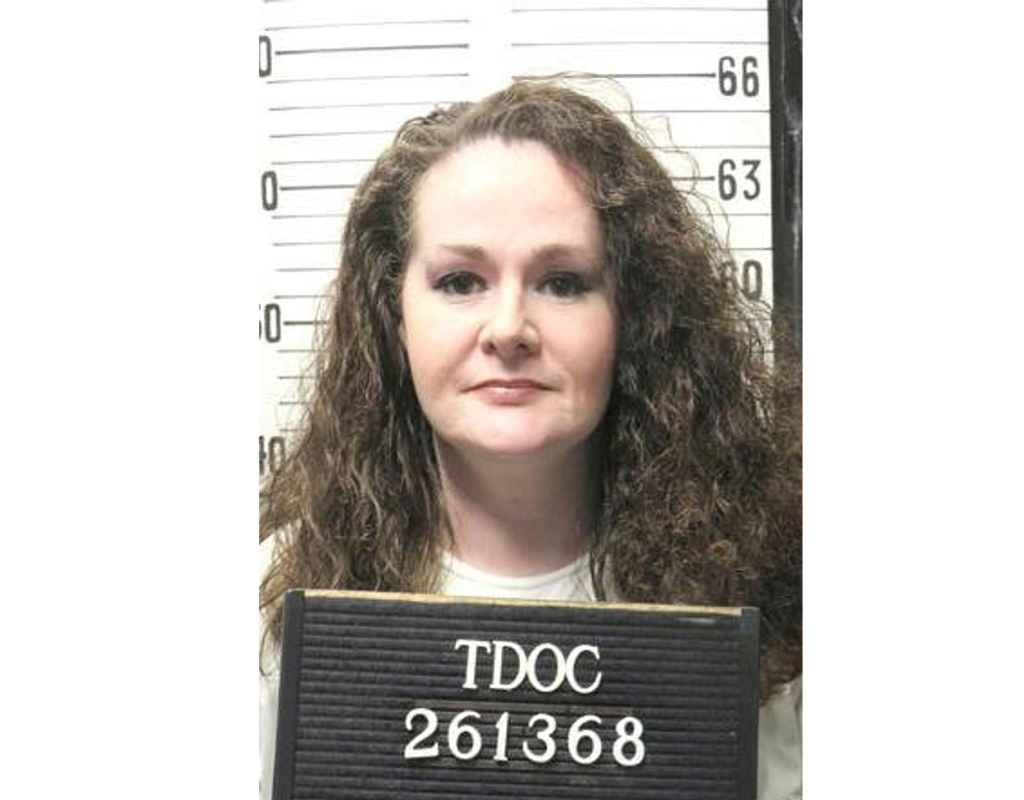
This photo, provided by the Tennessee Department of Correction, shows Christa Pike on Jan. 12, 2023.
TDOC via AP
Pike was administered two doses of pentobarbital, lawyers said in an emergency motion to halt and stay the execution late Wednesday, which ordered immediate medical care for the death row inmate and noted that curtains in the observation gallery went down twice, that she did not lose consciousness and had a perceptible heartbeat.
In a statement to the Associated Press, Tennessee Governor Bill Lee said he ordered “a comprehensive, third-party review to determine exactly what occurred” and that a remaining state execution scheduled for this year will not take place.
“Carrying out a lawfully imposed sentence is among the State’s most serious responsibilities, and the people of Tennessee expect it to be done in a manner that is not only legal and constitutional, but is effective,” he said.
The Tennessee Department of Correction said in a statement that it “followed every step of the State’s lawful, established execution protocol approved by the Attorney General’s Office,’ the AP added.
During executions, the state’s protocol calls for a second dose to be administered “if the inmate is not deceased” after the first and mandatory five-minute waiting period. It does not provide guidelines on what happens if the inmate survives a secondary dose.
Robin M. Maher, executive director of the Death Penalty Information Center, said what Pike experienced is “singular and unparalleled.”
Seven other people have survived medical complications due to an execution failure or the team’s inability to access a vein to administer the drugs. No one has stayed alive after receiving the drugs used in such executions, Maher added.
While Pike’s circumstances are unprecedented, bungled executions have occurred recently in other states, including the execution of a man who suffered a prolonged death after choosing to be killed by firing squad over concerns that the lethal injection could cause complications.
Mikal Mahdi, a South Carolina death row inmate, died, but only after death row shooters missed their target.
His lawyer said he opted for the firing squad method because he was concerned about the use of lethal injections, as post-mortem results indicated the use of higher-than-normal dosage amounts and medical complications in previously executed inmates.
On Jan. 31, 2025, South Carolina inmate Mario Bowman was administered double the typical lethal injection dose. Most states use five grams of a combination of chemicals, but Bowman was given 10 grams of pentobarbital.
His autopsy revealed that he suffered from pulmonary edema, a collection of blood and fluid in the lungs.
Pike’s lawyers, Randy Spivey and Kelly Gleason, said in a statement Wednesday night that “the State of Tennessee once again failed to carry out a lawful execution.”
“We take no pleasure in being right, but the concerns raised by Ms. Pike proved to be true: difficult vein access, blown veins, degraded pentobarbital, no emergency medical care available when things inevitably go wrong, all under a protocol that remains veiled in secrecy.”
Reporters observing Pike’s execution attempt from a separate room told the AP that prison officials raised curtains to the execution chamber at 7:27 p.m., where they saw Pike strapped to a gurney.
“I’m going to leave this world the way I spent most of my life and that is in love,” she said in her final statement.
According to the AP, witnesses reported that she remained conscious and at one point raised her head and asked prison officials if her arm was supposed to feel that way.
Witnesses said a second dose was administered at 8:26 p.m., but that laboured breathing and snoring sounds could be heard coming from Pike behind a closed curtain until the microphone was cut off at 8:53 p.m., at which point media and witnesses were escorted out of the room.
Tennessee has not executed a woman since 1820. Since 1976, 18 women have been put to death in the U.S., equating to about one per cent of all executions, according to the centre.
— with files from the Associated Press
© 2026 Global News, a division of Corus Entertainment Inc.