



The ‘Burnham Bounce’ Is Real But Fragile
Despite the new prime minister’s polling bump, Labour remains vulnerable on immigration.
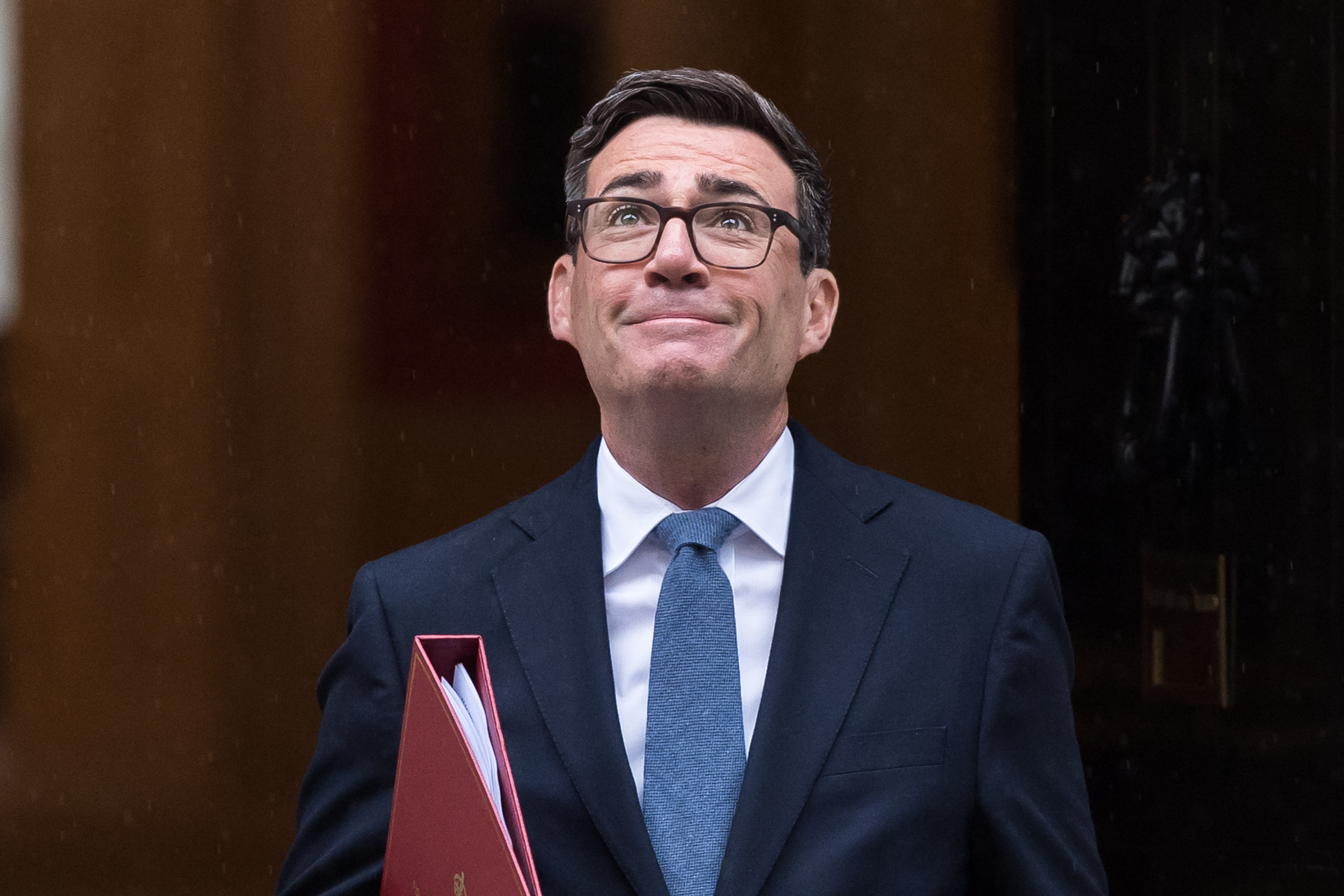
Ever since Andy Burnham set his sights on Downing Street, he has presented himself as a normal, down-to-earth bloke. With his northern accent and smart-casual dress sense, it is hard not to contrast him with the rest of the Westminster elite, at least in style if not in substance.
Since he ousted Keir Starmer in July, there has been a steady drumbeat of policy announcements, all ruthlessly targeted at ordinary people’s concerns—especially on the cost of living. Burnham has announced cuts to taxes on energy bills, a cap on bus fares, a crackdown on “rip-off” online subscriptions, a boost to apprenticeships and technical education, an end to “ugly” high streets, and so on and so on. That these policies themselves don’t amount to much (for instance, the average saving on an energy bill will be £3.75 per month) is not the point. What matters is that these are bread-and-butter issues that normal folks actually care about. The message is loud and clear: Andy is on your side.
The polls seem to have rewarded Burnham’s cost-of-living policy blitz. Reform UK, having topped over 100 consecutive polls, has slid down to second place. Burnham’s favorability ratings are the highest for any prime minister since Boris Johnson. And so it is now a distinct possibility that the Labour government, one of the most unpopular in history, could actually win a second term. A party that was regularly polling at less than 20 percent, third behind Reform and the Conservatives, seems to have staged a remarkable turnaround.
The media-class consensus is that Burnham has successfully pitched himself at Labour’s old heartlands—the so-called “red wall” of working-class, left-behind parts of the country, who first broke with the party over Brexit and were starting to be enticed by Nigel Farage. Burnham’s folksy appeal and commonsense leftism have helped to slay the dragon of “populism.” But this is not the real source of the Burnham bounce.
What is really driving Burnham’s favourable polling is the return of Labour’s more middle-class, progressive voters. Disillusioned with Starmer, these voters had sought refuge in a resurgent Green Party and that perennial “protest party,” the Liberal Democrats. Burnham’s achievement is to have brought these left-ish voters back into the Labour fold.
And while the left is lining up behind Burnham, the right is now split between three parties: Reform, the Conservatives and the new kid on the block, Restore Britain. Of the three, only Reform has a real chance of ousting Labour in a general election—the Tories have been reduced to a husk, and Restore will have to throw everything at keeping Rupert Lowe’s Great Yarmouth seat (for all of Lowe’s massive social-media presence, he is probably better known on the American right than he is among “normie” British voters). In the UK’s first-past-the-post system, the fragmentation on the right means that Labour can still win plenty of seats, even on a reduced vote share. The willingness of left-wing and centrist voters to vote tactically against the right makes a Labour victory even more likely. (There is simply too much bad blood between the right-wing parties for tactical voting against the left to have the same kind of impact.)
There are reasons to suspect, however, that Burnham’s honeymoon won’t last. The summer break has allowed him to govern by issuing press releases and producing TikTok videos, without any challenge or scrutiny from Parliament. In the autumn, his first budget is likely to bring painful tax hikes or cuts in spending—or both. He has also promised to tackle questions that have proved intractable for past prime ministers, such as the cost of adult social care and the ballooning welfare bill, for which there are no universally popular answers.
Then there is migration, by far the biggest issue in British politics, the problem that angers voters the most. Yet it is the subject Burnham is most at pains to avoid talking about, lest it alienate his left-wing MPs and Labour’s activist base. When pressed on the subject by interviewers, he vows to be “relentless” in tackling illegal migrants, but policies to stop the boats have not been forthcoming.
If you are a moderately informed voter in the UK in 2026, it is impossible to be unaware of the migrant crisis. Each day brings new horror stories of women being beaten and raped by random strangers who arrived illegally on a small boat. The British high street has been transformed by criminal migrant gangs, who use barber shops and vape shops as fronts for their black-market businesses. In Burnham’s first two weeks in office, more than 2,000 “asylum-seekers” crossed the English Channel. A new Chinese-made “megadinghy,” larger than a commercial airplane, brought 230 illegal migrants to Britain—a new single-vessel record. That not-so-small boat was on the front page of just about every national newspaper and the top item of every phone-in radio show.
What’s more, the migrant crisis is now spreading across the country, well beyond Reform’s heartlands. Asylum-seeker accommodation, once confined to the most deprived areas, has started to pop up in leafier climes. For instance, the tiny 400-person village of Piddington in Oxfordshire has erupted over plans to house 1,250 male asylum seekers in a nearby army barracks. In response, the Lib Dem–voting residents have taken the nuclear option of voting to secede from the United Kingdom. The local “referendum” has no legal force, but it does convey the sense of anger and bewilderment felt in wealthy, liberal parts of the country that might previously have posed with “Refugees Welcome” placards. These voters are unlikely to become Reform converts anytime soon, but they may at least start to view the left and centrist parties with the skepticism they deserve.
So yes, the right should fear the Burnham bounce—not because “Our Andy” is the prole-whisperer that his media cheerleaders believe, but because it highlights the divides on the right that could squander the political opportunities on offer. Allowing Burnham to coast to victory would be an unforgivable error.
The post The ‘Burnham Bounce’ Is Real But Fragile appeared first on The American Conservative.