



Mapping Air Pollution With MAIA Sensors in Addis Ababa

NASA/JPL-Caltech
Description
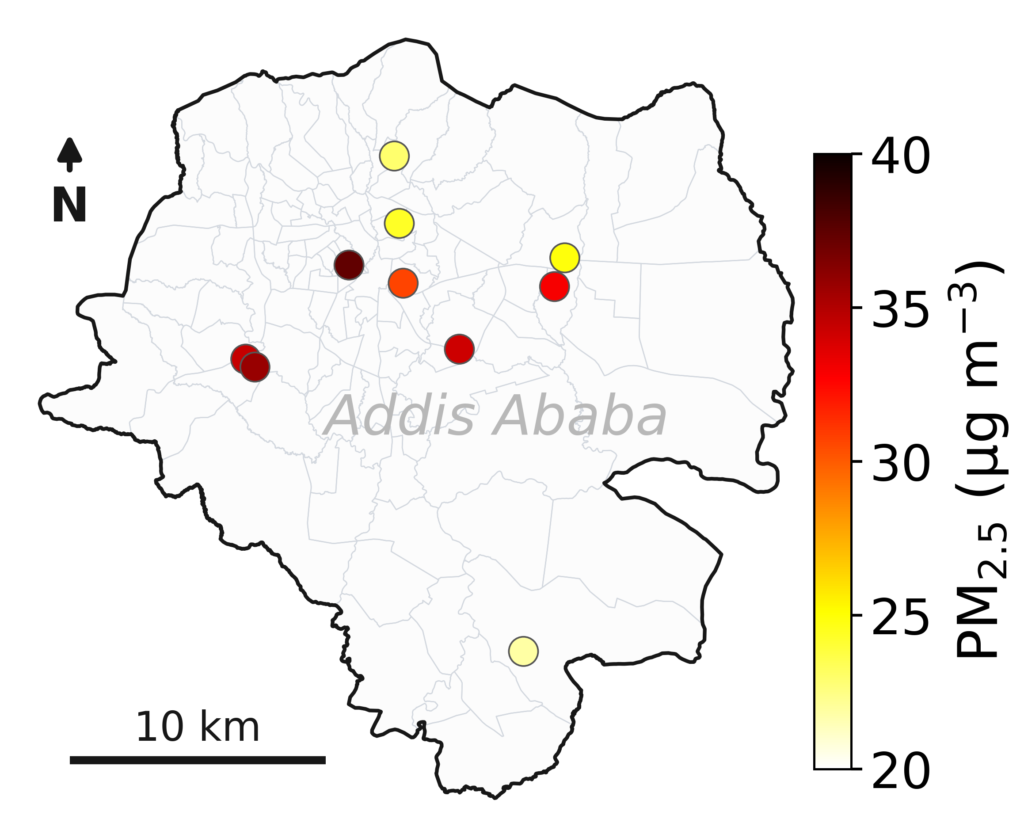
This map of Addis Ababa, the capital of Ethiopia, shows the locations of 10 air sensors that NASA’s Multi-Angle Imager for Aerosols (MAIA) mission is using to provide one of the most detailed looks ever at the city’s air pollution. Over the course of three years, these sensors measured particulate matter that is 2.5 micrometers or less in diameter, also known as PM2.5. Black carbon, or soot, is an important component of particulate pollution in Addis Ababa, which studies have linked to impacts on low birth weight, brain development, respiratory conditions, and premature mortality.
The color bar at right indicates air quality variations from 20 to 40 micrograms per cubic meter across the monitoring stations, with the darkest red being the poorest air quality.
In Ethiopia, black carbon is commonly produced by diesel vehicles, fires, and other combustion sources. Detailed measurements from the MAIA sensors reveal how Addis Ababa’s air pollution changes by time of day and season, including spikes produced by rush-hour traffic and holiday celebrations. The findings are relevant to cities around the world, including in the United States.
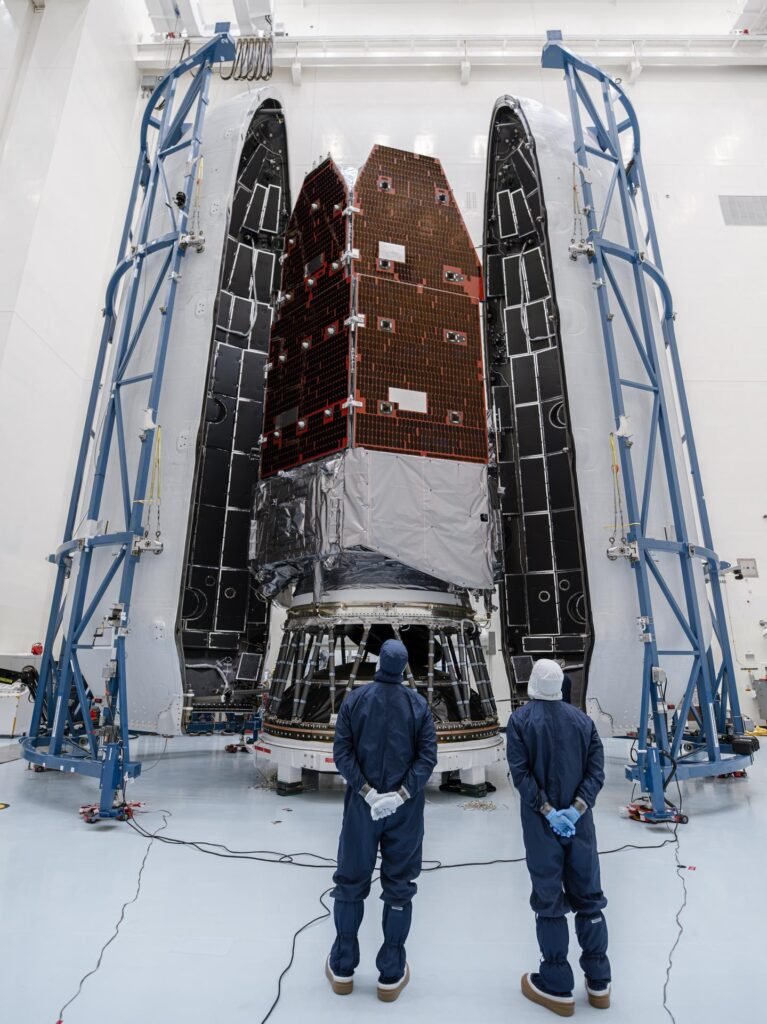
MAIA’s air pollution research is focused on a dozen regions around the globe, including three in the U.S. centered on Los Angeles, Atlanta, and Boston. The mission consists of a ground-based sensor network already in operation as well as a space observatory, which uses a camera built at NASA’s Jet Propulsion Laboratory, that will be launched by the Italian Space Agency (ASI) on an ASI satellite no earlier than late 2027. The camera is specially designed to help identify different types of PM2.5 aerosols based on how they reflect light, making it possible to map particle concentrations over each region that the mission studies.