




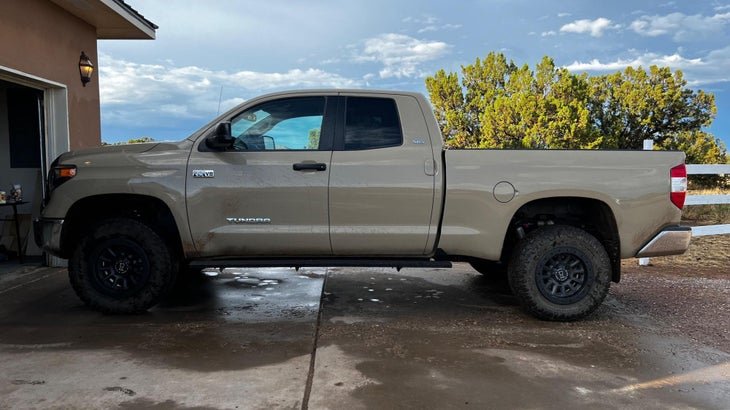
Published August 20, 2026 06:00AM
If you’re thinking about building an overland rig, chances are pretty high that one of the first modifications you’ll consider making to your vehicle is upgrading its suspension. It’s the single modification that can make the biggest difference in how a vehicle drives, but if you’re not careful, it’s also one of the easiest ways to ruin your rig.
A solid suspension upgrade can totally transform how a truck drives off pavement. It will typically yield more ground clearance, give you the ability to run a larger tire without rubbing, and can help your vehicle handle a heavy load better. A cheap suspension lift, on the other hand, often consists of a spacer that sits on top of your vehicle’s struts or springs, and usually makes your rig ride like a dump truck—while introducing a whole host of other issues.
I’ve been modifying various trucks and 4x4s I’ve owned since 2007, and in that time have learned a lot about what to do and what not to do. Here’s some info I wish I’d known when I was starting out in the world of off-road adventure rigs.
Beware Of Cheap “Lift Kits”
As I alluded to above, most cheap lift kits just consist of a spacer that sits on top of your vehicle’s struts in order to gain more height. They don’t increase your wheel travel, so you won’t get any performance benefits out of them or a smoother ride, and they’ll likely just create more problems for you. There is not an aftermarket company out there that has the resources or engineering team to match what the OEMs (Original Equipment Manufacturers) design, so if you think a few hundred dollar part or kit is an “upgrade,” you’re kidding yourself.
Every Action Has an Equal and Opposite Reaction
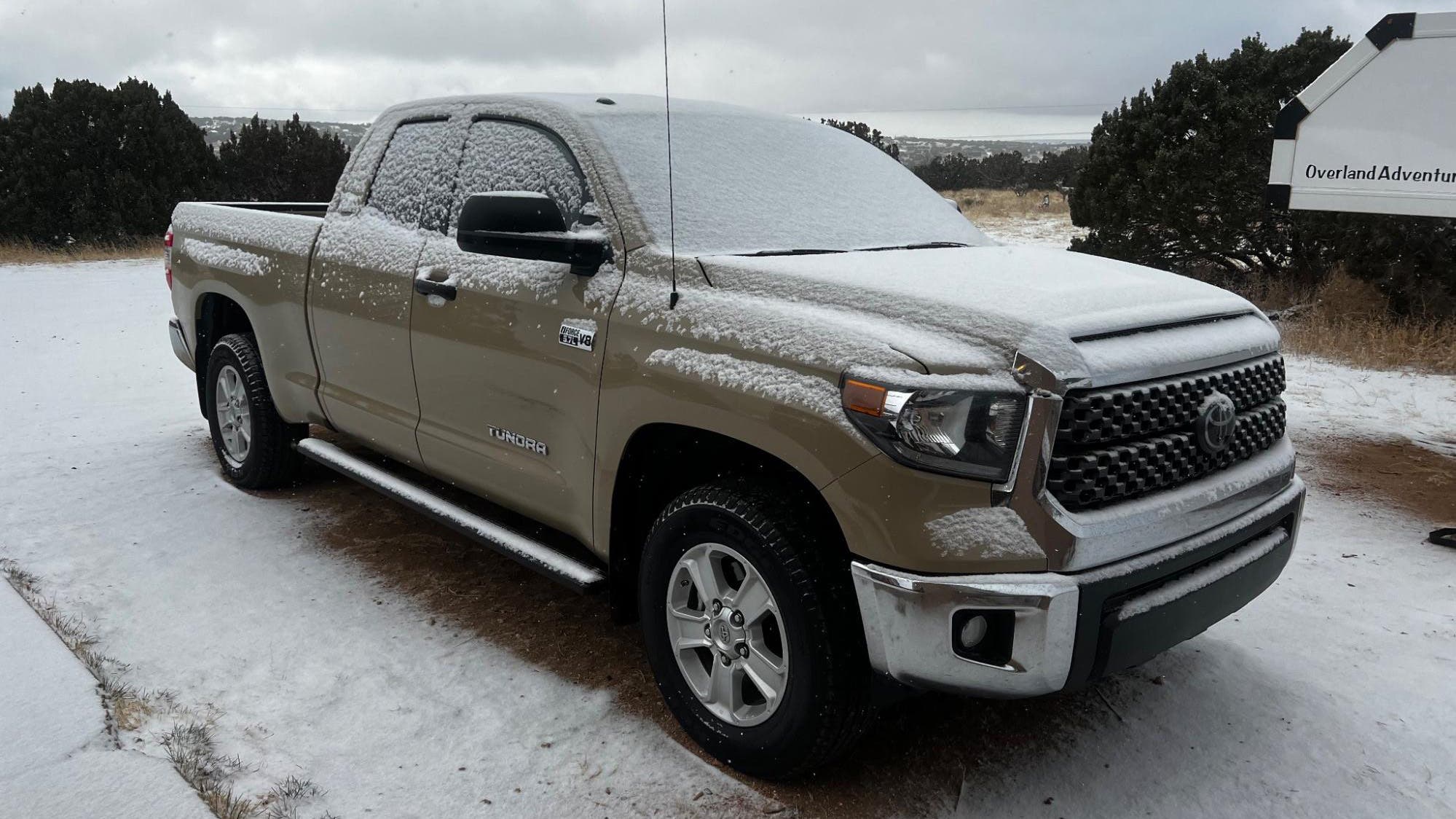
My truck when it was stock (which lasted only a few weeks… Probably should’ve kept it that way)
Newton’s Third Law applies to trucks, too. When you modify a vehicle, you’re changing the way it was designed to operate from the factory by the engineers who built it. There can be good reasons to do that—say, if you’re building a rig for a very specific purpose like traversing snow fields in Iceland—but it’s really easy to get caught up in thinking you absolutely have to modify your rig just to make it down a Forest Service road. In reality, your stock 4×4 pickup or SUV will do the job just fine.
First, increasing the ride height of a vehicle by lifting it raises the vehicle’s center of gravity, which impacts handling and aerodynamics. So, once you slap that lift kit on, not only have you increased your rig’s rollover risk, you’ve also changed the way the vehicle behaves in a crash. The automakers have to comply with all sorts of federal safety regulations, and they conduct their testing on stock vehicles—not vehicles with aftermarket lift kits installed (or, for instance, other mods like steel bumpers bolted to them).
I’m not saying that lifting your truck or adding a winch bumper immediately makes it a death trap. I’m saying that most aftermarket companies aren’t subjected to the sort of testing the automakers are, and they don’t have the capacity to test their components in the same way. So, there’s really no way of knowing how safe or unsafe a modified vehicle is.
As I mentioned before, aerodynamics also change when you lift a truck. Not only does that mean you’ll get worse fuel economy, but it also impacts your vehicle’s cooling system by disrupting the vacuum of air that flows underneath the vehicle. That can greatly affect performance, and make your truck worse at towing and hauling (you know, the whole reason to drive a pickup in the first place).
This video is a great deep dive on what lifting a truck and adding larger tires actually does to it. In it, the host interviews Dave Harriton, the owner of American Expedition Vehicles (AEV), who’s one of the foremost experts on vehicle modification in the overland and off road industry (more on them later). One of the most eye opening bits of the video comes at minute 6:18, when Harriton says if you increase the tire size of a vehicle by 15 percent, you should decrease its Gross Vehicle Weight Rating (GVWR) by 15 percent to compensate. In layman’s terms, that means big tires and a lift make your truck less able to do truck things.
I’ll use my 2018 Tundra as an example to help illustrate how big of an impact that is. Given that rule of thumb, when I was running 35s on my truck, it effectively should’ve had its 7,100-pound GVWR reduced by 9 percent, or 639 pounds, to operate as Toyota intended it to. That’s a pretty serious capacity reduction for a truck with an already low 1320-pound payload.
High End Shocks Require a Lot More Maintenance
Ok, so “lifting” a truck isn’t always a good thing. What about just swapping the stock shocks for higher end ones?
One thing I didn’t realize when I upgraded my truck’s suspension was that fancy shocks and suspension components require a lot more maintenance, and have significantly shorter service intervals than standard shock absorbers. In some cases, high-performance shocks need to be rebuilt every 20K-30K miles (or sooner), compared to most standard shocks that typically last more than 70K miles. Why? Because those fancy triple-bypass race shocks that can make your rig ride like a Baja trophy truck come from the off-road racing world, where they completely rebuild shocks after each race (which might be as short as 500 or 1000 miles).
If you google “how to make my Tacoma/Tundra/F150/Ranger” ride better off road, or walk into an overland shop and ask the same question, chances are you’ll be steered towards a set of Fox or King or another brand of fancy race shocks with external reservoirs and adjustments for compression and rebound (just like a full-suspension mountain bike).
What forum members and most shop owners won’t tell you is how often those shocks need to be rebuilt: if you drive an average of 12-15K miles per year like most Americans, you’re looking at a rebuild every two years (or sooner depending on how you’re using the vehicle). That can cost more than $200 per shock for parts alone. If you don’t have a local shop that can handle the rebuild, you’ll have to pull them off your truck yourself and ship them out to be rebuilt, which means your truck will be out of commission for a week or two unless you have a backup set.
If all of the extra expense and downtime doesn’t sound like a big deal to you, hit the “buy now” button and enjoy the incredible off-road ride you’ll get with those puppies. If, however, you’re like me and just want your truck to get you to a trailhead or a sweet dispersed camping site in a little more comfort, skip the race shocks—they just aren’t worth the hassle for most people. You’ll be better off with something like a Bilstein 5100, OME Nitrocharger (which I ran on my 2000 Jeep Cherokee back in the day and loved), or Eibach Pro-Truck. Shocks like these will provide a solid upgrade in ride quality over stock but are known to last 100K miles and don’t require maintenance. You won’t be racing Baja with them, but shocks like these are probably what most overlanders should be running on their vehicles.
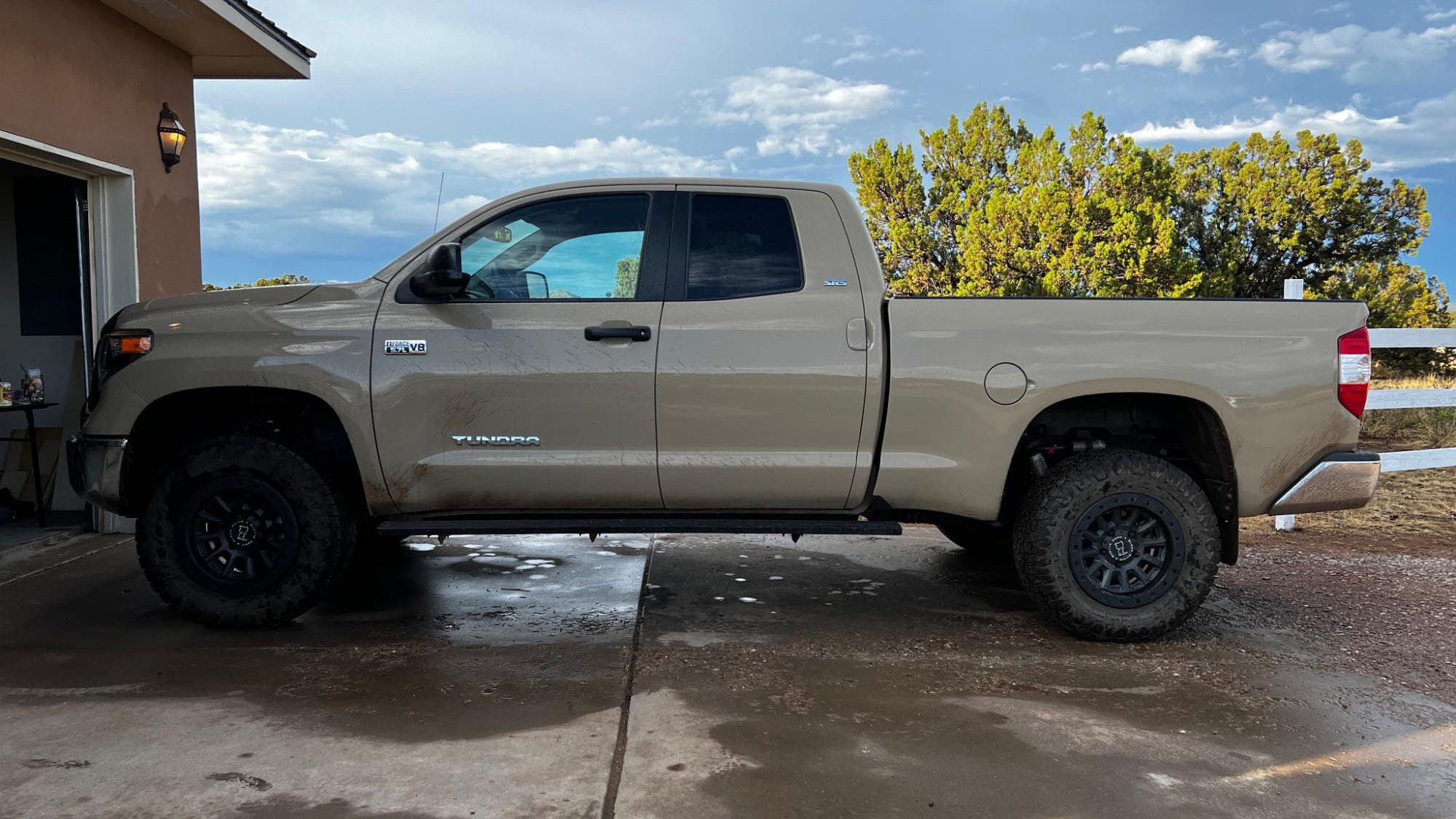
If you are willing to spend a little more, there are a few shocks that offer good compromises between higher performance and longevity, like OME BP51s, Dobinsons MMRs or Bilstein 8100s. A few years ago when I bought my 2018 Toyota Tundra, I installed Old Man Emu BP-51s, which are high-performance, internal bypass shock absorbers with a large, 2 inch (or 51mm) bore size and remote reservoirs for more oil capacity. They have significantly more oil capacity than my truck’s stock shocks did, and are tuned to have a soft ride over small bumps and a firmer ride towards the end of the stroke to resist bottoming out over big bumps (again, think of it like a mountain bike). My truck rides incredibly well off road with them installed, but they also have a 70K mile service life before needing to be rebuilt. For me, a 70K mile service life was a compromise worth making for the increased off-road performance.
How Should You Modify a Vehicle, Then?
In short, if you want a reliable truck you don’t have to worry about, modify it as little as possible. The more modifications you make, the more problems you’ll introduce and the more maintenance you’ll need to do.
If you want a high-performance off-roader, you’re better off ponying up and buying something straight from the factory like a Ford Raptor, Silverado ZR2 or a RAM Prospector from AEV. AEV is one of the only aftermarket companies that works directly with vehicle manufacturers and is subjected to the same rigorous safety standards the OEMs are, so serious engineering and testing go into everything they build (and you can buy their stuff right off a dealer lot). The price tag for rigs like these is high, but in reality you’re getting a better product with components that are designed to work together as a system versus piecemealing parts together on your own (and often spending just as much or more in the end).
If you insist on modifying your rig, keep it simple (one way to do this is to look at how the manufacturers specced the off-road trim of whatever you drive and copy that as closely as possible). Don’t lift your vehicle over 2 inches, keep your tire size to “plus one,” or one size larger than stock, and skip the race shocks. You can thank me later.