



OREGON
Every night, they descend upon downtown Portland like mysterious black-cloaked characters from an old-fashioned Gothic novel — and for over a century, naturalists have wondered why. The Bird Alliance of Oregon believes that the crows — over 20,000 of them — converge during fall and winter for “information sharing,” i.e., at times caw-cophonous corvid conversations. We suspect their group chats involve subjects like where to find the best place to eat or which neighborhoods to avoid, all discussed in their customary caws, clicks and rattles. As caw-inspiring as this Crowpaloosa/Crowchella may seem, there is an inevitable downside: bird poo, gobs and gobs of it. After trying street cleaners, including the impressive-sounding Poopmaster 6000, Portland recruited some trained hawks. Overseen by the Bird Alliance, the “crow patrol” monitors the streets at twilight, and the licensed falconers send their hawks into the trees, like flying bouncers enforcing last call. In response, the crows make a discreet exit, Discover Wildlife reports. “Their very presence dissuades the corvids from hanging around.” Now if we could just find a way to dissuade ICE …
Elsewhere in Portland, locals have other problems. File this next story under “awkward conversations we’d like to avoid.” Imagine knocking on your neighbor’s door, not to, say, borrow a cup of sugar, but rather, ahem, to complain about the unpleasant odor wafting from the tiny home parked on that neighbor’s property. This was the situation for one fed-up couple living in Portland’s Parkrose Heights neighborhood. John and Trudy Benjamin told KOIN that the smell coming from their neighbor’s tiny home “is so bad, they’re forced to wear respirators on their own property.” And they’re suing to the tune of $200,000 for “the distress caused by the odor.” The problem began last year, after the neighbors wheeled a tiny home onto their property, and a resident moved in. According to the lawsuit, the tiny home contains a chemical toilet that’s not connected to the city’s sewer system. After repeated attempts to communicate with the neighbor about the smell with no resolution, the Benjamins filed a complaint with the city, which found the tiny home to be in violation of city code. But the problem persisted, and the Benjamins say the smell has resulted in respiratory illness, nausea, lightheadedness and headaches. Good fences may make good neighbors, as the saying goes, but apparently, a good septic and sewage system can also work wonders.
CALIFORNIA
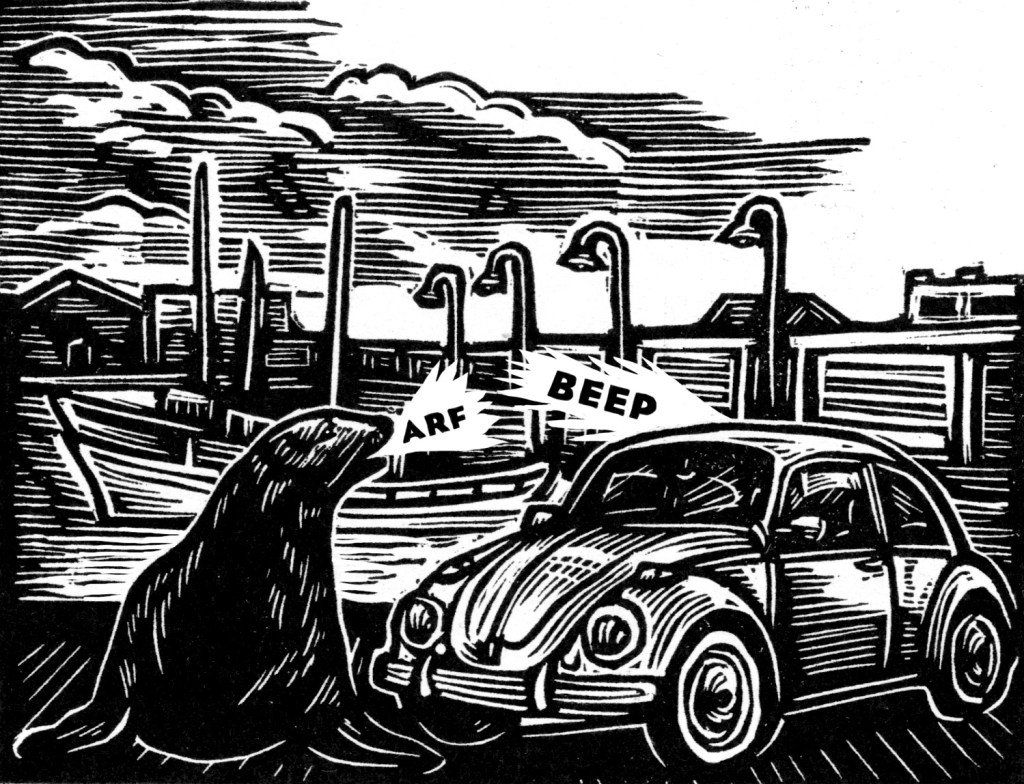
There’s a new sea-lebrity making waves at Pier 39 on San Francisco’s Fisherman’s Wharf: Chonkers, a 2,000-pound Steller sea lion. But just what makes this dock-lounging, barking, yawning pinniped stand out among the many dock-lounging, barking, yawning pinnipeds? People have peeped at San Francisco’s sea lions since forever, so why’s everyone “bonkers for Chonkers?” Well, for one thing, Chonkers is much bigger than the others. Steller sea lions (Eumetopias jubatus), and the California version ( Zalophus californianus), are two distinct species that differ, most notably in size. Stellers weigh up to 2,500 pounds and measure up to 10 feet long, while their California cousins generally weigh 900 pounds and reach lengths of about 7 feet. Sue Muzzin, a spokesperson for Pier 39, told SFGATE that Pier 39’s webcam typically gets about 2,000 visits a day, but after Chonkers’ made national news, viewing jumped up to 15,000. A stuffed animal in Chonkers’ image has been selling out, and perhaps he’ll achieve the legendary status of Humphrey the whale or San Francisco’s wild parrots.
THE PACIFIC NORTHWEST
For anyone looking to “visit” with a deceased loved one, air their feelings or express their grief, a wind phone can help provide the closure they’re seeking. What are wind phones? you ask. They’re rotary or push-button phones placed in secluded natural areas like parks or along walking trails or overlooking a beach. They’re not connected to any actual phone line; instead, people use them to “call” their deceased loved ones and carry on one-way conversations, Smithsonian magazine reports. “For many, it is a deeply moving, life-affirming experience.” There’s a list of wind phones posted on the Pacific Northwest Bucket List Facebook page: Grayland, Washington, for example, has one overlooking the ocean, while others are at Tacoma’s McKinley Park, Grandview Forest Park in Gig Harbor and O.O. Denny Park in Kirkland, Washington. Altogether, there are around 200 wind phones currently available throughout the U.S., and even more around the world. According to Taryn Lindhorst, professor of social work at the University of Washington, “There is comfort to be found through a one-way call.”
We welcome reader letters. Email High Country News at editor@hcn.org or submit a letter to the editor. See our letters to the editor policy.
This article appeared in the August 2026 print edition of the magazine with the headline “Heard around the West.”