




The cyclospora outbreak affecting produce from Taylor Farms de Mexico has sickened over 1,600 people across five states, including Indiana, Kentucky, Michigan, Ohio and West Virginia. It’s one in a long line of severe produce outbreaks, but this time, I’m reconsidering how I approach food safety, given that the greens meant to nourish us continue to pose contamination risks.
Over the last year and a half, I’ve used my Gardyn Studio, a hydroponic growing system, to grow my own produce in my small NYC apartment. I’ve harvested arugula, kale, lettuce, peppers, cucumbers, cherry tomatoes, herbs and edible flowers, even throughout the winter — and, more importantly, I’ve had full control over the safety of my produce.
What to know about the 2026 cyclospora outbreak
Cyclospora is transmitted through food and water contaminated with the parasite, with symptoms typically manifesting approximately 1 week after exposure, though cases can range from two to 14 days or longer. The 2026 numbers represent a significant increase from the 249 cases reported in the US during the same period last year.
According to The Cleveland Clinic, symptoms of cyclospora infection often include sudden watery stools and even explosive diarrhea. Other common symptoms include:
- Stomach cramps
- Bloating, increased gas and burping
- Nausea
- Unintentional weight loss
- Loss of appetite
- Extreme fatigue or weakness
While home-growing your produce doesn’t eliminate all food safety risks, it can eliminate the specific contamination risks present in mass industrial distribution systems and exposure to pesticides. Given these risks, many are looking for ways to bypass mass distribution entirely. This is why I started using the Gardyn Studio.
 Nasha Addarich Martinez/CNET
Why I switched to the Gardyn Studio
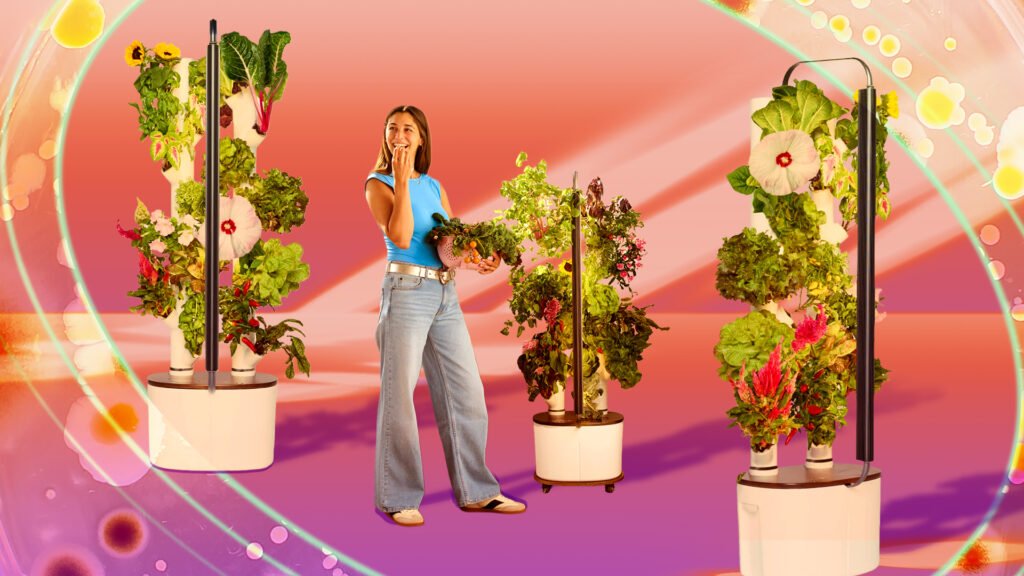
The Gardyn Studio is a compact, 4.5-foot hydroponic tower with 16 growing slots, LED grow lights and a mobile app that manages your growing from start to finish. Having used it for over a year, I have a clear sense of its benefits and shortcomings.
I appreciate how self-sufficient the device is: You insert the pods, set the lighting schedule, add water and plant food, and refresh the tank every few weeks. Other than that, the plants pretty much grow on their own. Not every pod is a success, though. In every cycle, at least two pods fail to grow. While Gardyn will send replacement pods, you will need the Gardyn Nursery (a separate $80 device) to grow the sprouts before you can insert them into the Studio.
I’ve found the harvesting time to be quick. My arugula reaches maturity in about three to four weeks. The Kale takes about five weeks. In both cases, the taste and quality are unsurprisingly better than store-bought greens.
The Gardyn Studio costs $579 and is great for small spaces. If you have a larger home, you can also consider the Gardyn Home ($899), which fits 30 growing slots, compared to the 16 on the Studio.
There’s also an optional membership that costs between $25 and $39 a month or $259 a year, which includes monthly credits you can use to buy more plants and access to Kelby, the AI gardener that will automate watering cycles and lighting based on your specific plants’ life cycles and the local environment. It also sends push notifications to the Gardyn app to alert you when to add water, add plant food or harvest.
Last year, a CNET Survey found that US adults who shop for groceries waste an average of $125 a month on food that’s not cooked or eaten. That’s $1,500 a year. I rarely waste food grown in the Gardyn since I harvest it as needed, so I rarely end up with excess greens wilting away in the fridge.
Gardyn specs at a glance
| Price | $579 (hardware) |
| Height | 4.5 feet tall |
| Floor Space | 1.4 square feet |
| Growing Capacity | 16 plant pods simultaneously |
| Technology | LED grow lights, automated nutrient delivery via app |
| Pod Pricing | $1.99 to $4.99 (member pricing); $4.99 (non-member) |
| Premium Pods | Up to $9.98 |
| Monthly Pod Credits | 5, complimentary with membership (10 with Gardyn Home) |
| Operating Cost | Minimal electricity (comparable to a smart bulb) |
| Warranty | 2 years |
| Membership | $25 to $39 a month |
| Trial | 30 days |
The pros and cons
While I use my Gardyn year-round, there are things to consider before committing to it. The upfront cost of $579 puts the Gardyn Studio in the same category as high-end kitchen appliances, but the benefits of growing my own produce at home and no longer having to buy it make it worth it to me.
Pros:
- Eliminates contamination risks
- Compact design that fits in small spaces
- Minimal maintenance (no soil or gardening skills required)
- Responsive customer service for pod replacements
- Reduced pesticide exposure
Cons:
- High upfront costs
- Some pods fail to grow
- Ongoing pod and nutrient costs
- No ability to grow root vegetables
For those without access to hydroponic systems
 Nasha Addarich Martínez/CNET
Growing your produce at home is still valuable, even at a smaller scale. Windowsill herb gardens require minimal equipment and investment. My first home garden was in a 10-inch planter, where I grew cilantro, basil and parsley, which I put on my windowsill.
Buying from local farms and building relationships with local farmers’ markets establishes direct supply chains from the source, without the middlemen (distribution centers). Inquiring about produce sourcing at your local supermarket creates incentives for transparency and regional cultivation. These approaches won’t prevent every outbreak, but they reduce dependence on centralized supply chains and create accountability between producers and consumers.
Food safety doesn’t (and shouldn’t) have to be a luxury. It does, however, require deliberate choices about where food originates and who controls its cultivation. The Gardyn Studio is one option among many, and the one that works for my lifestyle and home. What matters most is recognizing that alternatives to mass food systems exist.

Nasha is a Managing Editor for CNET, overseeing our sleep and wellness verticals. She is a nutrition, mental health, fitness and sleep science enthusiast. Her passion for mindful and holistic practices transcends her personal life and profoundly influences her editorial approach, as she weaves evidence-based insights with practical advice to inspire readers to lead healthier, more balanced lives. Throughout her career, she’s covered various topics including financial services, technology, travel and wellness.