



It was just five months ago when Andy Burnham retreated to his mayor’s office in Manchester, having been blocked by Labour’s ruling executive from standing for parliament.
When I met him there a few weeks later, he told me he planned to deal with his disappointment with some ambitious plans for his city region.
Burnham told me he wanted to appeal directly to Fifa to host the final of women’s football World Cup in in 2035 Manchester insteand of Wembley. “Imagine how electrifying that is for any girl growing up in the north of England,” he said.
He said he was also joining forces with other mayors for a “Great Northern” Olympic bid across the north of England, and a plan was also afoot to host the Ryder Cup in Bolton. Sports bodies needed “re-educating” about the rest of the country, he said.
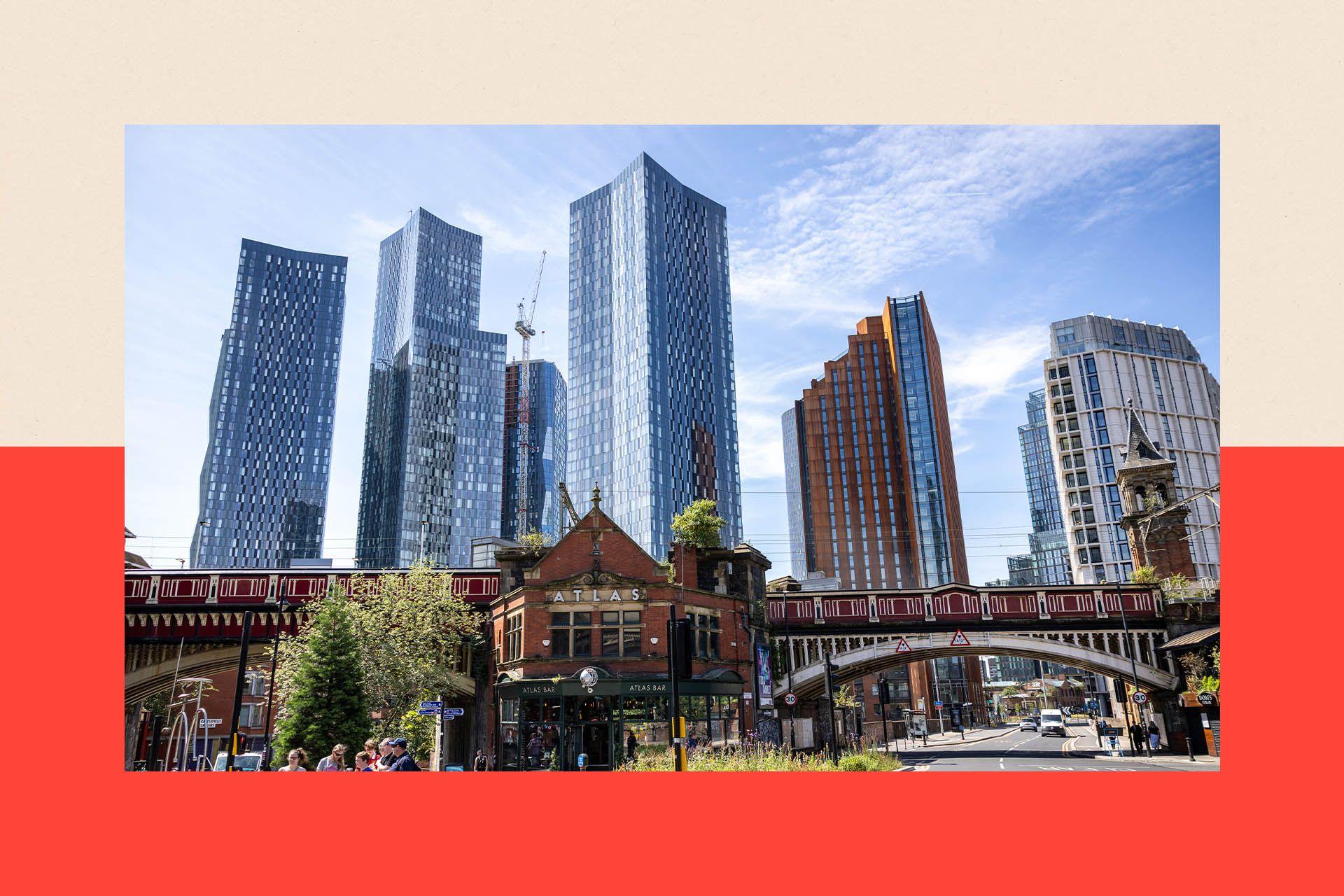 Image source, PA Media
Manchester has already poached the Brit Awards from London after half a century in the capital.
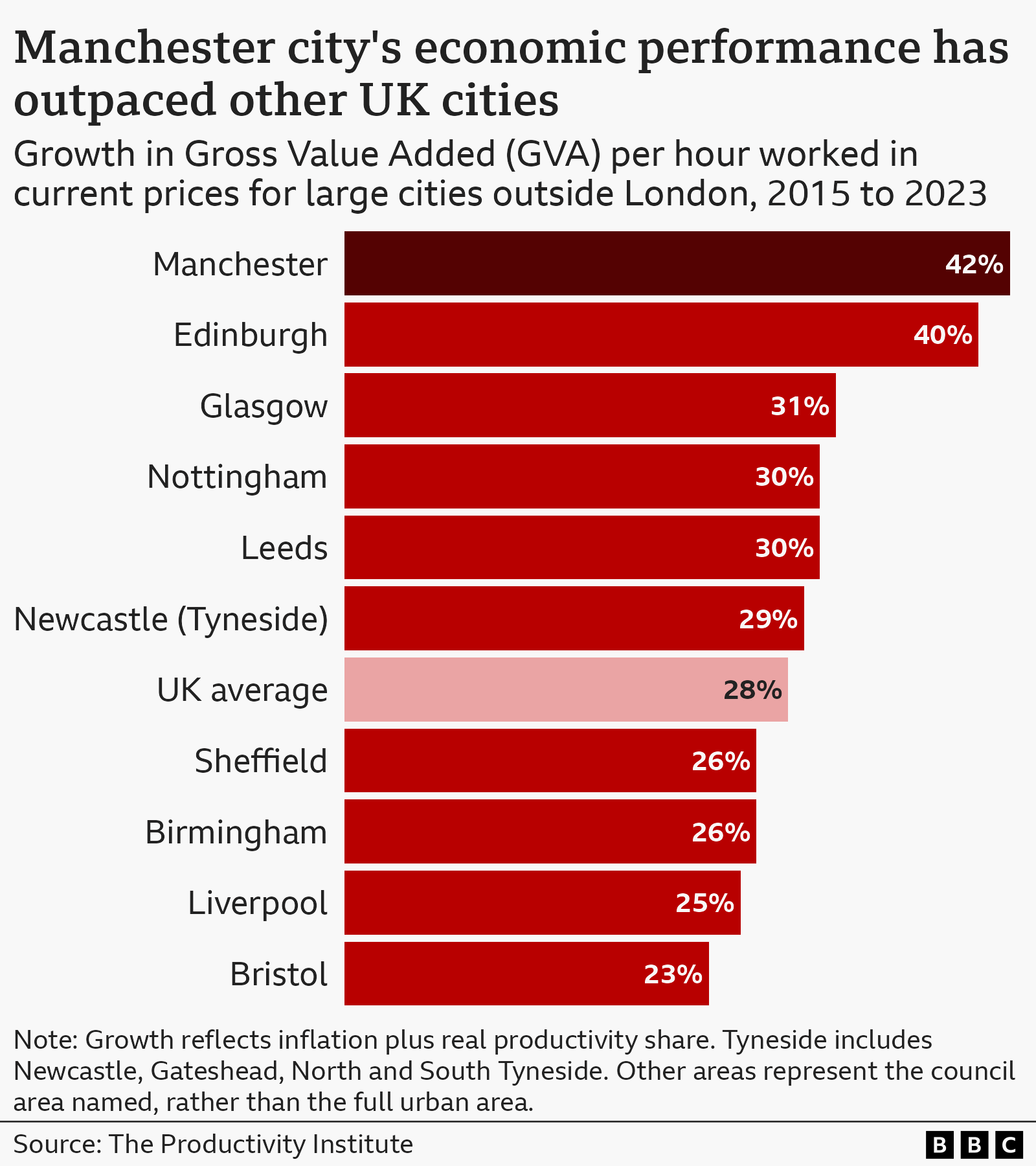
Big, bold gestures like these tell part of the story of what has happened in the city. Burnham’s civic ambition is a byproduct of Manchester’s status as the fastest-growing city economy in the country. As Burnham prepares to become prime minister, will he be able to apply the same model to the whole of the nation?
Manchester’s rise
Even before Burnham returned to parliament in June, there has been talk of Manchesterism as a political-economic philosophy that offers a programme for national transformation, rooted in a critique of a currently unresponsive, over-centralised British state.
The city has a long history of blending the freest of free markets with a strong social spirit. Manchester’s cotton traders championed free trade and liberal economics, at the same time as the emergence of the co-operative movement, the trade unions and the Suffragettes. Even the Manchester Ship Canal, the emblem of monopoly-breaking free trade, required local government intervention backed by the workers.
But for an understanding of contemporary Manchester, you need to go back to the summer of 1996.
Andy Burnham had left the north-west by then. He told me how when he first looked for a local media job after graduating in the early 1990s, all he could get was a role as an unpaid reporter on the Middleton Guardian.
“I had to do what so many people of my generation, born in the 60s or 70s in the north-west of England had to do to get on in life,” he said. “We had to go south.”
By 1996, Burnham was an MP’s researcher. That year, back in Manchester, the IRA detonated the largest bomb in the UK since World War Two, devastating the city centre,
The reconstruction in the aftermath of the attack marked the start of Manchester’s ascent from the doldrums of de-industrialisation. The essential idea provided by a group of local political, cultural and business leaders, and an architect called Ian Simpson, was that the city centre should be reshaped by demolishing, not repairing, many of the damaged buildings.
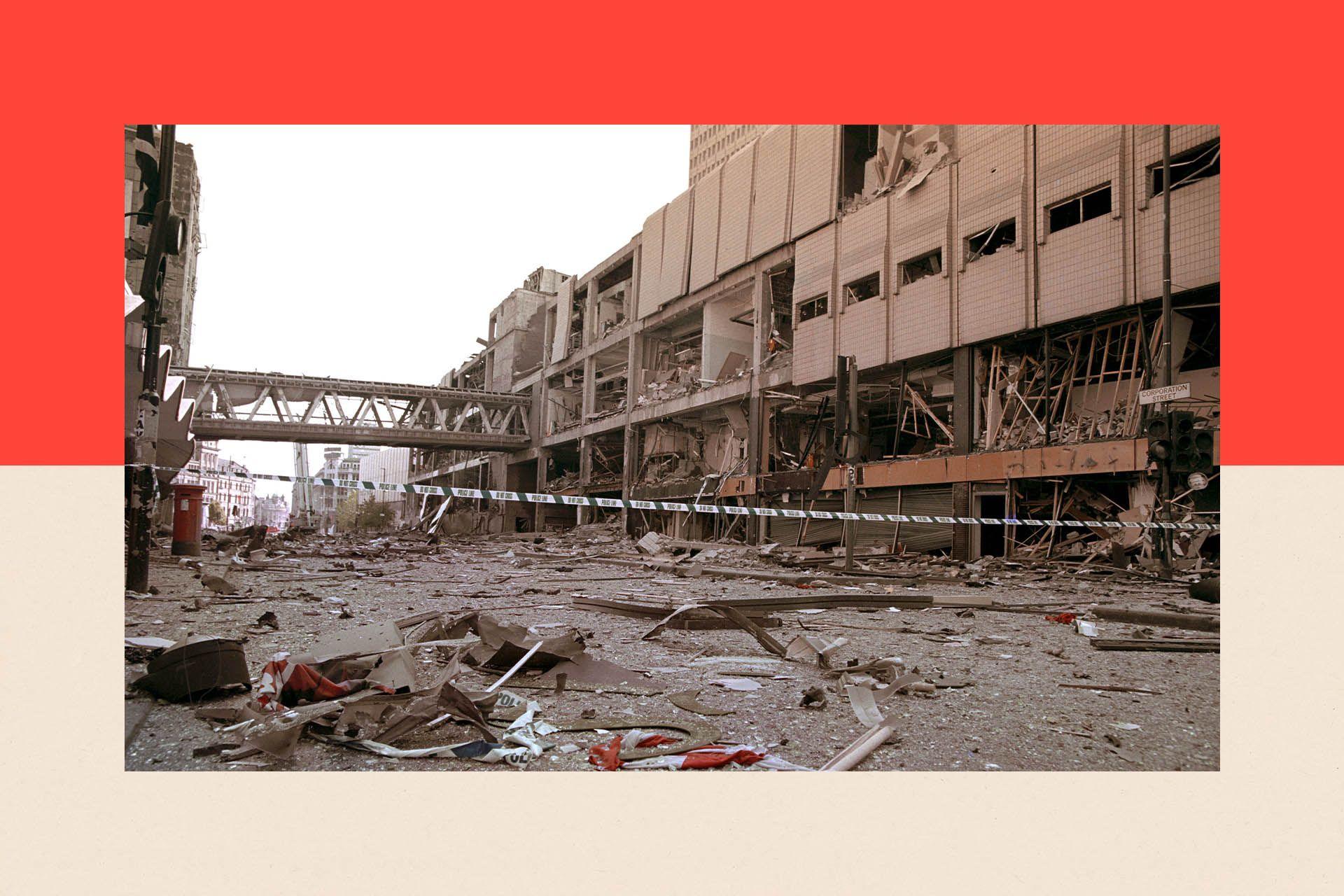 Image source, PA Media
From disaster could then arise a great opportunity to reshape the city’s geography and economy. Council leader Sir Richard Leese and his top civil servant, the late Sir Howard Bernstein set the tone for a variety of bold centrally driven strategic plans that were actually largely delivered by private capital and then significant international investment.
The council leadership was ruthlessly focused on transforming brownfield industrial sites. The private sector would go nowhere near these, but the council de-risked those investments with public money. It also sometimes stepped in to tide projects over during financial crises.
At the end of this process, private capital poured in, lining up the cranes and the hard hats. The council offered a flexible interpretation of requirements to build a proportion of “affordable housing”, sometimes effectively waived, sometimes met by funding building in cheaper areas of the city.
Paul Thwaite, the chief executive of NatWest, which has funded some of these projects, and who is on the board of the University of Manchester, says Manchester’s success story over the past 20 years was “built on there being a clear plan the private sector can get behind”.
Why hanging on to students matters
Such a shift would have been unthinkable a generation ago. The model of Manchester’s city centre development has succeeded in creating a critical mass of population, housing, jobs and service sector activity that has allowed it to turn its significant undergraduate population into a goldmine.
According to the mayor, more people from London had moved to Manchester (13,000) than the other way round (11,800) in the latest set of internal migration figures.
He put this down to a flow of young workers into the Manchester city centre service economy.
In a reverse from the 1990s, “no-one here has to leave to get on in life”, Burnham told me. “And in fact, there’s a net inflow of young people from London.”
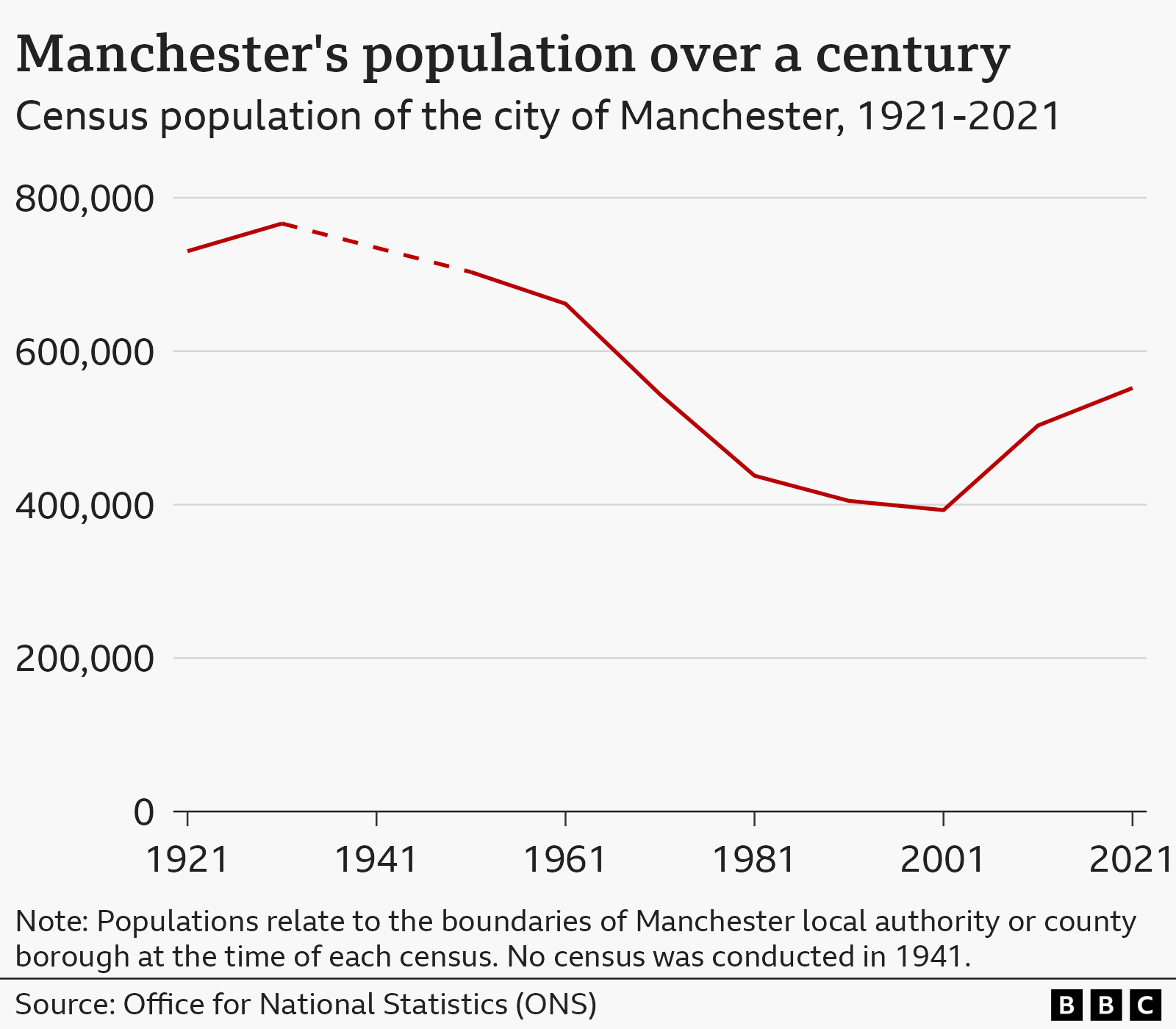
Manchester now retains over half its graduates, more than any other city apart from London, according to the Centre for Cities, and Manchester also attracts almost as many young graduates as it produces.
Tom Beahon, the CEO of Manchester-based sports brand Castore, who has not been shy about criticising some of the government’s business policies, told our Big Boss podcast earlier this year that the mayor had helped “attract inbound investment, making it a place that students want to stay after they graduate from the fantastic universities”. That in turn means more businesses want to launch in the city, he added.
It is a case study in agglomeration effects – the economic power of locating similar types of jobs close together. And if its infrastructure can keep up, Manchester’s economy will continue to fly.
Burnham’s Manchester
Andy Burnham is a product of this Greater Manchester and spent his decade as its first mayor trying to shape it. As Andy Spinoza, the foremost chronicler of Manchester’s turnaround, puts it: “Burnham jumped into a moving car, and by the end he was driving it.”
But what else is there to Burnham beyond driving that moving car?
While he has managed to ascend to the Labour leadership and the cusp of No 10 without revealing his wider policy plans, there is a fairly recent text already out there. In 2024 with his fellow north-west regional mayor, Merseyside’s Steve Rotherham, he published a book called Head North: A Rallying Cry for a More Equal Britain.
It was the basis for Burnham’s speech earlier this month on Manchesterism and remains his national political-economic-constitutional prospectus. The 10-point plan to “rewire” the country argues that better “homes, transport and jobs” across the country can only come from “a new set of principles and rules for the running of the British state”.
 Image source, Reuters
What underpins this is a determination to tear up two formulas that have long formed the backbone of how UK governments allocate money. The first is the Treasury’s Green Book, which decides infrastructure spending and which has traditionally valued existing areas of high growth and land value the most. In Burnham’s view, this drags investment in transport to the south of England.
The tangible example of all of this can be found on Platforms 13 and 14 of Piccadilly station in central Manchester. The only east-west train link for the entire region is here, and it is often jam-packed with trains and 40,000 daily commuters attempting to cross the Pennines and get to the airport. Burnham has long advocated for an underground four-platform “Kings Cross of the North” with a northern version of London’s Elizabeth Line.
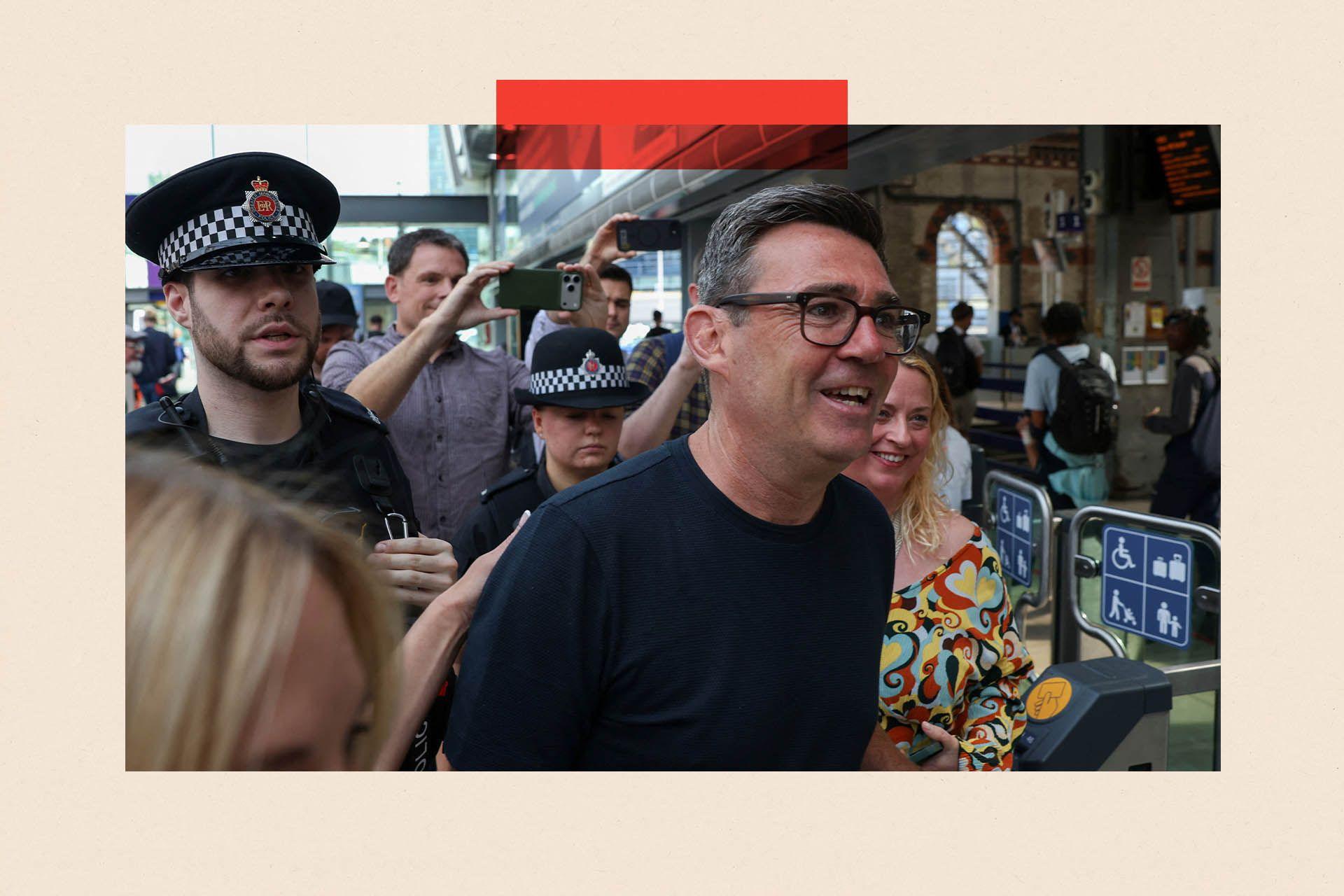 Image source, Reuters
He relays a story about his time as chief secretary to the Treasury in 2007 when he was told: “No project in the north passed the Green Book, Minister.” He told me the same in 2020 when there were murmurings of reform to the formula. Chancellor Rachel Reeves pursued pilot projects to change the approach that could favour local investment.
In the book, Burnham also advocates tearing up the Barnett formula, which allocates public spending, topping up spend for Scotland, Wales and Northern Ireland so they do not lose out to England as a whole. The effect, Burnham argues, is that the north of England is left squeezed in a “pincer”.
In Head North and his recent speech, Burnham points to Germany’s “Basic Law”, with its duty of “equivalent living standards” across the regions. Such a law, he argued, would protect local government and give regions a right to be consulted on long-term decisions.
Burnham also advocates significant constitutional change, including a form of proportional representation and the replacement of the House of Lords with a “Senate of the Nations and the Regions”, alongside devolution of powers over large swathes of public services to regional level.
On Net Zero he proposes a “Northern Way”, which subsidises the transition, retrofits, cutting bills, and building exportable locally owned industry. He contrasts this with a “Whitehall way”, which he characterises as bans, charges and taxes that hit the poorest.
The actual policy consequence of this will have to reckon with rising global energy prices, pressure on household budgets, and some impatience from North Sea energy interests to pump more oil and gas. There are some contradictions in for example, full tax and spend devolution for every region. Would the south-east get to keep the taxes it raises? Some aides recently played down any changes to the Barnett formula amid concerns from Scottish politicians.
The national stage
The fundamental difference between running a city region and a country is the need to raise the entire spectrum of tax revenues to fund spending. Or to borrow more money. The picture is rather constrained on both right now. Manchester has been agile in attracting private capital to build infrastructure, especially housing, partly because it had to. Can that stretch across the whole country?
With Manchester’s cotton traders in mind, I asked Burnham back in February if he considered the Manchester model to be politically left or right – an example of statism, perhaps?
“When it comes to right versus left, well, we’ve always been very pro-business, pro-enterprise here. We want people to succeed individually and businesses to succeed, but give back at the same time,” he said.
Some campaigners say that the dash for the gleaming towers and spires in the centre has left behind much of the rest of the region, and that the centre of Manchester is becoming a mini-London. While Burnham has criticised decades of “neoliberalism” and the “trickle-down effect”, the reality is it has been core to the Manchester model.
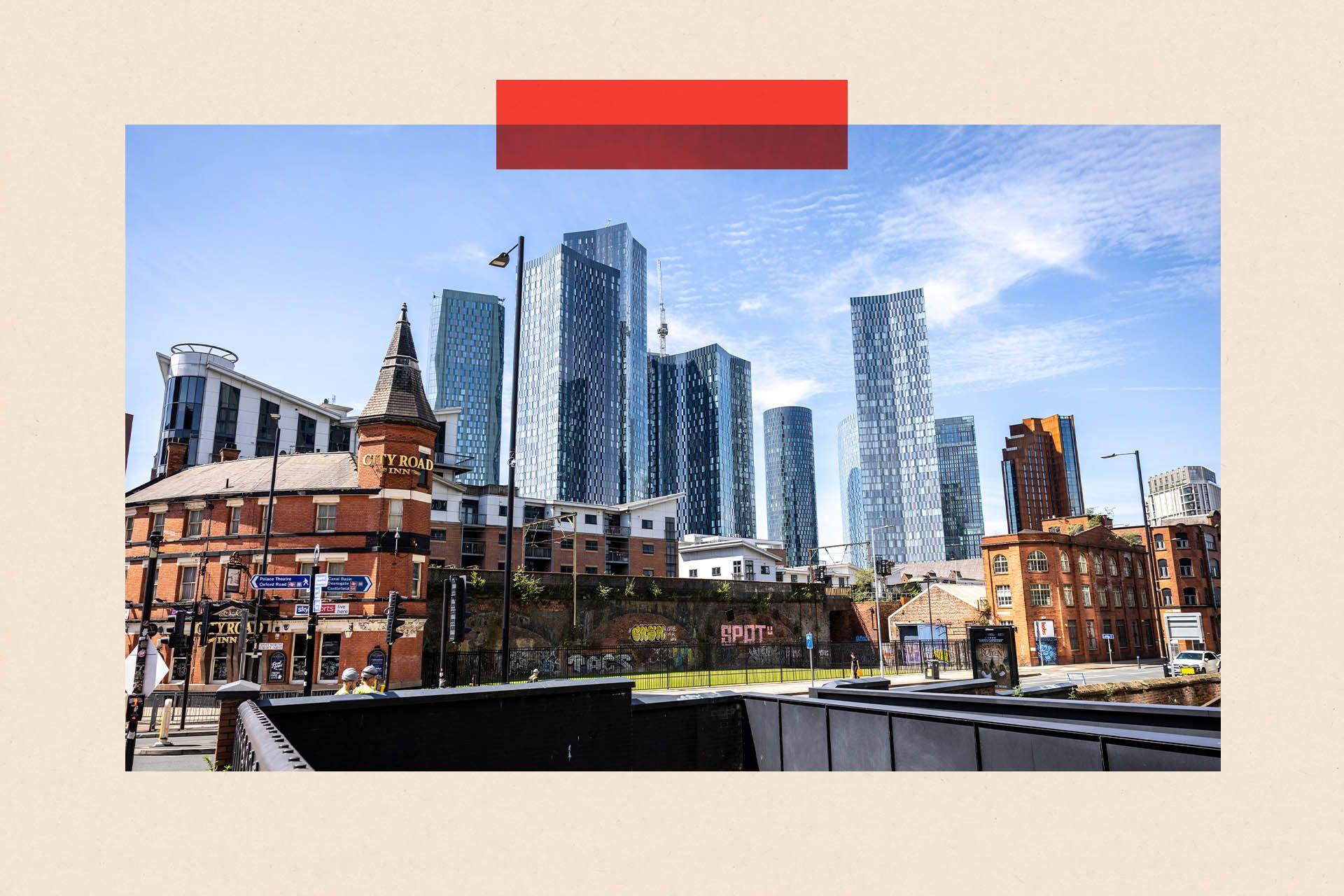 Image source, PA Media
At the same time, Margaret Thatcher’s 1985 bus deregulation has been reversed and over the years public money from central and local government, from the EU, as well as from the partly council-owned airport, has been spent on trams – a nod to the importance of spreading the proceeds of growth in the centre around the region.
To greater or lesser degrees Burnham has floated more “public control”, cost of living support, small business rates relief, and higher infrastructure investment and higher defence spending. They sound difficult to reconcile with sticking to promises to limit borrowing and not raise major taxes.
For example, the Defence Investment Plan is “funded” by cuts to capital investment in transport, energy and elsewhere. These are precisely the areas that Manchesterism would suggest might get more central capital investment.
Burnham the mayor has beaten the drum for the new Liverpool-Manchester Northern Powerhouse Rail and the high speed Manchester-Birmingham line he worked up with former West Midlands Mayor Andy Street. But what will Prime Minister Burnham do?
And what about the paused Brexit reset? There was a deal ready to go for closer relations at a UK-EU summit originally planned for next week. The government had started to explore different red lines for the next Labour manifesto and a turn back towards Europe’s single market. Does he go with Remainy Manchester? Or do the feelings of his Leave constituency, Makerfield, trump all?
NatWest’s Paul Thwaite says there could be a “powerful recipe for sustained growth” from the private capital that flows from “long-term certainty and genuine collaboration”. There isn’t, however, a “single blueprint” from Manchester or anywhere, he says. For devolution to work “the institutions, the leadership and the commercial capability matter as much as the powers themselves”.
Burnham in his speech quoted the famous line attributed to Tony Wilson in the film 24 Hour Party People: “It’s Manchester, we do things differently here.” Now it’s time to reveal what exactly it means for the nation.

BBC InDepth is the home on the website and app for the best analysis, with fresh perspectives that challenge assumptions and deep reporting on the biggest issues of the day. Emma Barnett and John Simpson bring their pick of the most thought-provoking deep reads and analysis, every Saturday. Sign up for the newsletter here
Get in touch
Are you personally affected by the issues raised in this story?
Related topics