



2 min read
Curiosity Blog, Sols 4934-4940: In the Land of the Polygons
Written by William Farrand, Senior Research Scientist, Space Science Institute
Earth planning date: Friday, June 26, 2026
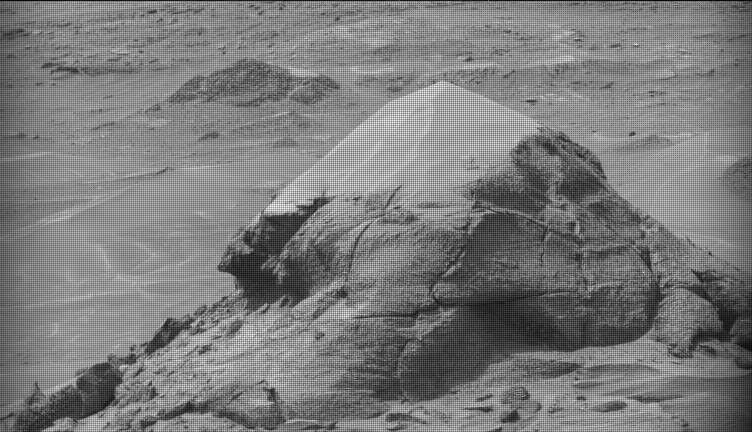
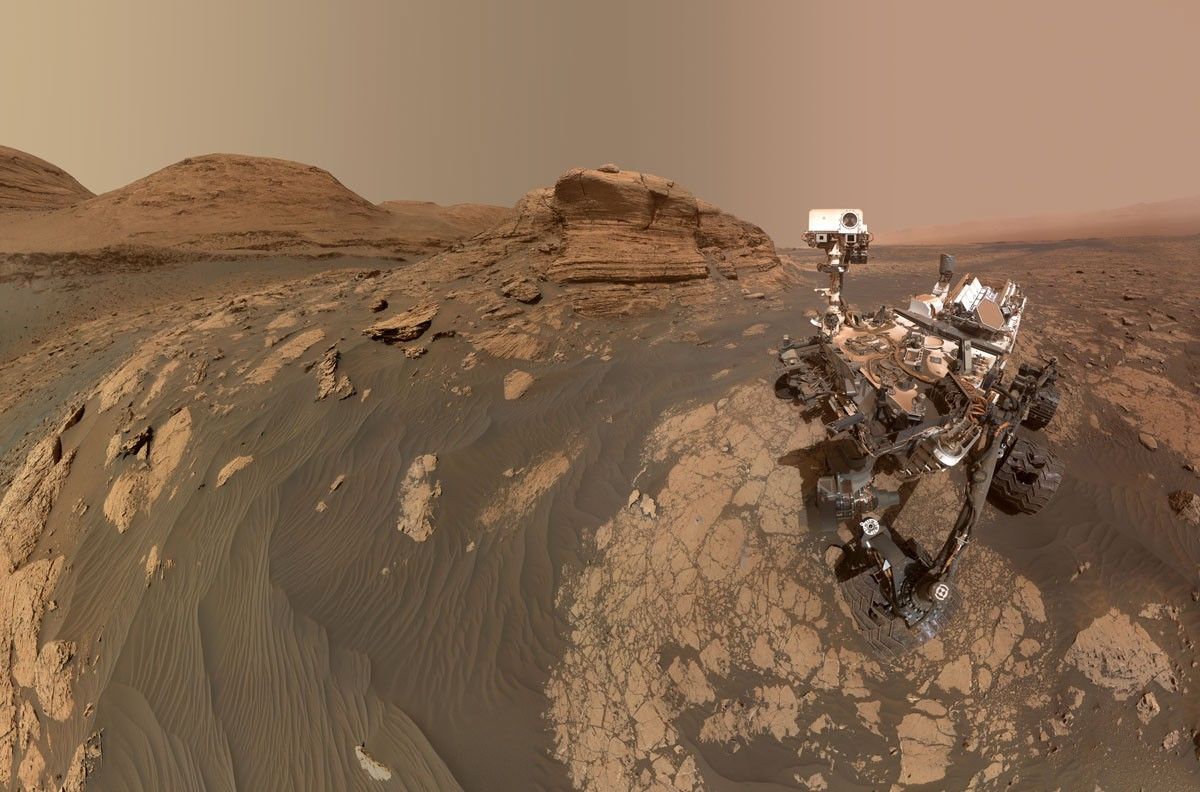
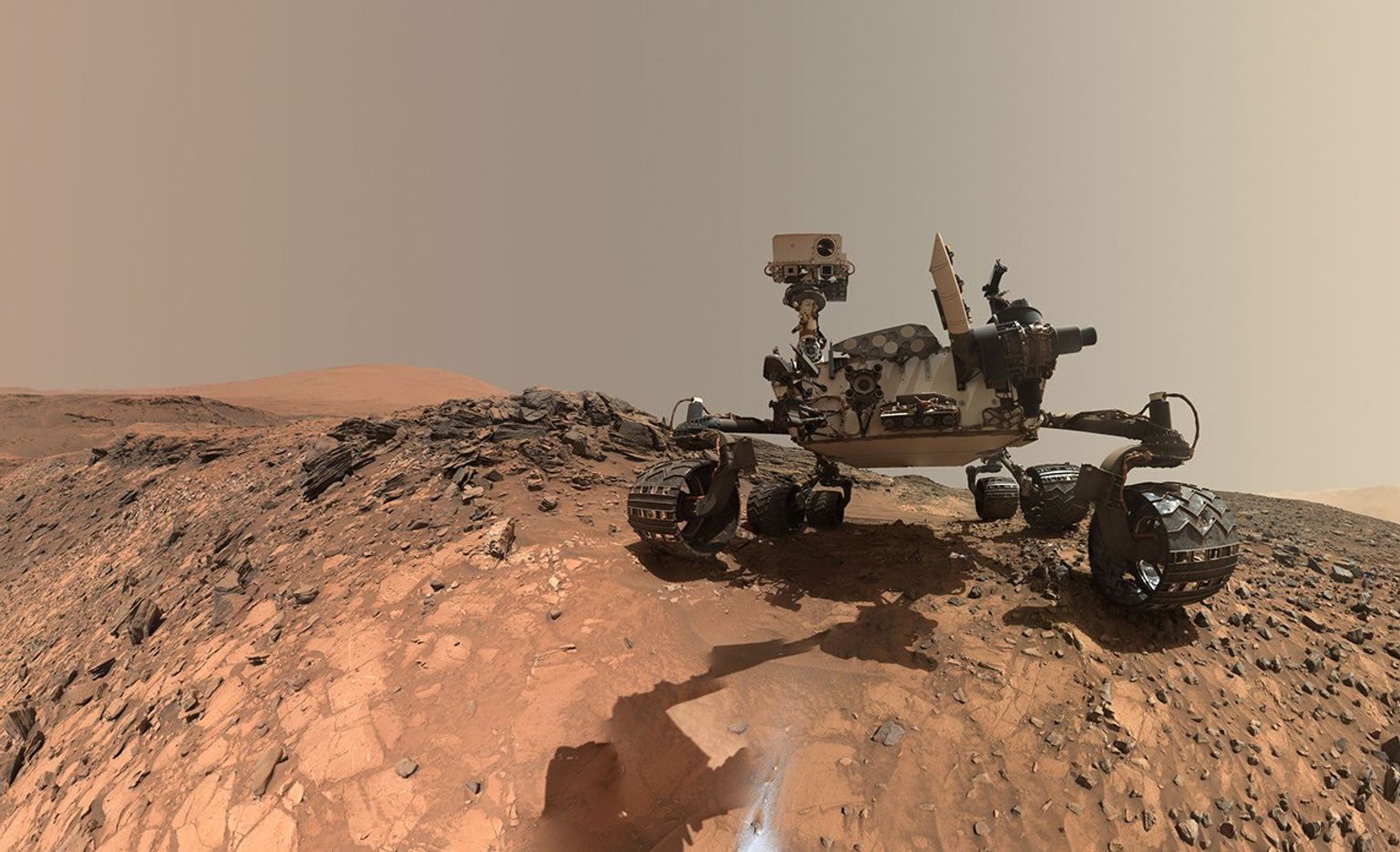
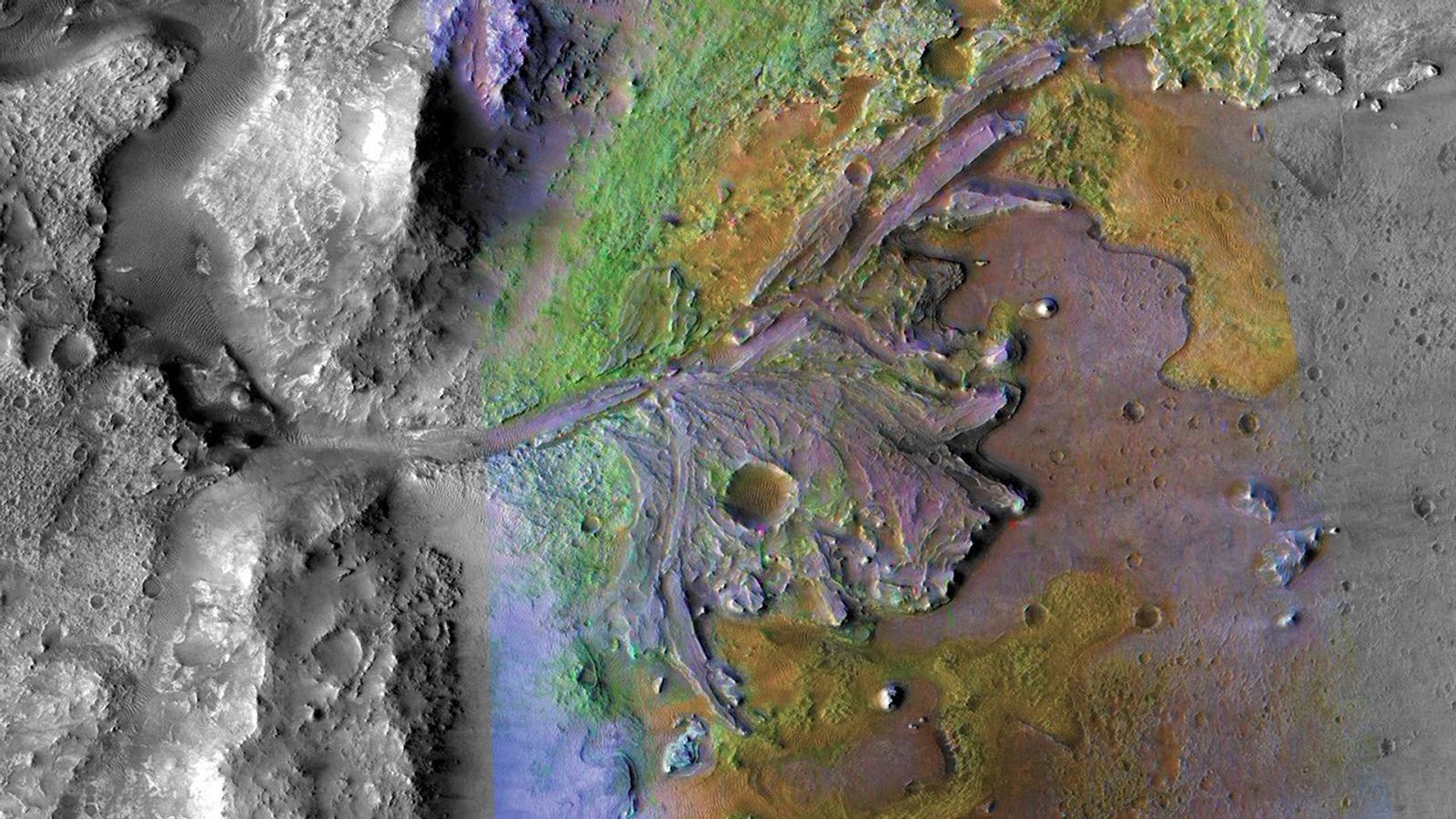
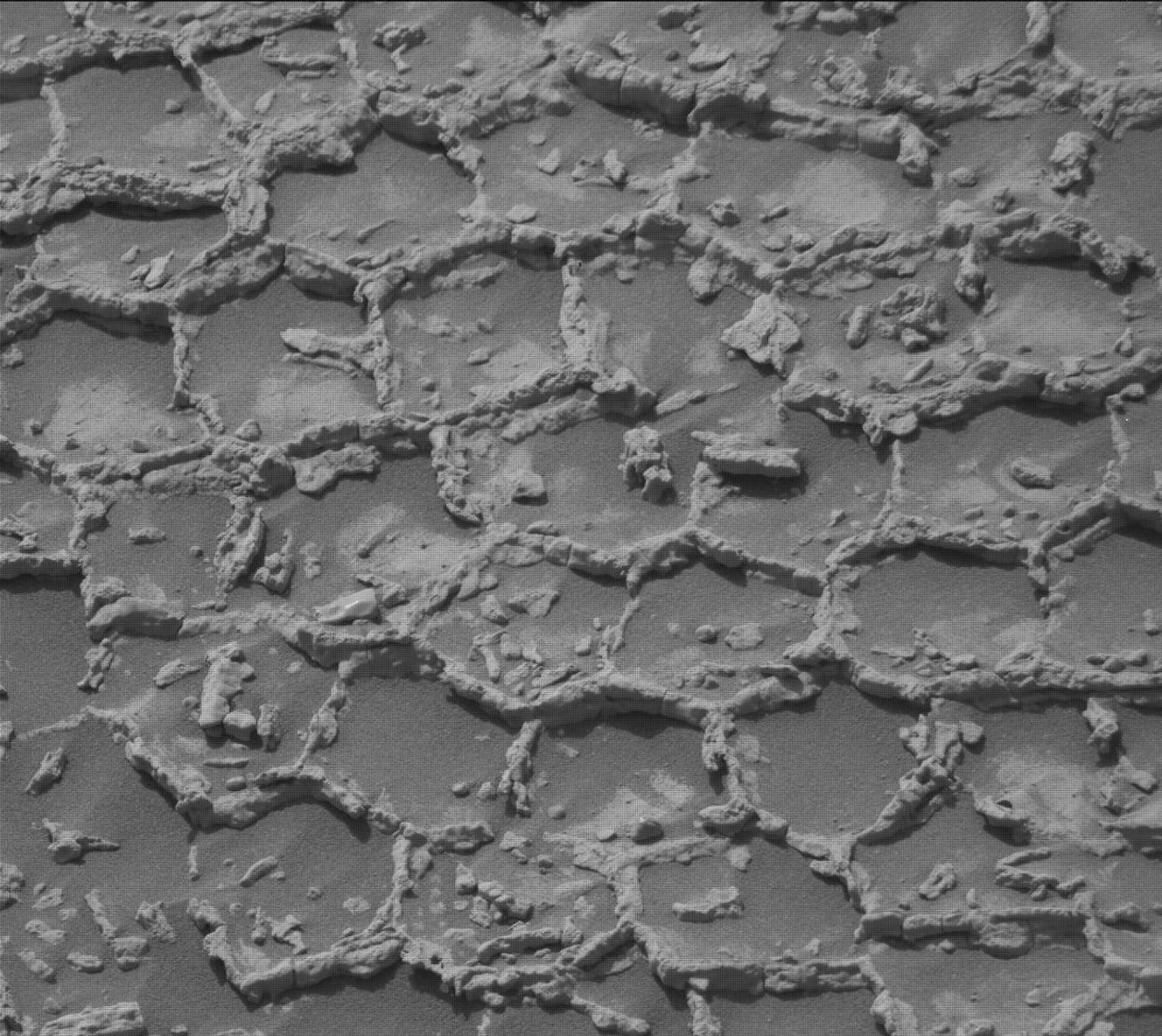
There were two planning cycles over this span of sols. The Monday planning took place with Curiosity situated within a unit that from orbital imagery appeared light-toned, and from earlier rover positions appeared smooth. Reaching this unit, the rover team was surprised to see the unit covered with polygonal structures like the top of a giant Martian honeycomb. Driving further into the unit, the polygonal ridges were more eroded. Littered about this unit are pebble to cobble-sized dark-toned rocks. A still-to-be-resolved question is whether these are bits of Mars that “floated” down from higher in the stratigraphy, were ejected from distant impacts outside of Gale crater, or are meteorites from beyond Mars altogether. Examination of some previous dark “float” rocks indicated the presence of nickel, common in meteorites but less so in Martian rocks, but are all of the dark-toned pebbles and cobbles meteorites? Further investigations should help in answering this question.
Monday’s four-sol plan had APXS and MAHLI investigations looking at the ridges and centers of the polygons. The plan also included ChemCam Remote Micro-Imager (RMI) views of the “Miraflores” small knob and of the “Cordillera” mesa. Similar to the contact science activities, ChemCam LIBS measurements were focused on the polygons, with two measurements on different ridges and one on a polygon center. A ChemCam passive reflectance measurement of one of the aforementioned dark cobbles was also carried out. Environmental activities included a Navcam dust-devil search and atmospheric opacity (“tau”) measurements.
After driving further towards the upper boundary of the light-toned, polygon-covered unit, the three-sol Friday plan included APXS and MAHLI measurements of another polygon ridge and one of the dark-toned cobbles, “Cortadera.” ChemCam LIBS was also targeted on “Cortadera” and on a polygon ridge. ChemCam RMI was targeted on the top and base of the “Cordillera” mesa. Mastcam mosaics were planned of “Cordillera,” nearby troughs, part of the nearby “Valle Grande” channel, and documentation of LIBS targets and the Mastcam calibration target.
In the coming week, Curiosity will cross over into another band of materials which appear darker-toned in orbital images and rougher-textured, as viewed currently by the rover.