




 Image source, Rasid Necati/Aslim Anadolu/Getty Images
Much of the UK is facing a record-breaking heatwave, with temperatures potentially reaching 37C in parts of south-east England.
That would smash the previous June high and comes hot on the heels of unprecedented heat in May too.
But scientists are warning even hotter temperatures are likely in the years ahead.
They have described the records as “extraordinary” and say the UK needs to make preparations for more extreme heat a much greater priority.
The temperatures we are experiencing are particularly unusual so early in the summer, but they are consistent with how our climate is changing.
“We expect increasing temperatures and the breaking of temperature records due to climate change,” said Lizzie Kendon, professor of climate science at the University of Bristol and head of climate projections at the UK Met Office.
“What is so extraordinary, however, is the margin by which the record will be broken.”
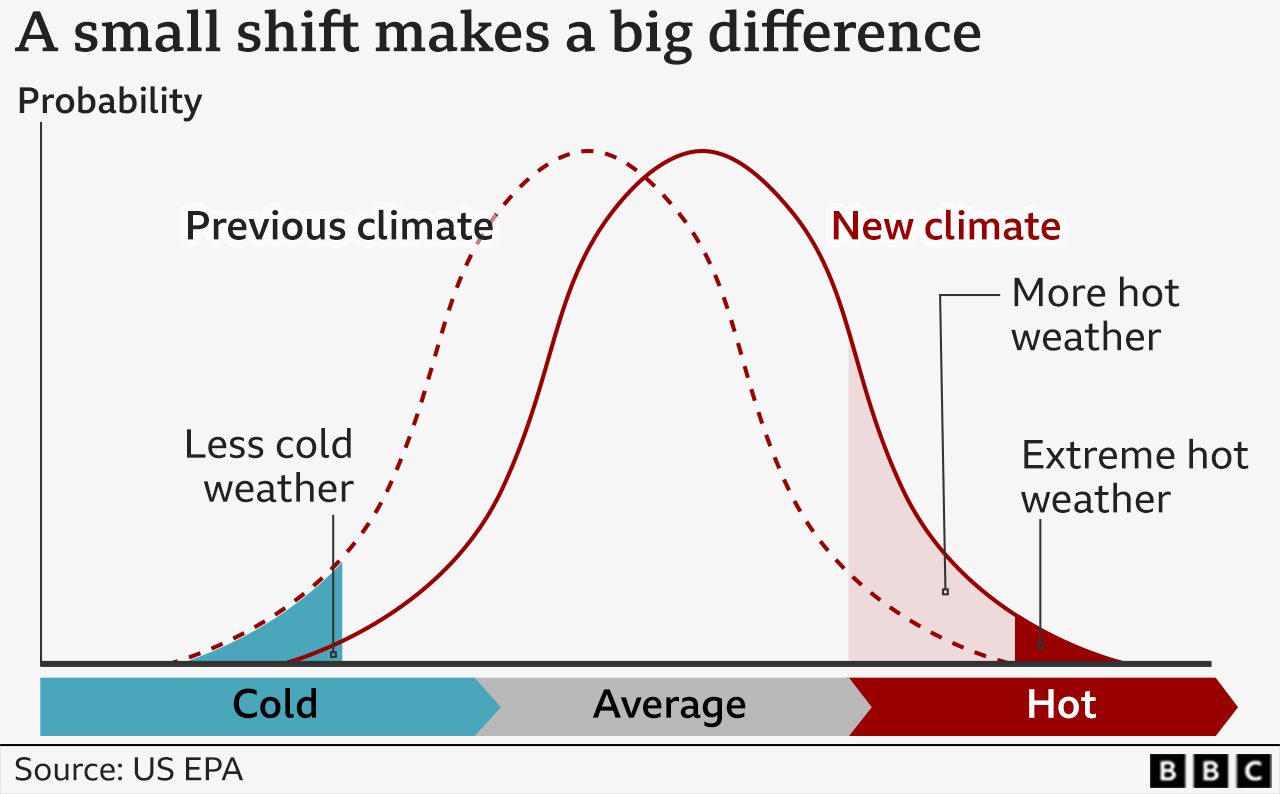
While temperatures vary naturally from year to year, UK summers have clearly been getting warmer.
Between 2015 and 2024, the number of days exceeding 30C in the UK more than trebled compared with the 1961-1990 average, the Met Office says.
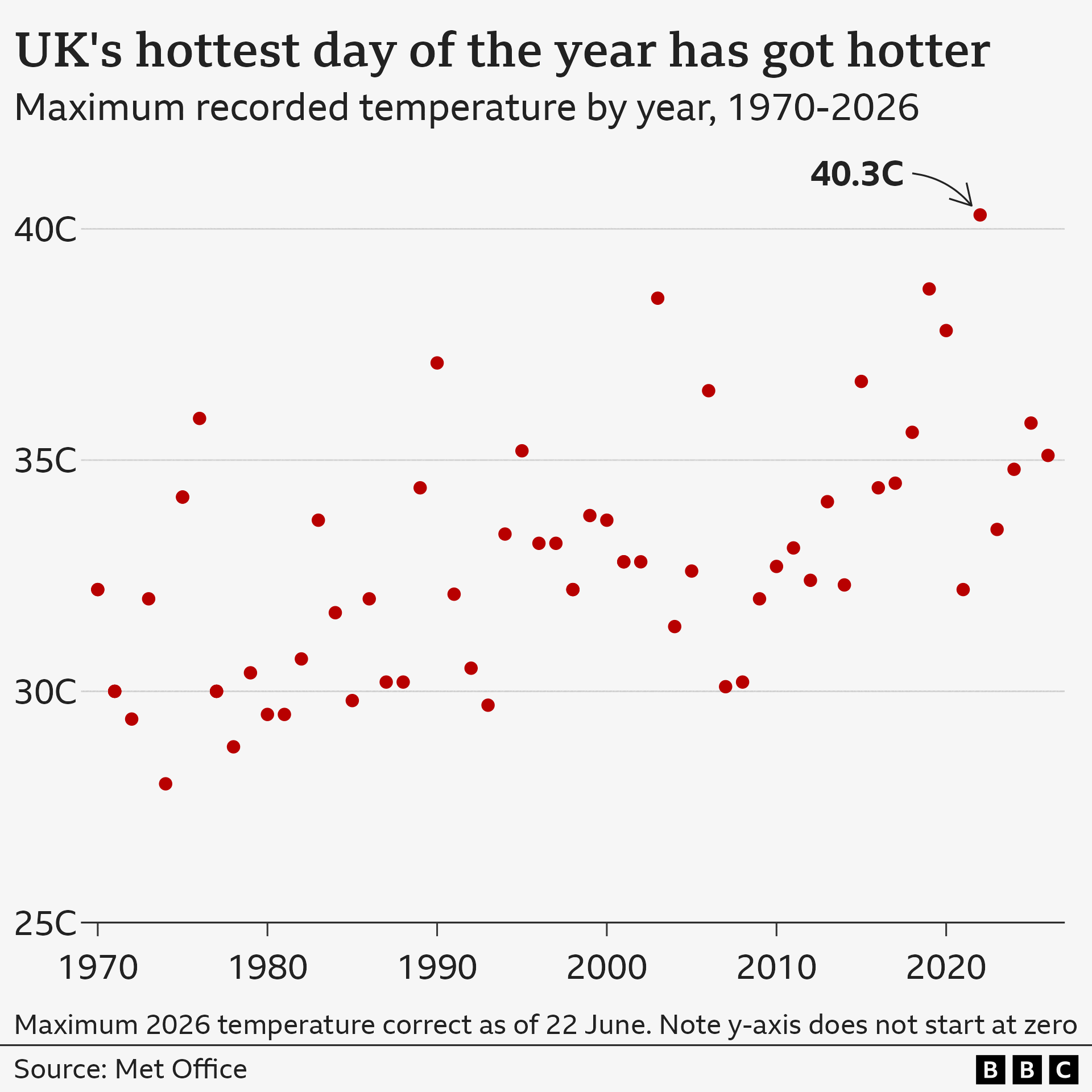
The maximum temperature recorded each year has shot up too.
Reaching 35C was a rare event throughout the 20th Century – but six out of the past ten years have passed that mark.
Could 40C summers be the new normal?
The UK’s hottest recorded temperature now stands at 40.3C, set in July 2022. Before 1990, the UK had not seen 37C.
But these records are almost certainly going to keep getting broken.
If global warming continues at its current pace, temperatures in the mid-forties could be a serious possibility for the UK by 2050, according to Met Office projections.
And while not every year will be hotter than the last, the UK could face even higher temperatures in the second half of this century.
Higher temperatures dry out the soil too. With less moisture available, less heat energy is used up by evaporation – leaving more energy to warm the air and amplifying the hot conditions.
Some scientists have also argued that climate change could be making high-pressure systems more likely to get “stuck” – although this is not yet certain.
This can create a “heat dome” that traps hot air underneath, which is what Europe has been experiencing this week.
“Climate change [is] loading the atmosphere with extra heat and making extreme temperatures far more intense than they would have been in the past,” said Dr Akshay Deoras, senior research scientist at the University of Reading.
Scientists stress that the only way to limit rising summer temperatures is to rapidly cut global emissions of planet-warming gases, such as carbon dioxide.
Is the UK ready for its hotter future?
Not according to the government’s independent adviser, the Climate Change Committee (CCC).
In May, it criticised the “woeful” performance of successive governments in getting the UK ready for more extreme heat.
“The UK was built for a climate that no longer exists today and will be increasingly distant in years to come,” the Committee said.
The 40C heat of July 2022, for example, saw a spike in deaths and hospital admissions.
There was also widespread disruption to road and rail networks, while London Fire Brigade experienced its busiest day since World War Two as blazes raged around the capital.
“When temperatures rise this sharply, and for this long, the effects ripple across everything we have built – our homes, our offices, our railways, our roads, the very ground beneath them,” said Xueyu Geng, professor in geotechnical engineering at the University of Warwick.
The temperature of steel railway lines can rise to up to 20C above air temperatures in direct sunlight, causing them to expand and buckle. Road surfaces can also soften in the heat, which can require gritters.
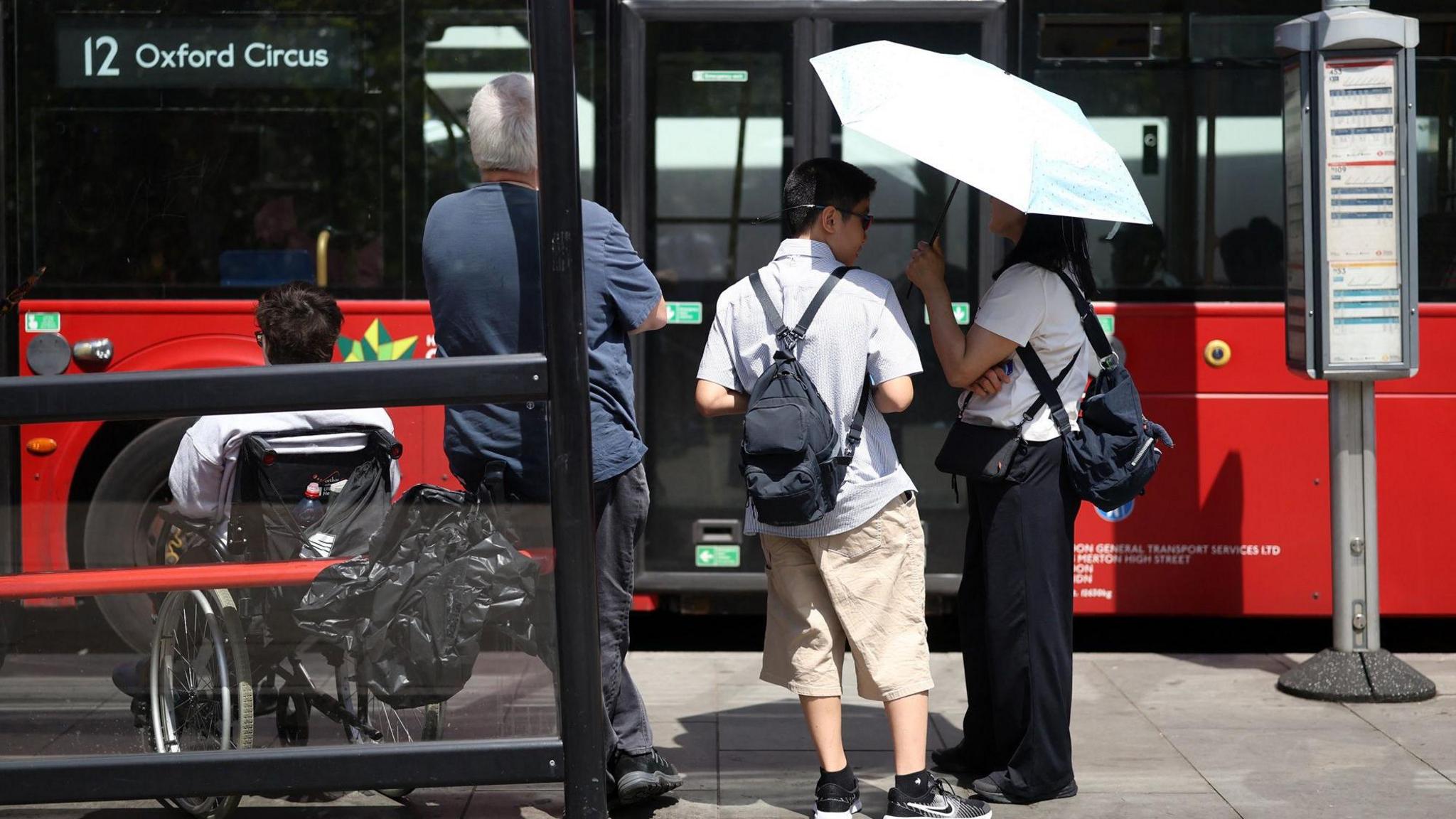 Image source, Toby Shepheard/AFP/Getty Images
Only a minority of homes have air conditioning. Without urgent action, more than 90% of existing homes could overheat during more extreme heatwaves by the middle of the century, the CCC says.
The CCC has repeatedly urged the government to make preparations for extreme heat a much greater priority.
It acknowledges that this will cost billions of pounds a year in upfront cash but argues that greater investment today would ultimately save money in the long run.
It wants to see cooling technologies such as air conditioning rolled out in homes, schools and hospitals, and has recommended setting maximum temperature rules for workplaces to protect people’s health.
In parts of Europe, working conditions and school days are changed when red heat alerts are issued – with heavy manual labour banned around midday and children leaving the classroom earlier.
UK Floods Minister, Emma Hardy, has previously told BBC News that preparing for the changing climate was “something [the government] is really committed to”.
-
A really simple guide to climate change
-
14 January
-

Related topics