




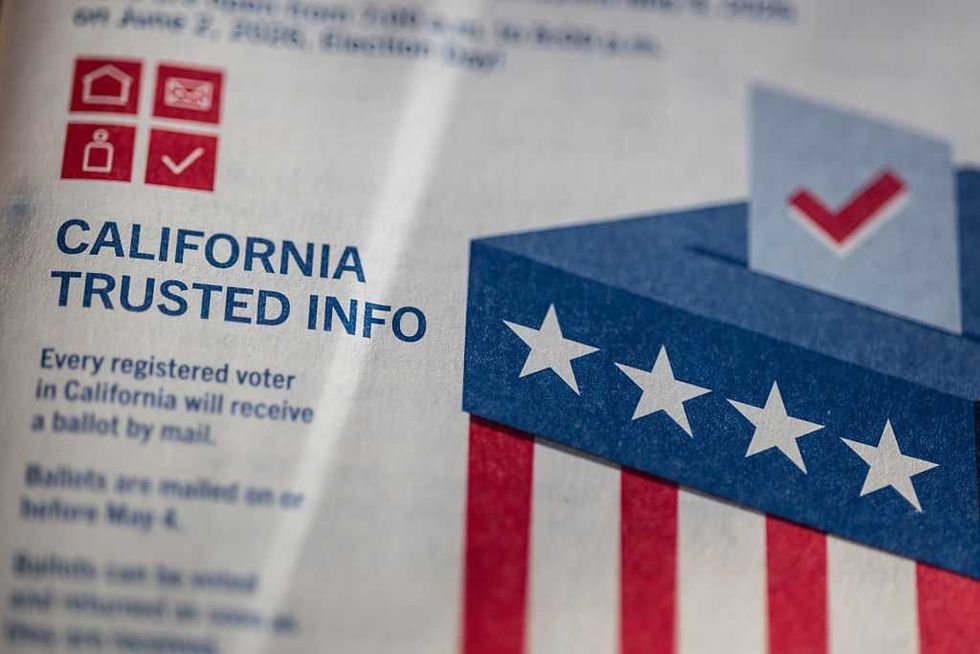
“Accuracy comes before speed.” That was California Secretary of State Shirley Weber’s message to voters in a press release issued two days after officials began counting ballots from June’s primary. In the same release, she reminded voters that the count could continue for up to 30 days after Election Day.
Weber argued that California is “taking the time to do this work correctly” to protect voters’ rights and ensure election integrity.
After 2022, 2024, and this year’s primary, the problem no longer looks like a glitch. It looks like a pattern created by poor policy choices.
She is right about one thing: Accuracy matters.
Every lawful ballot should be counted. Every voter should be confident that election officials will get the count right.
But a week after Election Day, California was still processing 1.4 million ballots under a system that routinely extends vote counting for days and sometimes weeks after voters cast their ballots.
That raises a question California’s leaders seem increasingly unwilling to answer: Why are voters repeatedly told they must choose between accurate elections and timely results?
This is not the first time California has found itself in this mess.
In 2022, several California congressional races remained unresolved long after Election Day while control of the U.S. House hung in limbo. Two years later, California took 38 days to certify its election results. Now in 2026, Californians are again waiting weeks after Election Day for final results.
The details change. The outcome does not. Californians keep waiting.
So why does this keep happening?
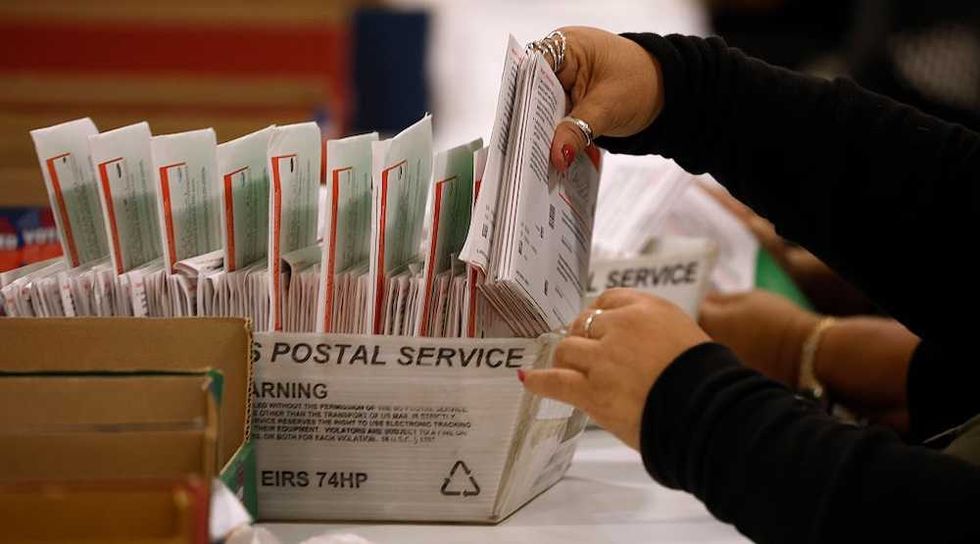
The answer starts with California election law. According to CalMatters, the delay is due in part to policies California adopted to make voting easier after the COVID-19 pandemic: Every registered voter receives a mail ballot, and ballots remain valid as long as they are postmarked by Election Day and arrive at county elections offices within seven days.
Election law expert Hans von Spakovsky has argued that California’s slow vote count is not an isolated incident or unexpected complication. It is the way the state’s election system is designed.
RELATED: ‘Fraudster’s paradise’: Feds plan to file election fraud charges in California
In other words, California is not experiencing an unexpected delay. It is experiencing the predictable results of the laws it chose.
Gov. Gavin Newsom (D) helped cement those policies in 2021 when he signed AB 37, making universal vote by mail permanent. His office promoted the law as “landmark elections legislation” that would expand vote by mail and strengthen election integrity.
Yet, Californians are now being sold the idea that waiting days or weeks for election results is simply the reality of modern elections.
It is not. It is the reality of California elections.
Timely results are part of election integrity. The longer ballots remain uncounted, the longer election officials must maintain secure chains of custody, verification systems, and storage. Delay does not automatically mean fraud. But delay does create more opportunities for confusion, suspicion, and avoidable controversy.
If California leaders want faster results, they should examine the policies that slow them down.
Instead, voters are told these delays are the unavoidable cost of administering elections in a large state. That explanation falls apart under scrutiny.
Look at Florida. The 2000 presidential election exposed serious weaknesses in that state’s election system. Legislators responded by reforming the state’s election administration and ballot-processing procedures.
Today, Florida is one of the fastest states in the country to report election results.
Florida allows election officials to begin processing mail ballots before Election Day, giving counties a head start on verification. The state also requires most mail ballots to be received by Election Day rather than days afterward. Voters whose signatures are missing or do not match generally have a much shorter window to fix those problems than California voters do.
Florida proves that accuracy and speed are not mutually exclusive.
California has chosen a different approach.
This is about more than administrative efficiency. In five months, Californians will return to the polls for the midterm election. Voters deserve confidence that the results will be accurate. They also deserve confidence that those results will arrive on time.
RELATED: Homeless people on Skid Row claim they were paid to vote — and not for Spencer Pratt
Lawmakers should examine whether ballots should continue arriving after Election Day and still be counted. They should review whether lengthy ballot-curing timelines help voters or simply extend uncertainty. Election officials should also receive every opportunity to process ballots before Election Day so results can be reported faster once polls close.
Most important, California leaders should stop pretending accuracy and speed are enemies. Florida proves they are not.
Weber says accuracy comes before speed. California voters should ask why they cannot have both.
After 2022, 2024, and this year’s primary, the problem no longer looks like a glitch. It looks like a pattern created by poor policy choices.
California built an election process that can take a month after Election Day to resolve.
Voters should stop accepting that as normal.