Skip to content











Among the latest products from Turkey’s prolific defense industry is a weapon directly inspired by the secretive AGM-114R9X variant of the widely used Hellfire, the effects of which TWZ was the first to identify back in 2017. Named Neşter, which is Turkish for scalpel, the new weapon features exactly the same kind of array of pop-out, sword-like blades as used on the AGM-114R9X, a weapon popularly dubbed “Flying Ginsu” or “Ninja” due to its unusual capabilities.
İŞTE ROKETSAN’IN SUİKAST FÜZESİ NEŞTER!
BU FÜZEDE HARP BAŞLIĞI YOK! pic.twitter.com/EJB7vszvWJ
— SavunmaSanayiST.com (@SavunmaSanayiST) May 5, 2026
ROKETSAN, NEŞTER’i tanıttı
NEŞTER, MAM-L ürününün bir varyantı olarak, minimum ikincil hasar prensibiyle yüksek hassasiyetli vuruşlar yapmak üzere tasarlandı. Klasik çözümlerden farklı olarak, bulundurduğu yaklaşma sensörü sayesinde, hedefe temas öncesinde devreye giren ve… pic.twitter.com/bwpHUw3T2Y
— SavunmaTR (@SavunmaTR) May 5, 2026
Produced by Roketsan, the Neşter was unveiled today at the SAHA 2026 International Defense and Aerospace Exhibition in Istanbul. Like the AGM-119R9X, the new weapon was developed explicitly to prosecute targeted strikes while minimizing the risk of collateral damage to an extreme degree.
The Neşter is a derivative of the same company’s MAM-L, which is described as a “lightweight smart micro-munition.” The compact dimensions of the MAM-L mean that it can be easily integrated on uncrewed aerial vehicles (UAVs), as well as light attack aircraft. Indeed, the MAM-L has become a munition synonymous with the Turkish Bayraktar TB2 drone, which has been used to great effect in various conflicts, including in Syria, Libya, Ukraine, and in the conflict between Armenia and Azerbaijan.
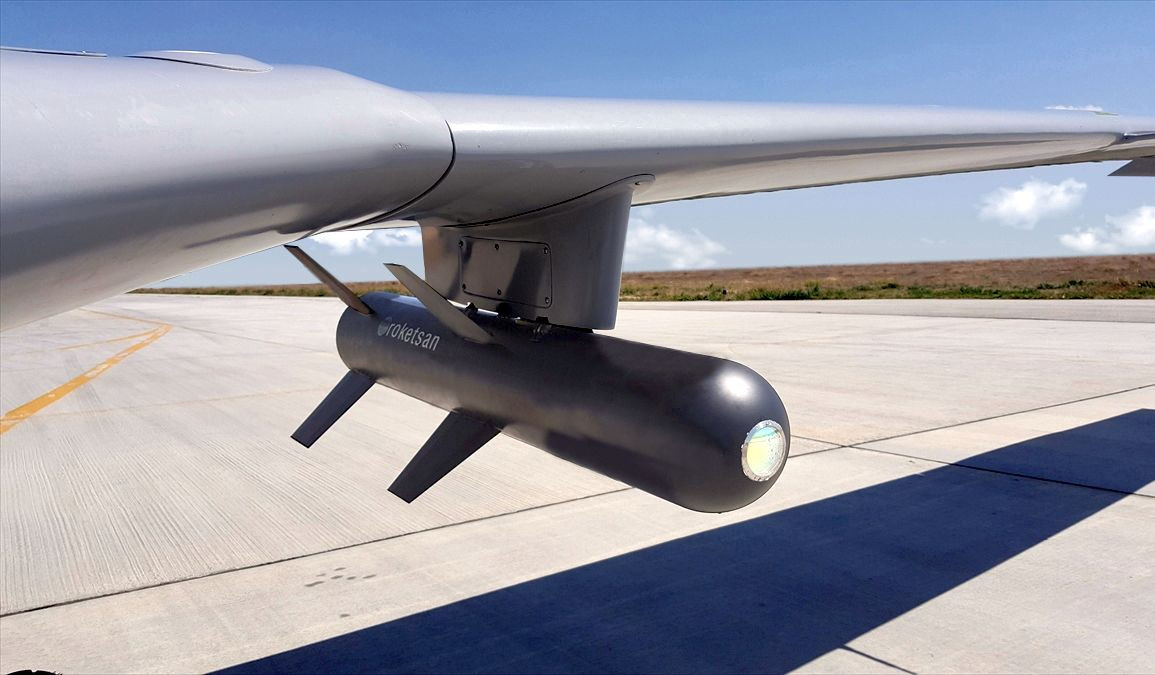
Already, Roketsan offered the MAM-L with a range of different warheads, including armor-piercing, high-explosive blast-fragmentation, and thermobaric.
The Neşter differs in that it’s strictly focused on assassination strikes, with no warhead at all, instead featuring blades that make it an extremely low-collateral-damage weapon. As we have seen repeatedly with the AGM-114R9X, a weapon of this kind can target not just a vehicle, but a specific occupant inside it, slashing through the car at just the right spot.
A 2025 U.S. Central Command video showing, for the first time, the AGM-114R9X in action:
So far, very few specific details about the new Turkish weapon have been released.
As for the MAM-L, the manufacturer states that this is around 3.3 feet long, has a diameter of 6.3 inches, and a range of 9.3 miles. The munition reportedly weighs around 48 pounds. The new weapon is likely broadly similar in terms of dimensions and range. The Hellfire is a considerably bigger weapon than the MAM-L, being around 5.2 feet long and weighing closer to 100 pounds.
It should be noted that the MAM-L was developed from the L-UMTAS guided missile, essentially being an unpowered version featuring a similar guidance system. It’s not clear if the Neşter is powered or not, but being unpowered would reduce the kinetic effect of its impact, at least compared with the AGM-114R9X, and, without a warhead, this is critical for its destructive power.
Both the basic AGM-114R series and the MAM-L use laser guidance. However, the AGM-114R9X is thought to feature a unique additional guidance capability that leverages automation in order to strike so precisely on just one part of a vehicle.
One possibility could be a very fine-tuned imaging infrared (IIR) guidance package that zeroes in on a specific section of a vehicle automatically. This could be paired with laser guidance for initial cueing or be a standalone IIR seeker and logic package.
Images show the result of an AGM-114R9X strike on a car in Syria in 2025:
Other guidance options could be available for the Neşter, including a so-called “human-in-the-loop” system, something Israel pioneered and perfected, with an actual operator correcting its course in the terminal phases of flight. That capability, however, would require compatible datalinks, and the Neşter’s ground control ground terminal would have to support it.
The Neşter is known to feature a proximity sensor, which activates the blade mechanism just before contact with the target. Before they deploy, the six blades (the same number as on the AGM-114R9X) are stowed in slots that run along the missile’s body.

As for the AGM-114R9X, this was developed in secret and has been used increasingly over the last decade or so, including in very high-profile operations. It is thought to be a weapon of choice for targeted assassinations using MQ-9 Reaper drones operated by the shadowy Joint Special Operations Command (JSOC), as well as the Central Intelligence Agency.
It can easily be imagined that the Turkish Armed Forces, and even Turkish paramilitary branches, could find a similar use for the Neşter, especially from the country’s growing arsenal of drones. If available with a motor, it would be suitable for the T129 ATAK helicopter and other rotorcraft as well.
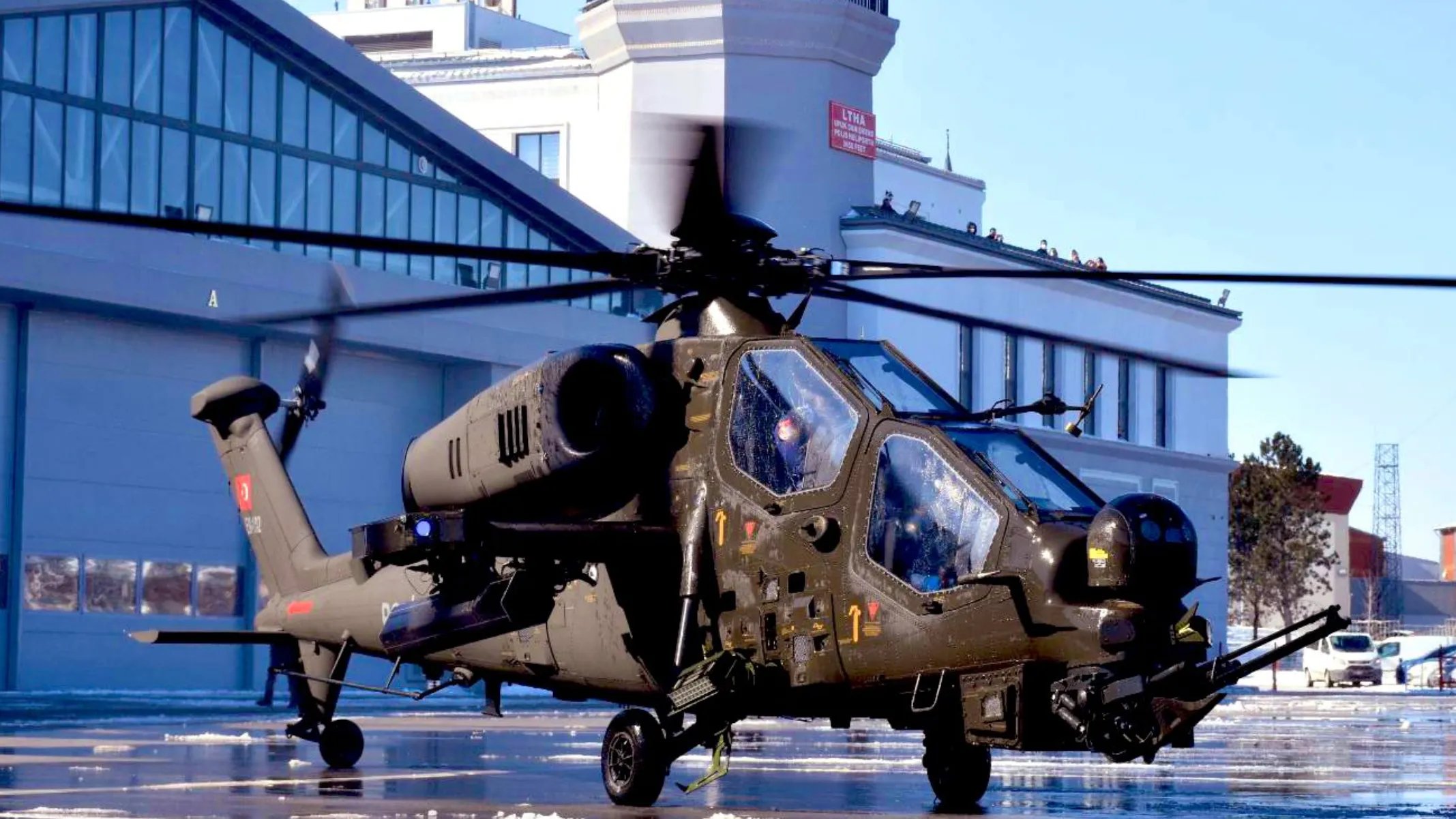
The Turkish Armed Forces and police branches regularly launch (often combined) offensive operations over Turkish territory, including providing close air support to law-enforcement forces and troops on the ground. These frequently include the proactive engagement of those deemed to be terrorists, like the Kurdistan Workers’ Party (PKK).
While the PKK has waged an insurgency in Turkey since 1984 and also operates extensively across its borders in Iraq and Syria, Ankara has stepped up its operations against the militants since a ceasefire with them ended in 2015.
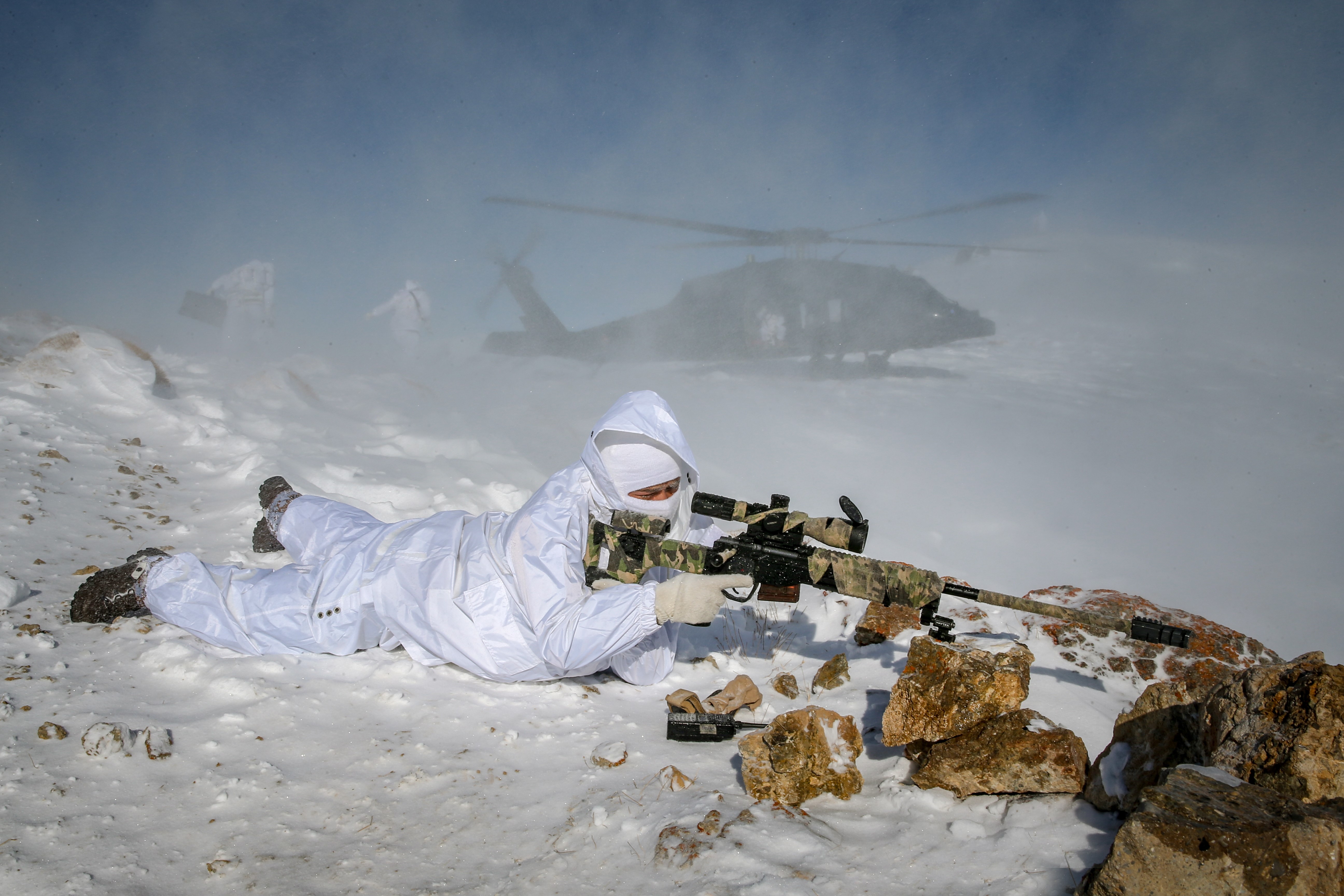
The appearance of the Neşter at this point is therefore both in line with likely Turkish requirements for its counterinsurgency operations, and reflects the fact that the country is fast developing and widely exporting a wide range of drones as well as the munitions to arm them. By offering the Neşter specifically, Roketsan is cognizant of the growing requirement for munitions that can help prevent civilian casualties, while also targeting particular high-value individuals.
For export customers, the Neşter, like other Turkish munitions, would not be subject to the restrictions imposed by the U.S. International Traffic in Arms Regulations (ITAR) guidelines, which can limit the transfer of defense and military technologies and services — especially the more sensitive ones — to certain countries.
At the same time, while the United States has very deliberately kept the AGM-114R9X under wraps, perhaps on account of the gruesome nature of its effects, it seems that Turkey is not nearly as coy. However, it still needs to complete the development work on the Neşter, something that is more challenging than it might at first appear.
Contact the author: thomas@thewarzone.com
The post Turkey Developing Its Own Bladed ‘Ginsu’ Precision Guided Munition appeared first on The War Zone.