


We may receive a commission on purchases made from links.
The 1970s were a golden age of television, especially when it came to sitcoms. This is the decade that gave us “All in the Family,” “The Carol Burnett Show,” “The Jeffersons,” and even “Sesame Street.” Many of the building blocks for how sitcoms are structured today can be found in shows from this decade. And, thanks to syndication in programming blocks like Nick at Nite or nostalgia channels like MeTV (not to mention the classic channels on PlutoTV and Tubi), many of the all-time great shows are readily available for today’s audiences to experience them for the first time.
But what of the forgotten sitcoms that are still worth tracking down? That’s what we’re here to celebrate today. Many of these shows are difficult to find (through legal channels), and are therefore at risk of being lost to time. Not just vital pieces of television history, many of these shows were so ahead of their time that they’d fit right at home in today’s TV landscape. Without further ado, here are five forgotten sitcoms from the 1970s that still hold up today.
Phyllis
 CBS
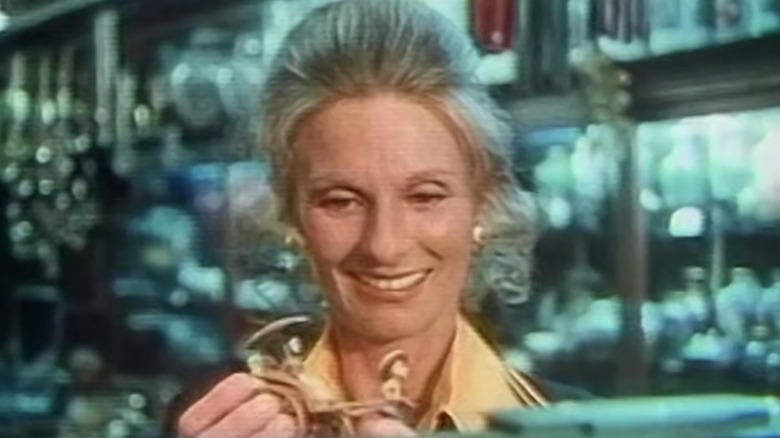
CBSCan you imagine giving Cloris Leachman her own sitcom — itself a spin-off of “The Mary Tyler Moore Show” — and having to cancel it due to low ratings after only two seasons? Seems impossible, but that’s exactly what happened to “Phyllis.” Based on Leachman’s character from “TMTMS,” the series followed Phyllis, who was left penniless after the death of her husband, Lars. Phyllis and her daughter Bess (Lisa Gerritsen) are forced to move in with Lars’ mother, the daffy Audren Dexter (Jane Rose), and her husband, Judge Jonathan Dexter (Henry Jones). After having spent much of her adult life as the spoiled wife of a wealthy dermatologist, Phyllis struggles to adjust to life as a working single mother, taking a job as an assistant at a photography studio.
“Phyllis” was a typical fish-out-of-water comedy and the first season was a huge hit, with Leachman winning a Golden Globe Award for Best Lead Actress in a Comedy Series. During the 1975-1976 season, it ranked higher than “The Mary Tyler Moore Show” and its other spin-off, “Rhoda.” Unfortunately, the sitcom’s viewership numbers tanked during the second season, (“Little House on the Prairie” was beginning to dominate) and the show went off the air following it’s completion. While unfortunately difficult to find (legally) these days, Leachman’s performance in “Phyllis” is worth seeking out.
That’s My Mama
 ABC
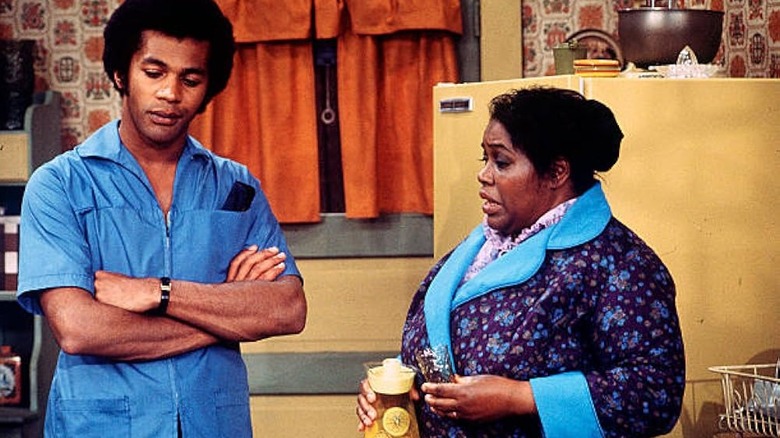
ABCWhoever decided to air “That’s My Mama” at the same time as “Little House on the Prairie” was either absolutely terrible at their job or straight-up racist, because this working-class sitcom deserved signficantly more than 39 episodes. The first series to be produced by Columbia Pictures Television. Set in a middle-class Back neighborhood in Washington D.C., “That’s My Mama” centered on twentysomething Clifton Curtis (Clifton Davis), a barber working at the family shop he inherited from his father. Clifton is enjoying the bachelor life, but his sharp-tongued mother, Eloise “Mama” Curtis (Theresa Merritt) is constantly trying to get him to settle down and find a loving wife.
Much of the show was about the generational differences in priorities between Clifton and his Mama, and the cast of supporting characters frequenting the barber shop made for a great roster of comedy performances. But the true star is Theresa Merritt (“The Wiz,” “The Best Little Wh*rehouse in Texas,” “Billy Madison”), an actress who deserved a much better career than what she was given. Her comedic timing is unbelievable and folks can see so for themselves, as the show is available to stream on Tubi.
Mary Hartman, Mary Hartman
 Sony Pictures Television
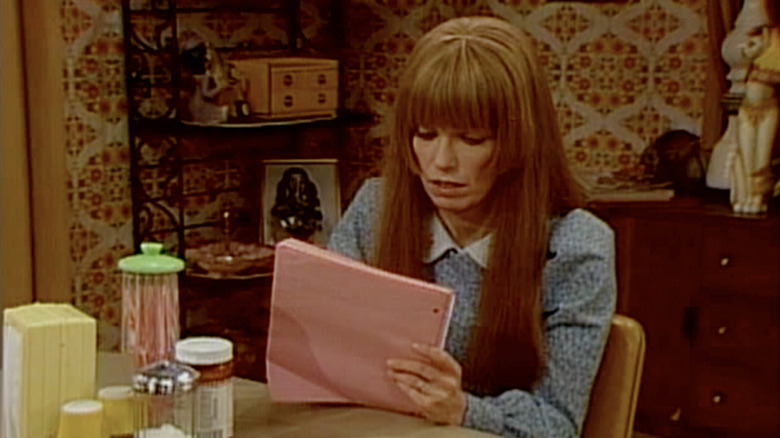
Legendary television producer Norman Lear is most well known for his smash-hit shows like “All in the Family,” “Maude,” “Sanford and Son,” “One Day at a Time,” “The Jeffersons,” “Good Times,” and “Diff’rent Strokes,” but television fans would be wise to track down arguably his most underrated sitcom, “Mary Hartman, Mary Hartman.” Starring Louise Lasser in the title role, the two-season series was a satire of soap operas in which an ordinary housewife in Ohio must contend with bizarre and sometimes violent incidents in her day-to-day life.
The series was deeply weird, and many audiences at the time didn’t understand what the hell was going on, because the tongue-in-cheek melodramatic elements were played completely straight. There is a very obvious throughline between “Mary Hartman, Mary Hartman” and David Lynch’s “Twin Peaks,” and there’s an argument to be made that the show laid the groundwork for something like the Marvel Cinematic Universe’s “WandaVision” to exist.
Journalist Claire Barliant once wrote of “Mary Hartman, Mary Hartman”:
“For some, the 1970s […] was a descent into chaos, a dissolution of self, but also a kind of awakening […]The ’70s nervous breakdown coincides with women’s lib and a strengthening gay rights movement […] “MH2″ is relevant today because it entertains but still shocks, because the social commentary and satire and bravery of the show are as fresh as ever.”
I couldn’t have said it better myself. There were talks in 2021 that “Schitt’s Creek” star Emily Hampshire was going to star in a reboot of the series from “Letterkenny” and Heated Rivalry” creator Jacob Tierney, and I desperately hope the attention from the latter allows this to come to fruition, because I’ve never needed something more. “Mary Hartman, Mary Hartman” is available on DVD, but it’s pricey.
The Corner Bar
 ABC
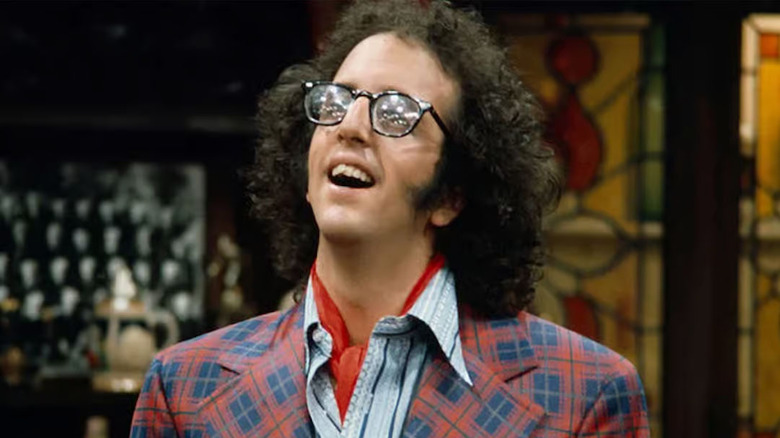
ABCBefore there was “Cheers” (or more accurately, “Taxi,” which gave us “Cheers”), there was the 1972 sitcom, “The Corner Bar” on ABC. Initially brought to the airwaves as a summer replacement series for its first season, the series was retooled for a second season the following year. Unfortunately, the show ended after only two seasons, but remains a piece of television history for its willingness to depict television’s first recurring openly gay character. Created by veteran TV writer Herb Sargent (“That Was the Week that Was,” “The Steve Allen Show”) and comedian Alan King, “The Corner Bar” was a hangout comedy that starred Gabriel Dell as Harry Grant, the owner and proprietor of a New York City Bar called “Grant’s Tomb.” In Season 2, comedy legend Anne Meara stepped in as Mae, along with Eugene Roche’s Frank Flynn as the bar’s new owners.
The recurring gay character in question, Peter Panama (played by straight actor Vincent Schiavelli in his debut television role), was hotly debated at the time of release, with many LGBTQIA+ activist groups rejecting the character as a horrible stereotype. However, looking back from a 2026 lens, the stereotypical qualities of Peter Panama are pretty tame by today’s standards. Not to mention, this character debuted only a few years after the Stonewall Riots, and many activist groups were actively pushing for assimilation to improve civil rights. Regardless, “The Corner Bar” is a vital piece of television history. If only it were easier to stream for modern audiences.
Hot l Baltimore
 ABC
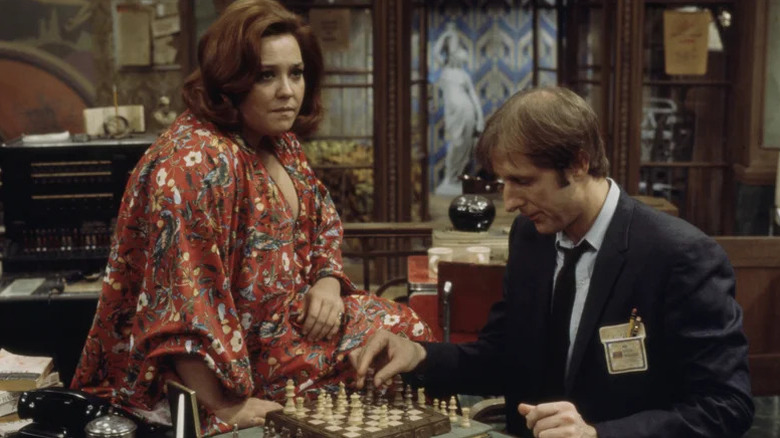
ABCWe’ve written before about this forgotten ’70s sitcom that was so controversial it had to advertise audience warnings before each episode, but “Hot l Baltimore” is a show that more people need to be talking about and encouraging new audiences to discover. The title comes from a visual gag, with the “e” in “Hotel Baltimore” burned out. Created by Norman Lear and adapted from Lanford Wilson’s off-broadway play of the same name, “Hot l Baltimore” was a ridiculously progressive series for its time, focusing on characters who seldom are given the chance to star in mainstream projects. For one thing, the two main characters — April Green (Conchata Ferrell) and Suzy Marta Rocket (Jeannie Linero) — are sex workers who work out of the titular hotel.
The show’s setting allowed for a number of colorful characters to come through the hotel, including Lee Bergere and Henry Calvert as George and Gordon, an openly gay couple, Al Freeman Jr.’s Charles Bingham, Gloria LeRoy’s waitress Millie, Robin Wilson’s tomboy Jackie, and Stan Gottlieb’s elderly Mr. Morse. The hotel is run by two well-known actors who went on to have huge careers: Richard Masur as the manager Clifford Ainsley and James Cromwell as desk clerk Bill Lewis. Given the progressive and often controversial nature of the episodes’ subject matter (one of the main characters is an undocumented immigrant, for example), it’s a shame that more people don’t know about “Hot l Baltimore.” An even bigger shame is that it’s next to impossible to find, as it has never been released on DVD or made available for official streaming. Consider this my official plea to ABC to release the episodes from the vault!