Skip to content

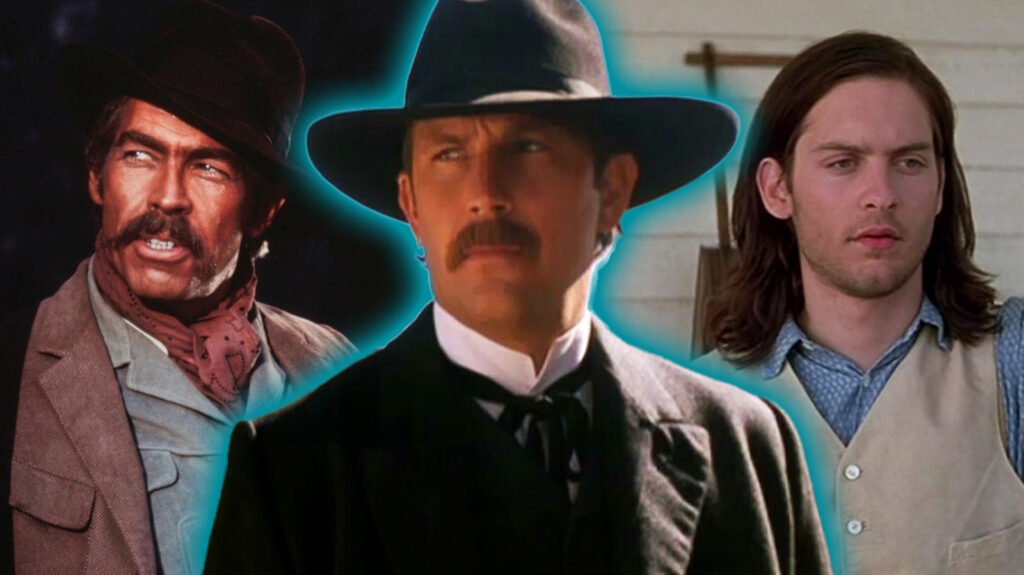
We unabashedly love Westerns here at /Film, both in movies and television, across their many forms throughout cinema history. We’ve recommended everything from Western movies everyone should watch at least once to the television highlights of the genre in the ’70s. But like any other genre, not every Western movie gets the wider attention that it should. Just as there are plenty of underrated Western TV shows, there’s no shortage of overlooked movies in the archetypal genre.
With that in mind, we’re focusing on some Westerns that don’t get as much love but are still worth watching. This oversight can come from general obscurity, commercial failure, or a notorious reputation stemming from a disastrous theatrical run. Whatever the reason, each of these movies don’t deserve the dubious distinction that they each currently hold.
These are the 10 most underrated Western movies of all time, ranked down to the most under-appreciated of them all.
10. Duck, You Sucker!
 United Artists
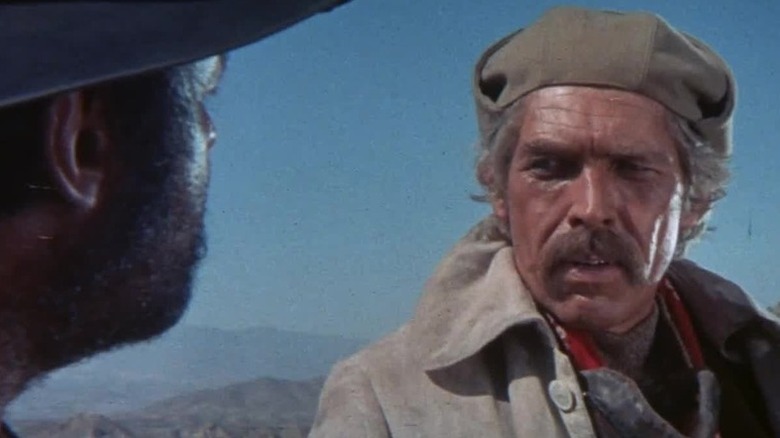
Italian filmmaker Sergio Leone completely redefined Westerns with movies like “For a Few Dollars More” and “The Good, the Bad and the Ugly.” Unfortunately, Leone’s work past the ’60s isn’t as widely celebrated or known, even his last spaghetti Western, “Duck, You Sucker!” Released in 1971, the movie takes place in the midst of the Mexican Revolution in 1913, with outlaw Juan Miranda (Rod Steiger) inadvertently becoming a hero for the revolutionaries. Joining Miranda is visiting Irish explosives expert John H. Mallory (James Coburn), whose antics make them the target of the Mexican army.
Sergio Leone’s most underrated Western is still a masterpiece in its own right, with “Duck, You Sucker!” sticking the landing in the genre that he helped reinvent. The movie leans into screwball comedy, more than “Once Upon a Time in the West” or “Once Upon a Time in America,” delivered by the pairing between Steiger and Coburn. At the same time, Leone maintains his penchant for stylish Western action, elevated by a score composed by Ennio Morricone. The forgotten Leone Western, “Duck, You Sucker!” is an irreverent blast, buoyed by its pair of likable lead actors.
9. Chisum
 Warner Bros.
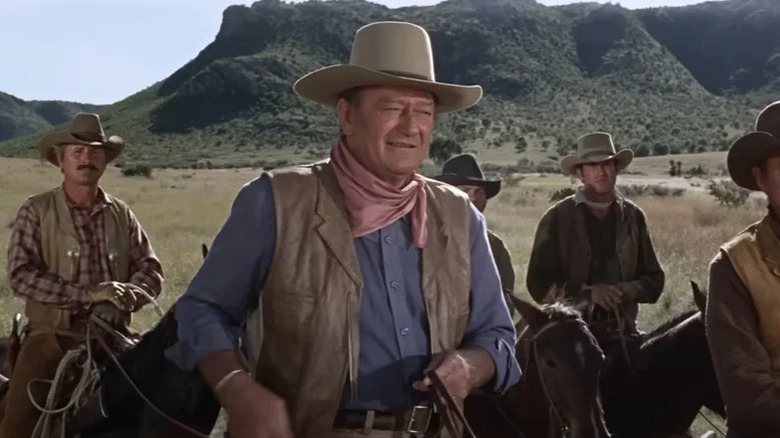
Some of the most under-appreciated John Wayne movies were released towards the tail end of his career, in between “True Grit” and “The Shootist.” This includes the 1970 movie “Chisum,” a Western based on a true story about the Lincoln County War and the rise of Billy the Kid. Wayne plays John Chisum, a rancher trying to keep the peace in the region even as violence escalates throughout the community. This is driven primarily by greedy land baron Lawrence Murphy (Forrest Tucker), whose murderous power grabs push Billy the Kid (Geoffrey Deuel) to start his own vengeful rampage.
“Chisum” stands as one of the most underrated John Wayne movies, with Wayne comfortably holding his own above the largely younger and more action-oriented cast. In this capacity, Wayne brings a more pronounced, mentor-like role to proceedings, anchoring his scenes with sage wisdom. This isn’t to say that Chisum doesn’t get in on the fighting, but it’s a much more measured and deliberate involvement compared to Wayne’s other projects. Overlooked among Wayne’s later work, “Chisum” takes advantage of its star’s advancing age with how it positions him.
8. Ride with the Devil
 Universal Pictures
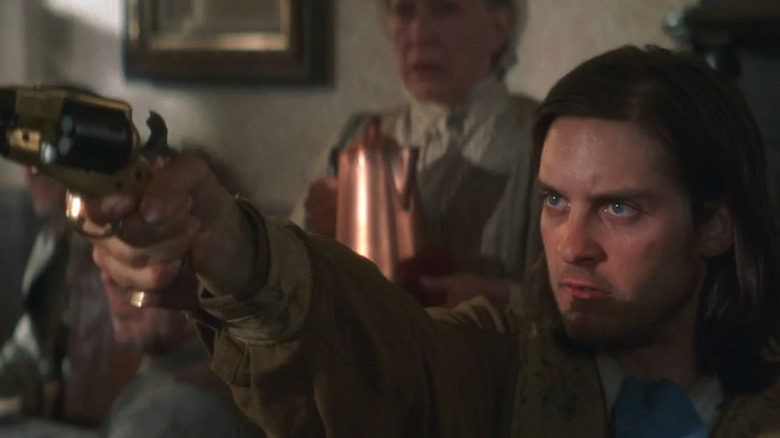
Taiwanese filmmaker Ang Lee brought a unique approach to the Western genre with the 1999 revisionist movie “Ride with the Devil.” Set during the Civil War, the story revolves around skirmishes between Confederate bushwackers and Union jayhawkers instead of conventional military units. The story initially follows Confederate irregulars Jake Roedel (Tobey Maguire) and Jack Bull Chiles (Skeet Ulrich) as they evade the enemy through the war-torn country. The duo’s hearty band grows to include other wayward figures while the rampant violence leads them to reconsider participating in the war at all.
“Ride with the Devil” is a forgotten Western that should’ve never flopped at the box office, though it certainly did. The movie explores the moral complexities of the Civil War, from those who want to maintain slavery to others who are drawn into fighting because of the conflict’s scope. The story isn’t afraid to dig into the messy nuances of it all, reveling in those contradictions and raw ugliness of the proceedings. Lee’s most under-appreciated movie, “Ride with the Devil,” provides a much more intimate look at the implications of the Civil War than most films.
7. Dead Man
 Miramax Films
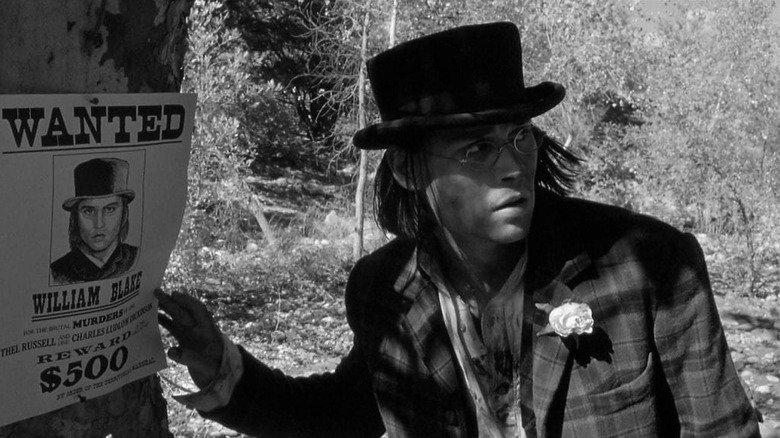
One of the best Western movies of the 1990s is “Dead Man,” written and directed by Jim Jarmusch. An acid Western, leaning heavily into psychedelia as it subverts the genre, following the last days of mild-mannered accountant William Blake (Johnny Depp). Traveling to a frontier town in the late 19th century, Blake is mortally wounded during a run-in with a woman’s jealous former lover. While being hunted by three gunslingers, Blake goes on an ethereal journey with a Native American man simply known as Nobody (Gary Farmer).
Easily and proudly the strangest movie on this list, “Dead Man” is one of the best Jarmusch films to date. The surrealistic take on the Western genre works wonders, elevated by a more understated performance from Depp to anchor the picture. In the years since, the movie has gotten lost in the shuffle of more arthouse flicks released in the ’90s. But over 30 years after the movie’s 1995 debut, “Dead Man” holds up as a quirky deconstruction of the Wild West.
6. The Proposition (2005)
 Sony Pictures Releasing
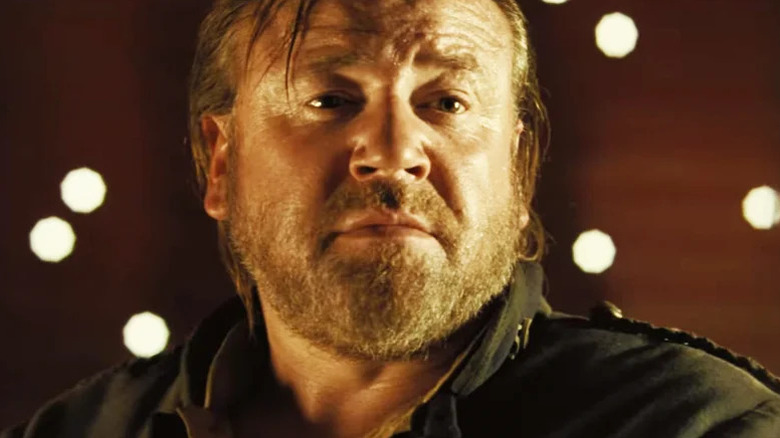
In a welcome break from the usual American Southwest set stories in the genre, the 2005 movie “The Proposition” heads to the Australian Outback. Set in the 1880s, the movie has captive outlaw Charlie Burns (Guy Pearce) agree to hunt down his fugitive older brother Arthur (Danny Huston) in exchange for his own freedom. Keeping Charlie and Arthur’s younger brother Mikey (Richard Wilson) imprisoned for his cooperation, Charlie has to rethink if he’ll follow through on the deal. Naturally, all plans go completely off the rails as questioned loyalties and the thirst for retribution escalates the manhunt.
“The Proposition” impressed critics upon its release, with the underrated 2005 Western having a haunting effect on Roger Ebert, in particular. That comes from not just the movie’s sweeping shots of the Australian wilderness but also its thematic meditation on violence and misplaced senses of justice. Pearce is in fine form as the morally conflicted outlaw while Ray Winstone does admirable work as the lawman who offers the titular deal to Charlie in the first place. A brutally atmospheric take on the genre, “The Proposition” gives the Western an effectively Australian twist.
5. Firecreek
 Warner Bros.
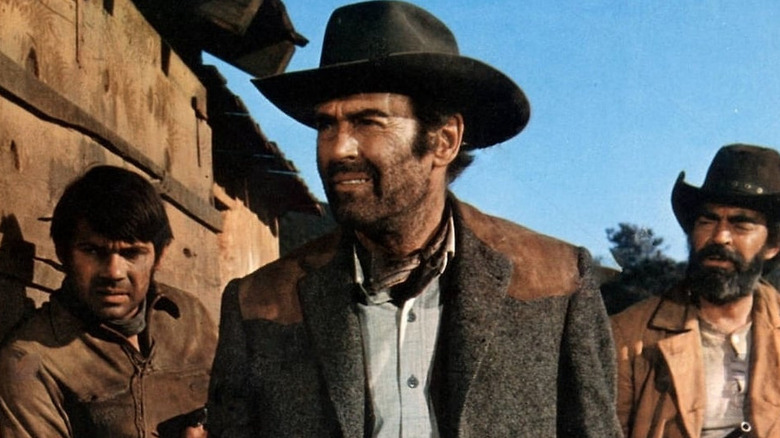
As spaghetti Westerns and revisionist takes on the genre began to take off, classic movie stars began starring in tougher and meaner Westerns than their usual fare. This includes Hollywood’s perpetual nice guy James Stewart, who took on a more brutal role with the 1968 movie “Firecreek.” Stewart plays relatively timid sheriff Johnny Cobb, who does his best to avoid resorting to violence, even when clear trouble comes to his town. This all changes when outlaw Bob Larkin (Henry Fonda) arrives at this sleepy community, with Cobb reluctantly stepping up to stop him and his merciless band.
Fonda had already delivered one of the best against type performances earlier in 1968, as the villain in “Once Upon a Time,” doubling down on subverting his heroic image in “Firecreek.” The movie is a less elegiac take on the genre than Leone’s classic, bringing a real grit to the Western setting and its action instead. This includes a grueling showdown as Cobb takes down Larkin’s men by any means necessary before his confrontation with the lead outlaw. The most violent Western in Stewart’s long career, “Firecreek” has its two veteran stars try to fit in with less innocent takes on the genre.
4. Wyatt Earp
 Warner Bros.
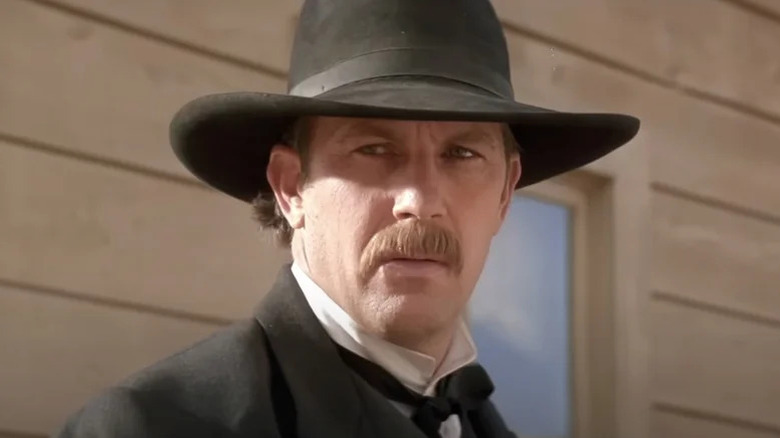
The thing most people nowadays seem to remember about “Wyatt Earp” is that it opened in direct comparison with “Tombstone,” something that Kevin Costner has regrets about. While Costner’s 1994 biopic about the legendary 19th century gunslinger isn’t as overtly fun as Russell’s turn as the lawman in “Tombstone,” it does have its own merits. The movie covers a fuller breadth of Wyatt’s life than the much more successful 1993 movie, starting with his teenage years during the American Civil War.
While fans still debate if Kurt Russell or Kevin Costner was the best Wyatt Earp, the 1994 film brings a more methodically reverential approach to its subject matter. The action is less flashy and the movie overall provides a more grounded tone permeating across its three-hour runtime. The film never earns its gargantuan length and could’ve been paced much better, but Costner has long proved that he at least knows how to stage and shoot a Western. To be clear, “Tombstone” is the superior ’90s movie covering the adventures of Wyatt Earp and Doc Holliday, but “Wyatt Earp” offers an interesting alternative.
3. The Ballad of Cable Hogue
 Warner Bros.
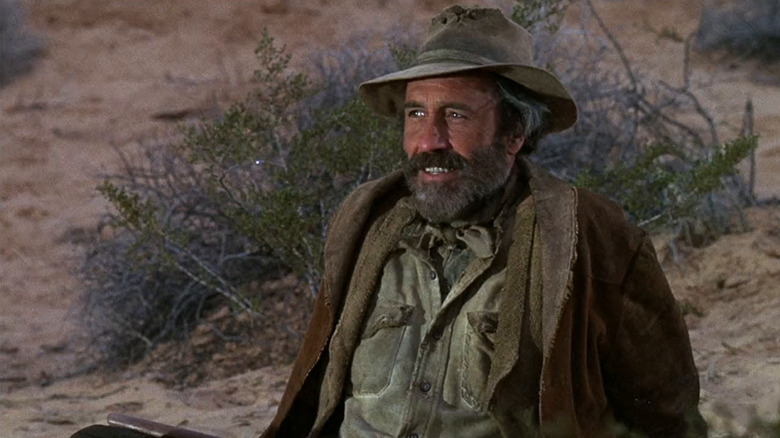
Filmmaker Sam Peckinpah developed a reputation for delivering plenty of silver screen brutality, particularly with movies like “The Getaway” and “Straw Dogs.” For his direct follow-up to “The Wild Bunch,” Peckinpah helmed a very different kind of Western, directing and producing “The Ballad of Cable Hogue.” A revisionist Western comedy, the titular drifter is played by Jason Robards, who discovers an underwater supply of water in a seemingly worthless stretch of land. The movie details Cable Hogue’s attempt to stake a claim on the land and his dynamics with the various figures in the nearby frontier town.
“The Ballad of Cable Hogue” is one of the best Westerns of the 1970s and a showcase for how under-appreciated Peckinpah’s storytelling range is. No one could’ve expected that the guy who oversaw all the carnage in “The Wild Bunch” would follow it up with a screwball comedy, and yet Peckinpah subverts expectations. Robards similarly plays against type, still a grizzled loner figure, but willing to lean into the physical comedy that his role requires. The perfect chaser for the bloody after-taste left by “The Wild Bunch,” “The Ballad of Cable Hogue” is Peckinpah at his most ribaldly funny.
2. Man of the West
 United Artists
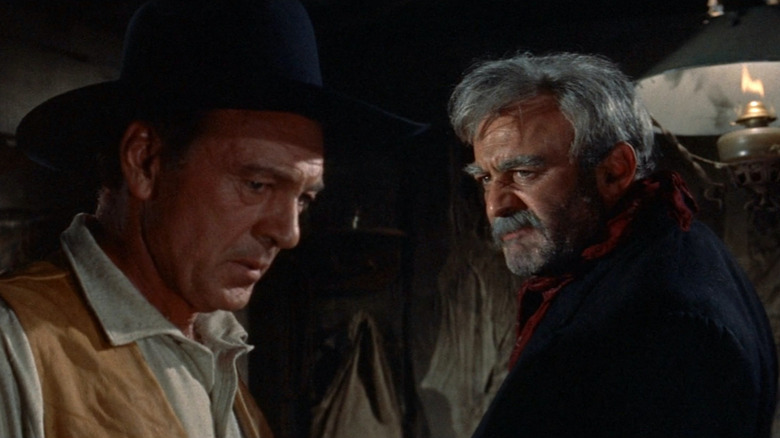
An icon of Hollywood’s golden age, several of the best Gary Cooper movies are Westerns, like “High Noon.” One of Cooper’s final films that deserves far more attention is his 1958 movie “Man of the West,” with much darker subject matter than his past work. Cooper stars as Link Jones, a man with a mysterious past, who finds himself defending a group of fellow passengers abandoned by a train during a heist attempt. This is complicated by the surprise appearance of Link’s uncle Dock Tobin (Lee J. Cobb), an outlaw looking to work with his wayward nephew once again.
For a ’50s film, “Man of the West” goes into much more vicious territory than many of its genre contemporaries. The movie also gives Cooper one of his most morally complex roles, from his dark past to the lengths he goes to do what he estimates is the right thing. This content raised eyebrows in 1958, with the movie questioned over its “morally objectionable” material for its time. But while it’s not as beloved as “High Noon,” “Man of the West” deserves to be recognized among Gary Cooper’s more soulful performances.
1. Heaven’s Gate
 United Artists
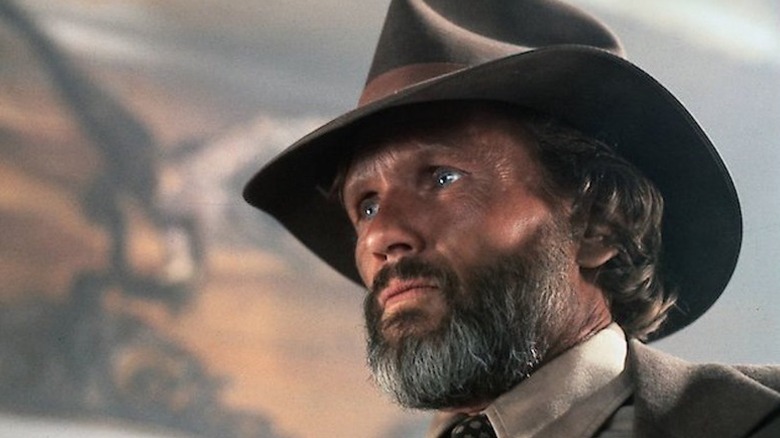
When it comes to Westerns that are underrated, nothing beats “Heaven’s Gate” when one really considers how notorious the 1980 movie’s reputation is. Written and directed by filmmaker Michael Cimino, the movie loosely depicts the Johnson County War in 1890s Wyoming. This historical conflict is seen through the perspective of Marshal Jim Averill (Kris Kristofferson), who joins forces with immigrant settlers targeted by powerful land barons. This leads to an all-out battle between the settlers’ makeshift defenses and the private army of mercenaries hired to wipe them out.
With its bloated budget and rumors of a chaotic production, Cimino’s “Heaven’s Gate” killed one of Hollywood’s most iconic studios, with its financial failure sinking United Artists. More than just United Artists, the infamous box office bomb killed the Western genre, at least as far as big studio projects were concerned, for years. However, the movie itself, separated from its commercial performance and Cimino’s reputation, is actually quite good, serving as a requiem to the frontier. Nowhere near deserving of the notoriety surrounding it, “Heaven’s Gate” is a haunting elegy to the hands that built the West.